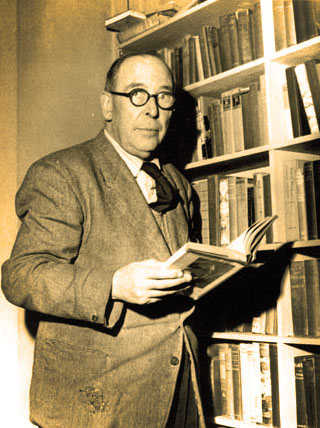
 In the preface to a translated volume C.S. Lewis wrote an essay on the importance of reading old books, bemoaning the lack of application that many people of his era had for the reading of older books, instead preferring to read secondary literature. While Lewis’ essay still speaks powerfully to us today, with the trend of prioritising secondary literature over the primary sources having scarcely abated, I think there is another challenge afoot. Namely the challenge of reading whole books. For many the process of reading and absorbing information and research is a thankless and arduous task. So this task is shortened and condensed as much as possible, until most of what is read is mere snippets of the information. But it doesn’t have to be this way, and so this skills post is dedicated to the art and process of reading.
Welcome to the second post in the Friday productivity and study skills series.
Our modern culture has condensed the information gathering process into a series of bite sized snippets, in part exacerbated by the sheer volume of information that is accessible to us at any given time. News articles have been condensed from the long-form essay, to short columns, then pithy snippets, shared on Facebook, condensed into 140 character tweets, and subsequently regurgitated as 2-3 second sound bites. This reduction in our attention span severely impacts how we read and research as well. Several essays, papers and articles I have read over the years have quoted sections of an author without realising that the following paragraph contradicted their entire argument.
One of the solutions for this is to simply read whole books.[ref]Thanks and HT must go to Rhys Bezzant, who constantly emphasises the need for this in his classes[/ref] While reading a single chapter, or skimming through a couple of pages of a book may glean required information, reading the whole book sets that information within the critical context of the argument. Reading a book from start to end gives the reader a sense of where the author is heading with the information. How the author is building their case to support their thesis, and whether that thesis is validly supported. It allows the reader to see progression within the material, and shows how the information that is sought after is integrated and relates to a bigger argument and sphere. The art of reading whole books leads to an appreciation of other people’s arguments and also serves to highlight some of our own cognitive biases. It also helps us to develop the patience and retrospection required to more fully analyse questions and arguments on the fly, without hastily responding to our own internalised straw-man of someone’s argument. In short: read whole books!
 Nevertheless the reading process can be hard, books can be too long, too dry, and plain old boring. What do we do with that sort of challenge, do we simply slog through a book because we started it? Actually I don’t think that this is a productive or healthy way of going. While I think we need to read more whole books, I am happy to acknowledge that not all books need to be read from cover to cover. Some are best used as reference works, even if they are not designed as such. Others are helpful to skim read through, for a gestalt picture of the argument, while extracting certain portions. Others are indeed best read cover to cover and pored over as you go. So how do we differentiate between the different types of reading? Tim Challies distills the reading method into seven categories: Studying, Pillaging, Devotional, Skimming, Stretch, Rerun, and Failed. [ref]http://www.challies.com/articles/7-different-ways-to-read-a-book[/ref] I think his broad categories are useful in thinking about our reading process and his blog post is worth a read. But here I want to focus on just three: Studying, Stretch and Failed.
Studying
For most students and academics the default mode of reading is studying. Quite commonly when I sit down to read something I have this strong urge to pick up a pen or highlighter. I’m sure many can empathise with this urge. However, there are many books that don’t need to be studied, and it can be quite cathartic to read something where you consciously make a decision not to study it; I have to do this periodically. Generally I pick biographies or unrelated histories for this.
For general studying there are many methods to make your reading time more efficient, and as per usual not all will work for everyone. One key element of most studying methodologies is being able to mark up the text and then synthesise summaries. Personally I use two methods for markup, one for personal books and one for borrowed books, but the schema is the same. I use a four mark system for scheme for Important, Agree/Quote, Disagree/Investigate, and Bias/Presupposition. In books I own these generally take the form of scribbles in the margin, a combination of lines, double lines, question and exclamation marks, usually with a single colour post-it tab to mark the point in the book. Borrowed books get a series of small reusable and non-marking post-it tabs at appropriate points in four different colours, generally yellow, green, red and blue respectively.
At the end of reading a book it is good to synthesise a summary of the information. Not only does this reinforce the learning, but also serves as a useful reference for where ideas and quotes have come from later. I generally synthesise per chapter, the book as a whole and transcribe the quotes I am after. If a quote stands out as being particularly pertinent I commonly archive it off separately in a ‘quote database’ for easy access. The summarised synthesis of each chapter gets archived within Zotero for later access, more on that in the tools day on Zotero. The practice of synthesising summaries is invaluable for reinforcing the material, and if archived well helps for later access. If you are reading multiple books on similar topics then a synthesis matrix may be an option. I have used various matrix schema in the past, and have recently come across this one from NC State: Synthesis Matrix.pdf. I think I will use this matrix for an upcoming lit review, it may be useful for you too.
 Stretch Reading
Often I feel that we don’t think big enough in our reading, and this is where stretch reading can come in. When is the last time you picked up a book that really stretched your reading habits? Personally my stretch reading is a goal based reading and usually I conduct it over a whole year. I pick something that I wouldn’t otherwise have the time to read cover to cover, and simply set the goal of reading it over the course of an entire year. A few years ago I read through Calvin’s Institutes in their entirety, and over the last two years I have read through Barth’s Church Dogmatics. Now with works of this size you inevitably cannot study them thoroughly and meditate on each sentence, but the act of pushing through and reading them cover to cover over a longer period not only broadens the reading sphere, and increases your knowledge base, but also gives good discipline in sitting down each day or week and just reading something. I find it a very enjoyable long term goal. Next up is N.T. Wright’s Christian Origins series. It may take a while, but that’s ok. After all it’s not called ‘stretch’ for nothing.
Failed Reading
Sometimes a book is just so boring, uninteresting or irrelevant that you just can’t summon any will power to go on. Sometimes you just need to put a book down and admit defeat. It can be hard to do, especially if you are an avid completionist. But I think it is an important skill to learn, and especially to discern what the appropriate point to shoulder arms is. Giving up too early can be problematic, as some books take time to reach their stride, while giving up too late simply wastes time. What is the appropriate time? I’m not sure there is any specific recommendation there, but perhaps just to acknowledge that setting a book aside incomplete is not a terminal failure, but rather a tactical surrender.
Those three categories are the ones I think are the most useful for our train of thought in the reading process. In addition there has been some interesting recent discussion over the elements of reading on screen or on paper, and personally I’m undecided. Some books and articles are better on paper, while others are invaluable digitally. There is an interesting article by Oxford University Press on this topic here: http://blog.oup.com/2015/02/reading-on-screen-versus-paper/ and while I note that they focus on university students they don’t seem to control for the type of writing. They do note that even the smell of a book invoked an emotional response, but I cant remember the last time the smell of a boring text book made it any less boring. Nevertheless I suspect that is a debate that will continue for a while.
But there is one aspect of the reading process that I haven’t covered, although I have hinted at it: Writing. It may seem somewhat non-sensical to lump in Writing as part of the Reading process, but I think it is a critical part. However, that explanation will have to wait for next Friday.
Do weigh in on the comments below as to your thoughts on the reading process.