Tag: paper

  • Tapping into my inner Luddite – Why I am returning to pen and paper for planning.

    Tapping into my inner Luddite – Why I am returning to pen and paper for planning.

    If you have been following this blog then you will know that I am no technological luddite, with many of the most viewed posts dealing with Zotero, Scrivener and other computer based writing management software.

    However, recently things have been changing, although perhaps not for the reasons that first come to mind. Perhaps a bit of background is appropriate though. Like many others my age, I grew up with the burgeoning computer period, but before they become so ubiquitous that we walk around with more processing power than Apollo in our pockets. Being in this liminal space means a few things. Firstly, it means that while I have had a long string of computerised assistive devices, I originally learnt to do most things without them. Secondly, I remember how annoying some physical processes were before the rise of easy digitisation, gone are reams of paper, and in comes the iPad. Finally, I also spent a lot of time at a computer without any particularly good OH&S advice.

    It is this last aspect that has been one for me of the driving forces towards digitisation over paper technologies. I have RSI and carpal tunnel in one hand, and as a result don’t write a huge amount, and therefore have exceedingly bad handwriting. Amusingly though it is also this aspect that recently I have found myself benefiting from. Simply put, when i want to scribble something down it takes effort, and that effort means that I think things through a bit more thoroughly. So when I am putting things in my diary, or making plans for different things, the extra effort actually helps in making good decisions or proper planning. I have written in the past about how this relates to students using higher cognitive load methods for note taking (see here for that post), but this is taking the same mechanism in a new direction.

    Therefore, this year–for the first time in about 10 years–I have bought myself a paper diary. While it is a pretty spiffy paper diary, and with all sorts of other advantages, it has really been helping me to pare back what I want to record and what I am planning to do. Now I still use my digital calendar for meeting reminders, and other things like that, but as a planner this mechanism seems to be far more effective for me at the moment.

    The planner I have decided to use is the Ink+Volt Planner (I backed it on Kickstarter) that has a few spiffy features, but one of the best is that each day is just split into three sections of time. This minimisation of the number of things you can cram into a period of time really helps with planning and execution of the things to do in a day. Note: this feature can also be implemented in other planners with a ruler and sharpie to limit the amount of space you have to write in, so give it a go and see what you think.

    Im interested if anyone else is experiencing the digital fatigue, and returning to pen and paper as well. Please comment below. Ill blog in the future about what using a pen and pad has done for my conference notes.

    Or perhaps I am just becoming a luddite hipster… after all I have rediscovered my vinyl collection too.

  • Presenting at St Andrews Symposium 2016 – Son of God: Divine Sonship in Jewish and Christian Antiquity

    Presenting at St Andrews Symposium 2016 – Son of God: Divine Sonship in Jewish and Christian Antiquity

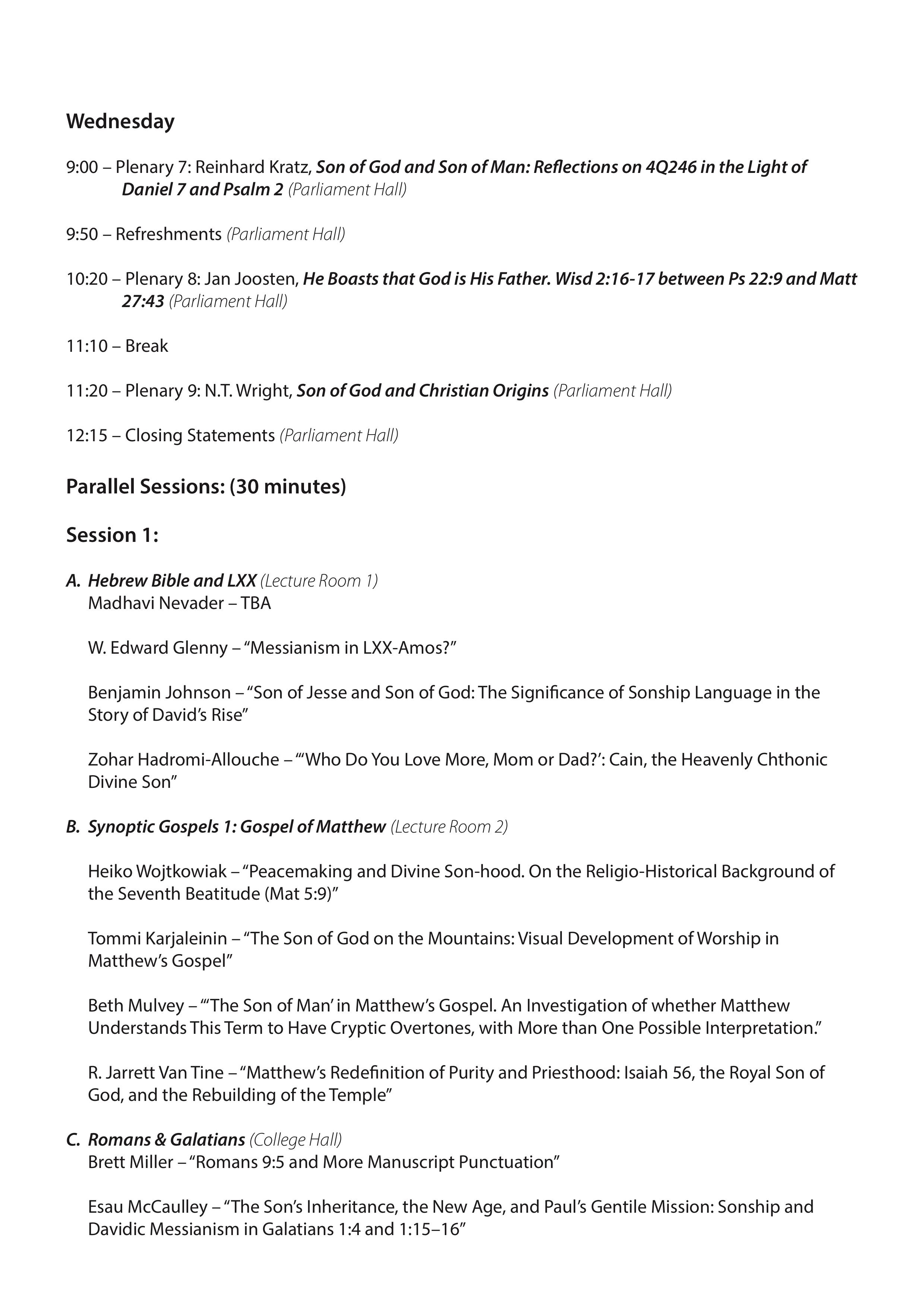
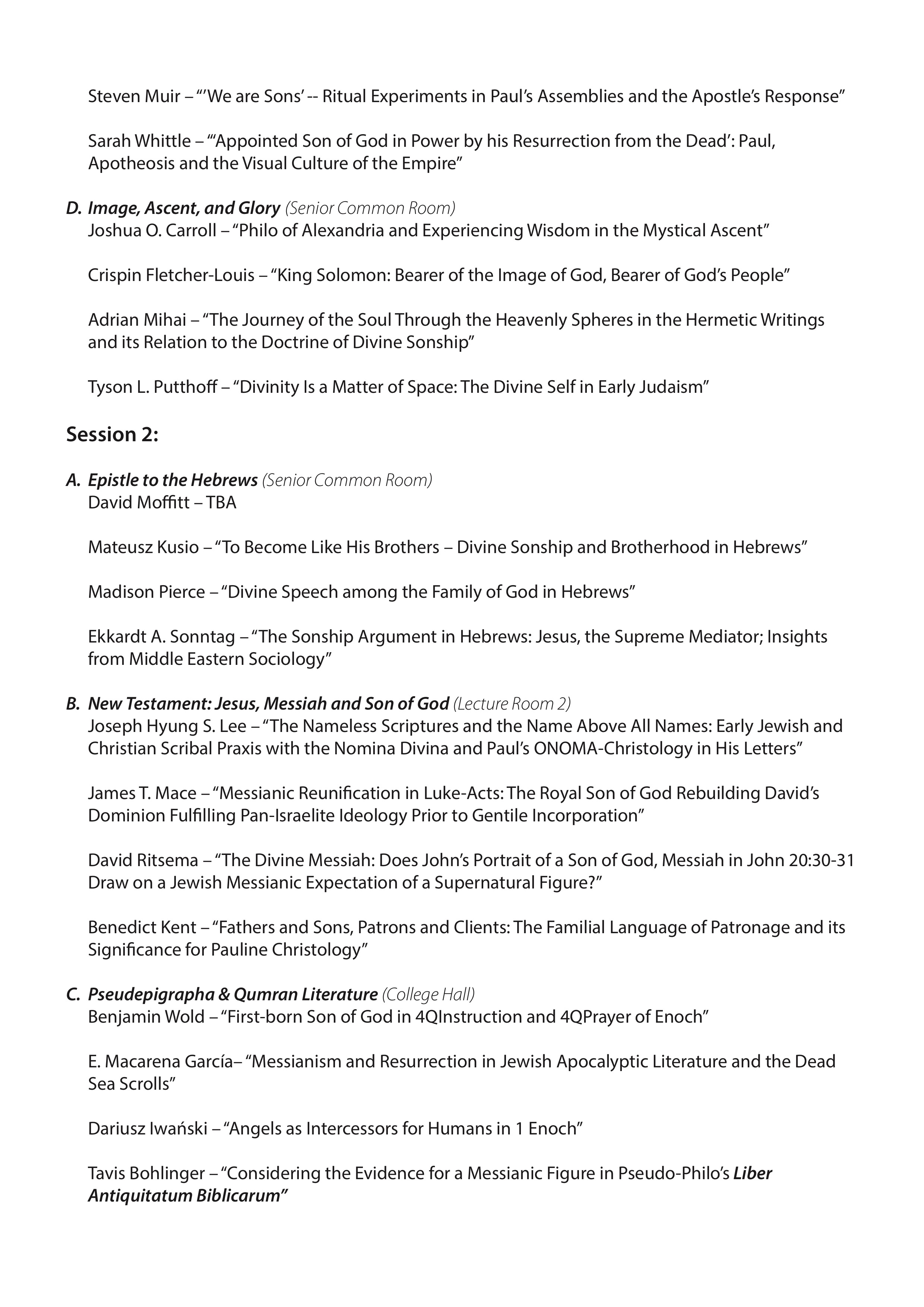
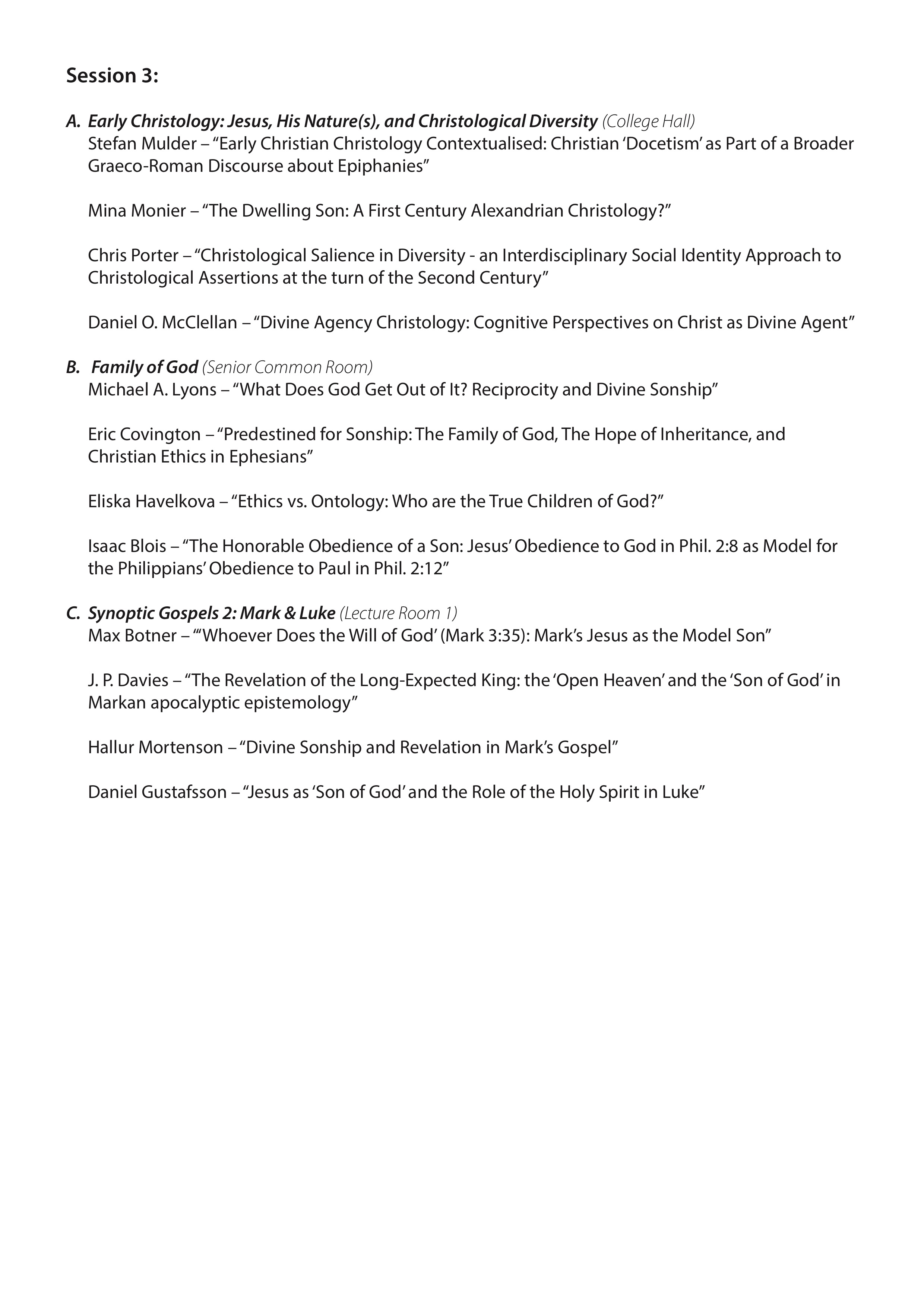
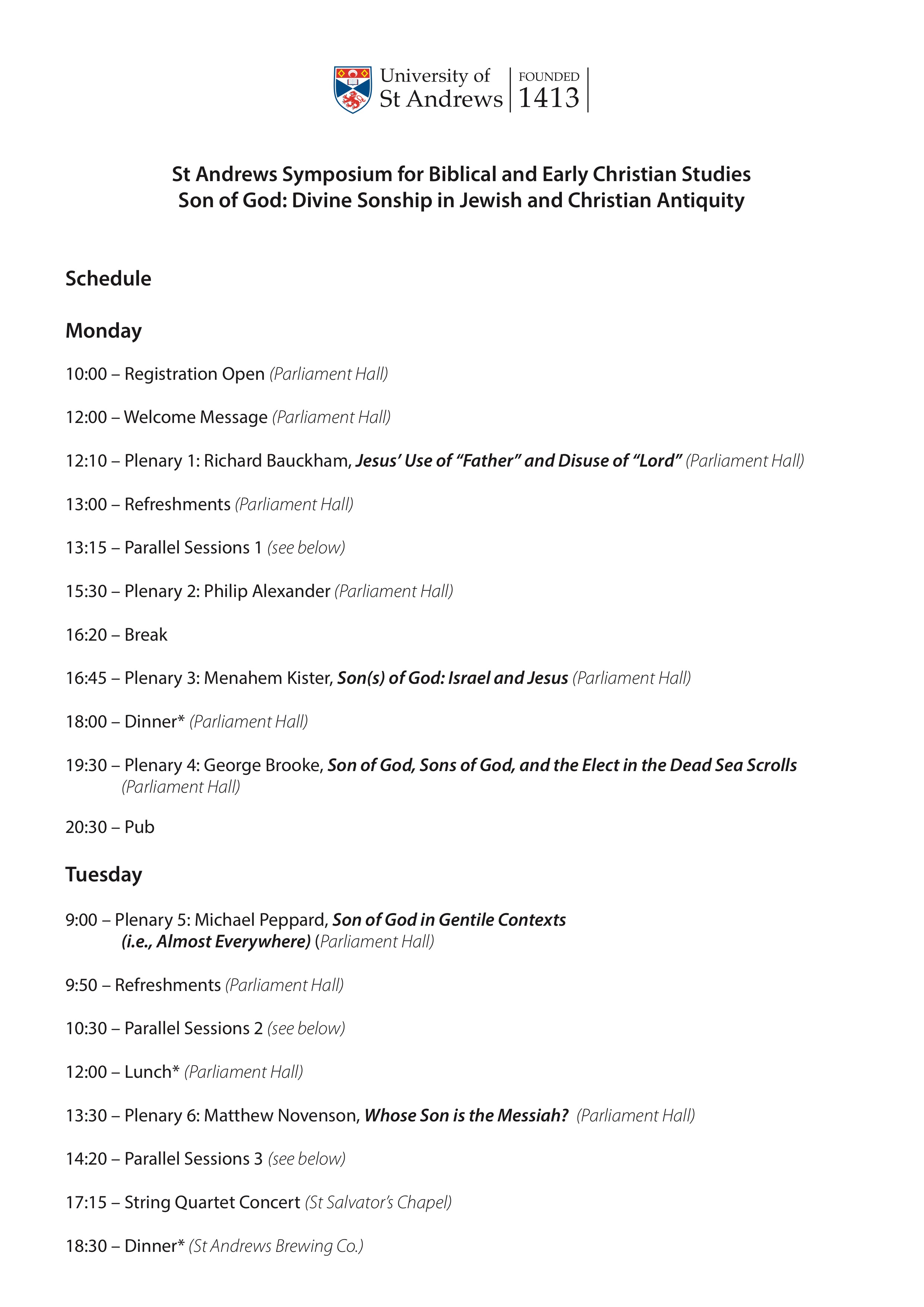
    This morning Qantas had the temerity (ok it was automated) to remind me that its only a little over a month before I will be heading to the UK for a pair of conferences, one at St Andrews in Scotland and the other at St Mary’s Twickenham down in London. Co-incidentally the draft schedule for the St Andrews symposium was released this week. Ill be presenting in the third parallel session on the Tuesday afternoon.
    Divine Sonship 2016 ScheduleDivine Sonship 2016 Schedule 2Divine Sonship 2016 Schedule 3Divine Sonship 2016 Schedule 4If you will be around Edinburgh/St Andrews or London/Oxford during the first two weeks of June and want to catch up I’m sure we can work something out 🙂

    Now, back to work on finishing this chapter of the thesis and getting all my cards in order again.

  • Cognitive Biases: Laptops vs Paper – a useful case study on how to remember things (oh and biases)

    Cognitive Biases: Laptops vs Paper – a useful case study on how to remember things (oh and biases)

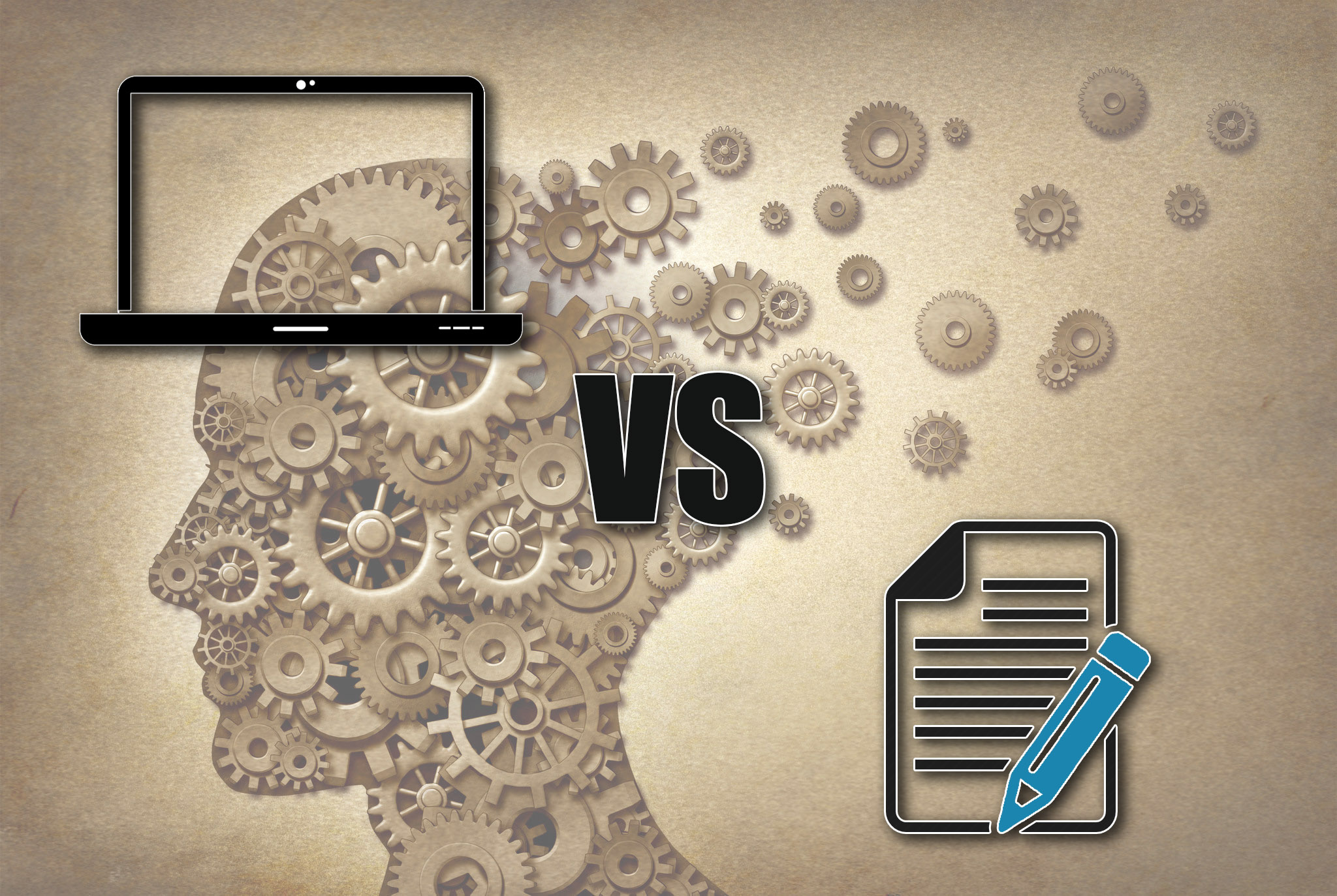
    Before we get into the Wednesday series on cognitive biases and fallacies in full swing I thought it would be good to look at a simple case study that not only applies to how we fall into biases unconsciously, but also teaches us a little about how we process information. For a little while now there have been a series of articles floating around the web and popping up from time to time based on the 2014 study by Mueller & Oppenheimer on memory retention with long hand vs laptop note taking. [ref]Mueller, Pam A., and Daniel M. Oppenheimer. “The Pen Is Mightier Than the Keyboard Advantages of Longhand Over Laptop Note Taking.” Psychological Science, April 23, 2014, 0956797614524581. doi:10.1177/0956797614524581.[/ref]

    It’s quite a salient topic to look at with the focus on appropriate methods of pedagogy and learning in our modern society, and the sudden and sharp uptake of computers in the last two decades; thanks to Gordon Moore. Now the majority of these articles focus on the study setup by Mueller and Oppenheimer which looks at memory retention from a variety of TED talks when students were asked to take notes in two different modes: handwriting, and laptop note taking. That study found that students performed better at recognition tasks when handwriting rather than laptop note taking. From this the majority of the articles I have read simply conclude that handwriting is superior to laptop note taking, that in the laptops vs paper debate traditional methods come up trumps.

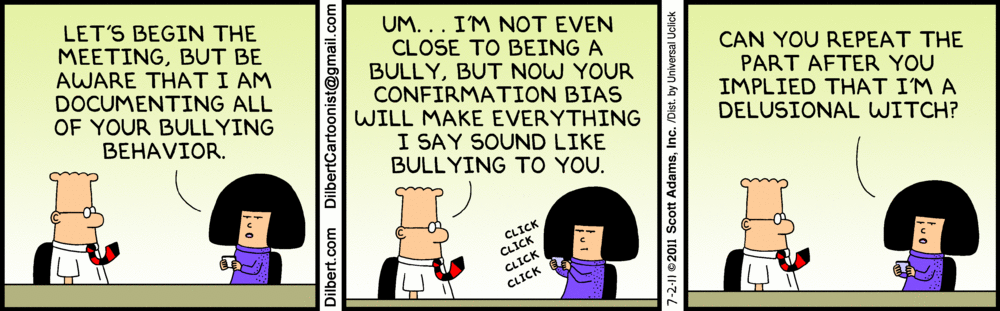
    But is it really? Well before we get into the psychology behind learning and memory, it is worth noting a simple cognitive bias at play here. Confirmation bias. Confirmation bias is a simple bias of taking note of the items or conclusions that fit our existing pattern of beliefs. Simply put the author of most of these articles sub-consciously eliminated the information that disagreed with their presupposition that using laptops in a classroom is detrimental to learning. Notably they ignored the link between laptop use and verbatim transcription, and the corresponding handwriting and synthesis based non-transcription.

    This is just a simple example of the problem with cognitive biases. We simply have a lot of them, and they are excellent at blinding us to alternative data and explanations that challenge our presuppositions. Furthermore there is no malice behind the biases in many cases, which makes it harder to detect in a self-reflective manner. However, being aware of our presuppositions and our predisposition to cognitive biases significantly helps in identifying where our biases are affecting our reasoning and thinking. That is the main reason behind this Wednesday series, if we know more about some of the more common biases it should help us internally defeat them.

    dilbert-confirmation-bias

    Biases aside and back to learning theory, as from the interview in this article: http://www.theatlantic.com/technology/archive/2014/05/to-remember-a-lecture-better-take-notes-by-hand/361478/ where thankfully the reporter has covered the whole of the study, Mueller reflects:

    “We don’t write longhand as fast as we type these days, but people who were typing just tended to transcribe large parts of lecture content verbatim,… the people who were taking notes on the laptops don’t have to be judicious in what they write down.”

    This reflection shows the underlying cognitive working behind the study design of typing vs handwriting. Indeed the claim of better memory retention from handwritten versus typed comes from the level of cognitive engagement, as in thinking and processing, in the memory task. If you are cognitively engaged, such as you are when synthesising material for a paper, then the mode of recording has little consequence (so long as you record something to be able to find it again several months down the track).

    There have been some studies done with low- and high-cognitive load tasks, along with possible low-cognitive load distraction tasks (flipping coins etc) which show its the load of the task that affects retention. Ultimately if you are cognitively disengaged, such as simply transcribing notes for a lecture, then the ‘harder’ cognitive task of handwriting will generally yield better results. [ref]Cf. Piolat et al, 2012; Makany et al, 2008 for cog load; and Schoen, 2012 for contra Mueller & Oppenheimer[/ref]

    wpid-Photo-20141004215054I generally recommend that people take notes in a ‘cognitively difficult’ fashion. What constitutes cognitively difficult varies per person as well, for some it may involve reading around the subject before and after class, while for others it may be formulating interesting questions even if they are not asked in class. While for students who are learning in a non-native language it may actually mean typing verbatim, as the very act of thinking in a non-native language is a hard cognitive task. Indeed some of the students I had last year did this, and subsequently took photos of the whiteboard after class to supplement their notes. As per this amusing anecdote on James McGrath’s blog here. This probably wouldn’t be a useful task for many people with English as a native language, but for them working across a language barrier it helped with both retention and accuracy.

    Realistically for long term memory retention the cognitive load should be high, and the material should be reviewed regularly. I recommend having a high cognitive engagement, even if it is via typing, but review after 24hours and then 3 days and 7 days. Furthermore if the task is able to be used in a synthesis fashion, by perhaps answering questions or writing a personal paper or synopsis on the lecture at hand, then this will reinforce the cognitive loading of the task as well. As from the Mueller & Oppenheimer study abstract the ultimate difference appears to be the act of ‘processing information and reframing it in their own words’ rather than the physical mechanism. So take notes well, and also take note of your cognitive biases.

    Some tools for note taking will be coming up in future Monday posts, and look forward to more cognitive biases on Wednesdays. Tell me what your preferred note taking method is in the comments.