Tag: identity

  • Book Review: Understanding Gender Dysphoria – Mark Yarhouse

    Book Review: Understanding Gender Dysphoria – Mark Yarhouse

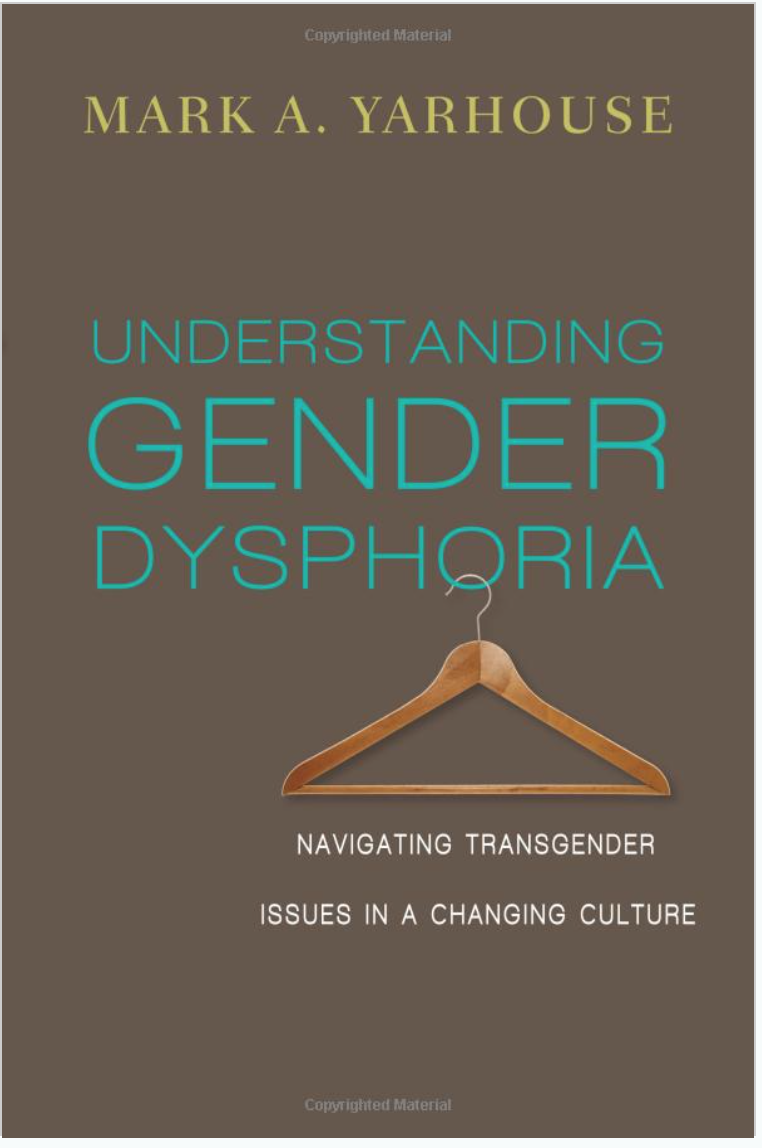
    Understanding Gender Dysphoria
    Mark Yarhouse; 2015. | IVP Academic | 191 pages
    978-0-8308-2859-3

    Gender dysphoria (GD) and transgender issues are currently a hot topic in the media and everyday discourse, thanks in no small part to the topic being thrust into the limelight by celebrity events. However, the current media focus on the topic doesn’t do justice to the complexity of the issue. Especially given the superficial gloss awarded to the psychological and medical aspects. From a psychological perspective, Gender Dysphoria [302.85]—or Gender Identity Disorder (GID) as it was known—has been described in the Diagnostics and Statistics Manual (DSM)—the psychological disagnostic handbook—since version III (1980) under different categories. My own interest in the topic originated with two friends announcing their identification as ‘trans’ and ‘gender identity dissonant’ (yeah, he was a Psych friend) around fourteen years ago. In particular, there has been a lack of helpful, well thought through analysis from a Christian perspective.

    A few books have been released recently, intent on speaking to this modern interest in gender dysphoria, and the first for review is the aptly titled Understanding Gender Dysphoria by Mark Yarhouse. This is a relatively slim book from Yarhouse, given his previous work on Modern Psychopathologies and books on therapy. As with his previous work he writes from a distinctly Christian perspective, although firmly embedded within the psychological discipline as a well-rounded practitioner. As such this book walks the fine line between disciplinary specificity and appealing to a broader audience. The introduction describes this tension well:

    ‘This book invites Christians to reflect on several issues related to these findings [sexual identity research], a broader research literature…and other anecdotal accounts. …I note that as we wade into this particular pool, we are going to quickly be in the deep end, as the topic is complex.’ (p11)

    However it is this tension that makes this book both appealing and somewhat unsatisfying. From my own background I will be reviewing it from both a psychological and a theological perspective, with all the conflict and overlap that this presents.

    Given Yarhouse’s aim of engaging with a broad Christian audience, he starts from a point that is relatively accessible to his audience. However, this accessible starting point is not without its costs, as the first few pages present a steep learning curve. By the second page of the first content chapter Yarhouse is deep within identity theory, chromosomal difference, and introducing a spectrum of gender identification. Although this book may be written for a lay audience it expects a strong degree of education, reflection and analysis. Drawing from his psychological background Yarhouse helpfully differentiates between biological/chromosomal sex, gender identity, and gender role/acts. It is this degree of nuance that is useful in defining aspects of the discussion up front.

    From the first chapter that seeks to appreciate the complexity surrounding gender dysphoria, the second chapter attempts to assemble a useful Christian perspective on the topic. The opening anecdote sets the tone for the chapter by highlighting a limited and closed-minded approach. Throughout this model building Yarhouse draws upon a biblical theology of humanity. From this he proposes three preliminary models for engaging with gender dysphoria: the integrity framework, the disability framework and the diversity framework. While these three frameworks represent usable approaches it is worth noting that of them none will please everyone. Conservative Christians will likely follow after the integrity framework, while abhorring the diversity framework. Similarly staunch supporters of Gender Dysphoria (in the DSM-5 sense) will likely support the diversity model while decrying the integrity framework. Nevertheless these three frameworks are a useful heuristic for approaching the issue. Yarhouse attempts to blend these three frameworks in presenting an integrated model that acknowledges ‘integrity of sex differences,’ drives for ‘compassionate management of gender dysphoria,’ and validates ‘meaning making, identity and community.’ From a theological perspective the anthropology feels quite shallow and I wish it wrestled further with the imago dei and Christian identity. Still this section is a good introduction to the topic, and will be useful even to those with no faith convictions whatsoever, due to the paucity of helpful literature on the topic. [ref]The majority of literature at a lay-level provides brief glosses at best, while more in-depth literature tends towards ‘clinicalisation’ and diagnostic issues.[/ref]

    From this chapter, the book moves onto an investigation of the Phenomenology and Prevalence (Ch4) and Prevention and Treatment (Ch5) of Gender Dysphoria. These chapters are presented from the perspective of the DSM-5 with some minor comparisons with the previous DSM-IV. Here Yarhouse’s clinical practice is set centre stage, with regular anecdotal excurses supporting and highlighting facets of the clinical definitions. Personally from my background in Socio-cognitive psychology, I would wish for more in these chapters on the DSM-5 update to the DSM-IV given the change from Gender Identity Disorder to Gender Dysphoria. This change in the DSM-5 acknowledges the increasing ‘medicalisation’ of the diagnostic criteria, but seemingly sidelines many of the identity issues in favour of focusing on the ‘distress’ involved in the diagnosis. (Koh, 2012) This aspect of identity and gender is the primary area that my inner socio-cognitive psych wants to see addressed and engaged with further from a Christian perspective, especially concerning issues of cognitive dissonance in this sphere.

    The final section of the book envisages a Christian response from both individuals and the broader community (or institution). These chapters seek to cement the theory and specialist praxis within the sphere of Christian community. Ultimately these chapters are likely to be the most useful to the intended audience and have the most impact; my psychological and theological wishes aside. These chapters paint a picture of a church that seeks to love and engage with those who have gender identity concerns. Furthermore, the picture that Yarhouse paints is certainly not the whitewashing of the issue that is commonly presented, nor is it the seemingly random spatters of paint that resemble a church that has not wrestled with these issues. The practical application here will greatly benefit churches and individuals alike.

    Ultimately this book provides an invaluable foray into the issues surrounding Gender Dysphoria/Gender Identity Disorder. It seeks to present a strong case for understanding gender dysphoria from a biblical, theological, pastoral and psychological standpoint. The argument presented will certainly not please everyone, with many conservatives seeing it as capitulating and many progressives seeing it as not radical enough. Personally there are times I wish that certain issues were investigated further, or extricated from the holistic model to be examined individually. However, despite these issues the book makes an important contribution to a sorely neglected issue within the church, and our society, today. All readers, even those who have no faith affiliation, are likely to find this book useful in addressing the basis of their exploration in understanding gender dysphoria.

    I hope that Gill can also review this book from a medical perspective in the near future.

    This book review was originally published on Euangelion and archived here. 
  • Personal Stories and Narrative Identity

    Personal Stories and Narrative Identity

    Identity is a hot topic in our society, with regular articles on ‘How to find your identity’ and what identity means in a shifting culture. Advocates on all sides of the culture, gender and sexuality wars also appeal to identity as a core ideal worth defending. However, from the broad usage of ‘identity’ across these different scopes I get the feeling that many of these ‘dialogues’ are really talking cross-purposes and using different definitions of identity. So how do we think about identity?

    Well one of the helpful ways of thinking about various forms of identity is from the perspective of story telling. Simply put if you were to tell the story of your life how would you go about recounting it? What would you emphasise, and what would you leave out? Which events have shaped your life, and which have fallen by the wayside unnoticed? How do you integrate all the different facets and experiences that you have?

    I stumbled across an article over on the Atlantic that elaborates on some aspects of Narrative Identity from the perspective of telling our own personal story. It is a very useful way of figuring out identity issues, and as we struggle in a world that values identity highly, but doesn’t have a strong grasp on it, it will become invaluable. For Christians the value of Christian identity is similarly core, although just as tenuously grasped.

    This short snippet gives the gist of the article:

    In the realm of narrative psychology, a person’s life story is not a Wikipedia biography of the facts and events of a life, but rather the way a person integrates those facts and events internally—picks them apart and weaves them back together to make meaning. This narrative becomes a form of identity, in which the things someone chooses to include in the story, and the way she tells it, can both reflect and shape who she is.  A life story doesn’t just say what happened, it says why it was important, what it means for who the person is, for who they’ll become, and for what happens next.

    I highly recommend you go and read the rest: http://www.theatlantic.com/health/archive/2015/08/life-stories-narrative-psychology-redemption-mental-health/400796/

    In addition I will continue to be posting things on identity, gender and social identity in the next little while. Many of which will build on some of the concepts that I’m raising now.

    Let me know in the comments what you think of Narrative Identity.

  • Charlie Hebdo, terrorism and identity

    Charlie Hebdo, terrorism and identity

    Some will probably know that I have been interested in issues of identity formation, adoption and social identity for quite some time now. While this is not the time or place to engage in a long discussion of the factors of Tajfelian Social Identity Theory, I think that the issues we are facing now interact strongly.

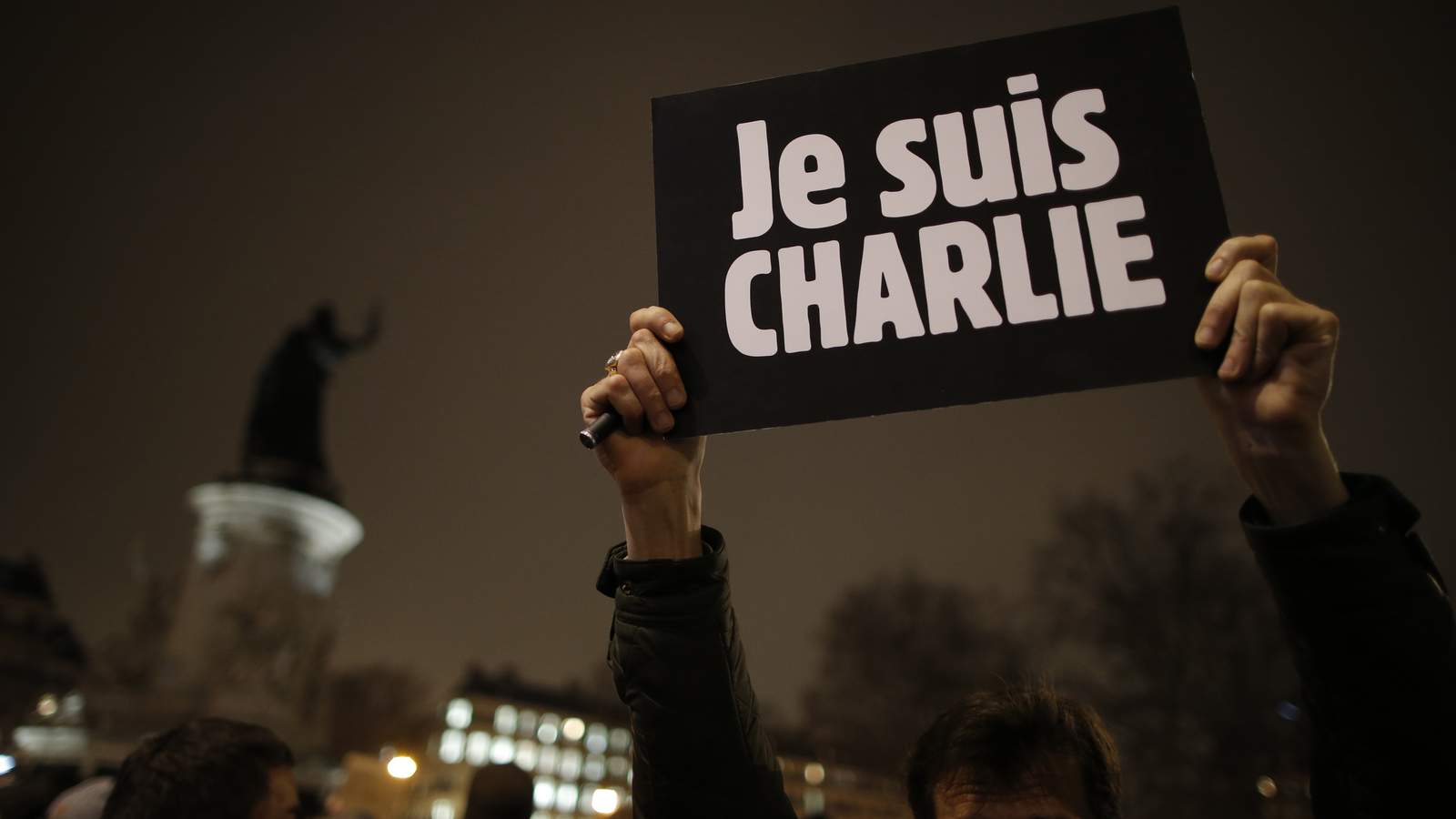
    Many of the statements and  rhetoric surrounding the Charlie Hebdo and subsequent incidents have focused strongly on a type of positive-negative asymmetry, where pejoratively denouncing the other while reinforcing ingroup bias comes as a priority for group identification. The problem is that these reinforcing mechanisms tend to make constructive discourse harder to engage in, as it is driving at the heart of the group identification. The rhetorics of #jesuischarlie, #jesuisahmed and the ‘We don’t condone such actions’   foster such identity dichotomies.

    However, I am somewhat heartened by articles such as this one from the Telegraph: http://www.telegraph.co.uk/news/worldnews/europe/france/11332535/We-think-the-Paris-terrorists-were-offended-by-Charlie-Hebdos-satire.-What-if-were-wrong.html

    Instead, they [extremists] merely pretend to be offended by cartoons, in order to give themselves a pretext to commit murder. Murder so horrifying, on a pretext so unWestern, that non-Muslims – blinded by grief and rage – turn on Muslims. Blame them. Persecute them. Burn their book, attack their mosques, threaten them in the street, demand their expulsion from Western societies. Actions that, in turn, scare Western Muslims, isolate them, alienate them. And thus drive some of them to support – and even become – terrorists.

    While I think that the strong reaction to ignore religious and social differences in many of these articles (this one trends in that direction) is unhelpful. I do think that considering and engaging with some of the underlying social and identity motivating factors, especially in a diachronic fashion, is required. Perhaps this is a good place to start…
  • A Cult of Personality – whose persona to follow?

    A Cult of Personality – whose persona to follow?

    Originally I wasn’t going to write on this topic, but this morning I was reading an old friend’s blog and started thinking about the situation, and these thoughts became notes, and became a small comment, and now this brief post. So the logical starting point for this post is here: http://www.dylanmalloch.com/2014/10/mark-driscoll-theology-vs-behaviour.html and with Mark Driscoll’s sudden resignation from Mars Hill (Christianity Today).

    Many of the words written on Driscoll’s sudden resignation have focused on specific aspects of his life, ministry, theology or church, but while these are all good perspectives to explore, I’m not convinced that these explorations will go much further than skin deep. Mark DriscollWhile there are a plethora of facets, historical and present, theological and personal, and many more that serve to build a bigger and stronger picture of the situation at hand, but one aspect I think has been overlooked a bit. I think that it is not the theological credentials or creeds that is at stake here, rather it is more about the cult of personality that was built up around Driscoll, and that is certainly not unique.

    Rather we see the same sort of implosions and resignations across a wider range of the church including many non-conservative Reformed Evangelicals. Issues with various pastors and leaders are rife in the wider church, and while snippets are heard briefly, they certainly don’t make national news headlines. I think that the case with Mars Hill got significant air time because traditionally conservative evangelical Christianity has followed the example set forth in 1 Corinthians and has rejected cults of leadership in the same fashion that is found in Paul’s admonition.

    However, our society as a whole certainly has not shied away from following after leaders and personalities, and perhaps the best example of this is MTV and the plethora of people following after the strong personalities in the public space. The cult of personality  appears intrinsic in human nature, and I think it probably reflects the middle category of Maslow’s hierarchy of needs: Love and Belonging. These needs are further intensified by interacting with strong social identity markers in an ever splintering social world, and seeking an in-group to feel at home with.

    But I think just as the Church is in the world, it imbibes this ever nervousness over social identity and so we too can be just as obsessed with status and and personality as early Corinthian church was. Just as the Corinthian’s were divided over Apollos vs Paul vs Cephas (1 Corinthians 1:12) so too the modern church follows after Driscoll, Calvin, Dollar, Houston etc etc. Across the church as a whole there are strong tendencies towards cults of personality, and driven by a complex web of social identity construction and formation. While certainly a cult of personality needs a personality to follow after, I think there is also a strong onus on those sitting in the pews, the general congregation, and the Church catholic.

    Perhaps a few illustrations are warranted. The cult of personality is easiest to see in the case of Driscoll and the wider range of mega-church preachers, and even easier again to see with itinerant preachers such as Creflow Dollar. But I was a bit stunned this week to find that the cult of personality doesn’t actually need a living breathing person to follow after.

    This week I discovered a 10626606_726511277385898_8876200350693483732_nnasty little practiced called ‘grave sucking’, basically involving the veneration of grave sites of various Christian leaders. Simply put these people head out to a grave, and believe that they can ‘suck’ special blessings from the corpse of the dead. See the thumbnail for an example. A cult of personality without even a person to physically follow.
    Of course there is the theologically sanitised version of this, where people follow theological tradition in such a slavish way that they may as well be physically following the individual in question. Hyper-Calvinists, hyper-Lutherans etc. Arguably the differentiating factor here is disagreement. While I follow the reformed Anglican tradition, and i think highly of Calvin’s theology, I occasionally disagree with his interpretation or application of scripture. This can be extrapolated out slightly, where it is not only a personage to follow, but an ideological slavishness. One recent example of this has been the engagement and accusations of ‘going Catholic’ towards a swathe of Reformed Protestant scholars  that sits somewhere between confusing and bizarre. I wont write more on this, but simply refer to Mike Bird’s blog article on the topic: http://www.patheos.com/blogs/euangelion/2014/10/setting-the-australian-church-record-straight-about-justification/

    One interesting indicator I found recently on the health of wider Anglicanism on this topic has been the responses to the admission from Justin Welby the Archbishop of Canterbury over the interaction between faith and doubt. http://www.theguardian.com/uk-news/2014/sep/18/archbishop-canterbury-doubt-god-existence-welby Interestingly there has been significant backlash from some in the church who believe that leaders should be infallible, and certainly not doubting anything whatsoever. When a leader admits that they are not on the pedestal that they have been set upon, then they are set on by the swathes of Facebook and Twitter commentators. Perhaps the less said about that the better.

    The final point I will adduce is the astute and active denial of the cult of personality that some leaders, such as Tim Keller, have engaged with. Keller commonly refuses to pose for selfies, chooses to speak less on stage than others if possible, and his appearance here in Australia this year was likely a one off event. His choice to actively undercut any cult of personality as much as he can certainly says something about the human tendencies at play here.

    So if these psychological and social issues are at play then what can be done to move forward here. In our sinful state I think that it is likely folly to be attempting to change our intrinsic psycho-social disposition. However, I think that there is one aspect to our social identity formation, and desire to follow after a personality that can be recognised. Namely that we do have a personality to follow, one who was a living breathing fleshly person, and indeed is so now. In the end the only persona that we should be following of is the second person of the tres persona una substantia. As Christians our cult of personality should be, must be, and is centred around Christ. It should be psychologically cathartic, socially comforting, and strongly identity building.

    christcentered