Brief contact with a cockroach will usually render a delicious meal inedible. [But] the inverse phenome-non—rendering a pile of cockroaches on a platter edible by contact with one’s favorite food—is unheard of.[ref]Rozin, Paul, and Edward B. Royzman. ‘Negativity Bias, Negativity Dominance, and Contagion’. Personality and Social Psychology Review 5/4 (2001): 296–320.[/ref]
Why does our media constantly report on the negative aspects of our society, with only a short snippet of positive media? Why is it that people spouting polemic and invectives get so much more airtime, than those building constructive arguments? Undoubtedly some of this is due to the prevalence of polemics and the problem of evil in the world, there is also a cognitive bias lurking beneath the surface: the negativity bias. This bias describes our human predisposition to paying more attention to elements that have an overall negative nature, to those that have a positive nature to them.
The negativity bias, also known as the positive-negative asymmetry effect, has been regularly observed in a wide range of studies, and is intrinsically felt by many people. For example the loss of a pet or more significantly a relative will resonate with many individuals for a significant period. Or for a child at school being picked last on a sports team, or failing a test, will have a higher and longer lasting currency than all the times that they were picked first or excelled. Psychologically the effects of negative events stick with us longer than the positive ones.[ref]Baumeister, Roy F.; Finkenauer, Catrin; Vohs, Kathleen D. (2001). Bad is stronger than good. Review of General Psychology 5 (4): 323–370. [/ref] Furthermore, in a range of psychological studies, even when artificially controlling for frequency and occurrence the majority of people pay more attention to negative than positive events, and are even internally motivated to avoid negative projection rather than emphasise positive projection.
 So is this just the old adage of the world going to hell in a hand basket? Are things just getting ever worse, and eventually the situation will be completely untenable, with the world imploding in on itself in a sea of negativity? Well, not quite, or so the research says. Although it is obvious that negative events occur, and seemingly regularly, the overall tenor of the world is that these events are in decline. As Steven Pinker found in his research on violence in The Better Angels of Our Nature we may actually be living in the most peaceful era ever.[ref]Pinker, Steven. The Better Angels of Our Nature: Why Violence Has Declined. 1st Edition edition. New York: Viking Adult, 2011.[/ref] While I’m usually quite suspicious of Whig-type historiography, it appears that the research in Pinkers book stacks up. Why then is it that we feel that the world is just getting worse? A significant portion of it is likely to do with our negativity bias.
With our inbuilt negativity bias pushing us towards paying more attention to negative events than positive, is is understandable that the variety of media tends to report on negative events. Especially those outlets that are dependent on sales or clicks to pay the bills. In turn this feeds our negativity bias, and so the cycle is perpetuated. However, it is important to note that this is not a chicken-and-the-egg origins scenario. From the plethora of studies it is quite clear that the origins for the cycle lie within our cognitive biases, and are then subsequently fed and reinforced.
 The same effect occurs when people are asked to make decisions based on the evidence provided. Many will decide on a course of action, or a held belief, based on the negative arguments put forward, rather than the positive arguments. We humans tend to make decisions based on what we may lose, rather than what we can gain.[ref]Rozin, Paul, and Edward B. Royzman. ‘Negativity Bias, Negativity Dominance, and Contagion’. Personality and Social Psychology Review 5/4 (2001): 296–320.
In a possible confirmation of the FUTON bias: https://sites.sas.upenn.edu/rozin/files/negbias198pspr2001pap.pdf[/ref]
What does this have to do with academia and the public square, other than something that is cool to know about. Well, one of the primary applications is to do with how positions are argued. While proving the null hypothesis probably wont suffice for formal arguments, it certainly suffices for the public square. What is more, because of the negativity bias, these negative arguments tend to be taken on board more than the same argument phrased positively. As an example I was recently reading an article posted to that erudite news source: Facebook. Essentially the author of the article was arguing positively for the existence of a town from archaeological and historical evidence, and quite academically convincingly too might I add. However, from the comments on Facebook it was evident that the take home aspect of many readers was that the author was arguing negatively, against the proposed thesis that the archaeological evidence pointed to the non-existence of the town. Many readers completely failed to acknowledge the positive arguments, even when quizzed.
So what for us? Well in academia and public discourse there is a tendency to provide solely constructive arguments, as within the scientific method it is difficult to prove the null hypothesis (don’t get me started on Bayesian theory and NHST again). However, for reception of that discourse we need to be aware that negatively framed arguments tend to be carried with more weight. Sadly then negative arguments must be engaged with, rather than merely dismissed. Of course the difficulty is how to engage with them without merely being negative in response, and on that question I’m very sad to say it is highly contextual.
How do you deal with negative arguments, and how are you aware of the negativity bias at play in your own work? Tell me below, in the comments.
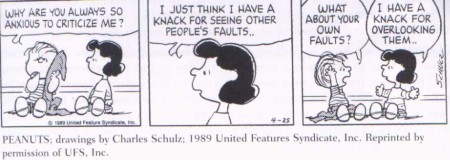
 Furthermore this is only exacerbated when it is brought into a social setting. While the nature of the FAE is powerful on an individual level it is stronger again amongst groups. The expanded bias, creatively named Group Attribution Error, sees the attributes of the out-group as being defined by individual members of that group. We met this bias briefly in the post a couple of weeks ago on Cyclists vs Motorists and Intergroup biases. This is further expanded again with Pettigrew’s, again creatively named, Ultimate Attribution Error (one must wonder where to go after this). While FAE and GAE look at the ascription to external and out-groups primarily and discard most internal and in-group data, Ultimate Attribution Error seeks to not only explain the demonisation of out-group negative actions, but explain the dismissal of out-group positive behaviours. Interestingly many of the studies that support Pettigrew’s Ultimate Attribution Error look at religio-cultural groups as their case studies, such as the study by Taylor and Jaggi (1974), or later studies on FAE/UAE and suicide bombing (Altran, 2003).