Blog

  • First essay for 2013….

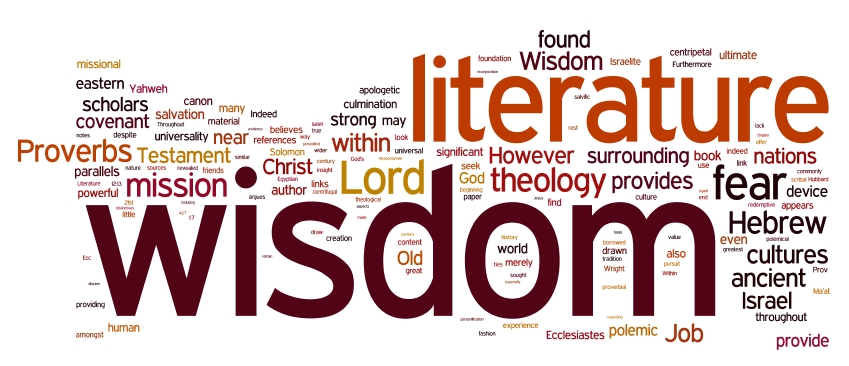
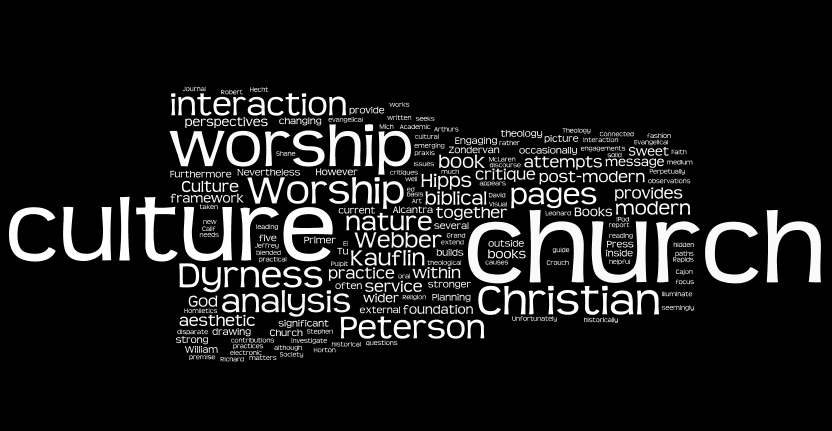
    wordle

    So the year has started again, and is rapidly accelerating. Infact my first essay has already been written and submitted, although technically it was really a book review… of six books… and two jouranls…. in 1100 words. Eeep.

    Anwyay in that tradition of posting a wordle for each one, here is the one for this essay.

  • The Borgias – a sordid tale of the Papacy

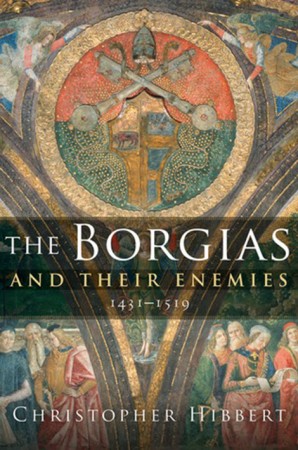
    The Borgias Cover

    Over the summer I have had the great opportunity to get some reading done on topics that I don’t have enough time to read about during the rest of the busy year. One of my favourite reading topics tends to be history of various kinds, and in this case I have indulged myself by reading about one of the most controversial and sordid periods of the the Papacy: the rule of the Borgias.

    In this narrative history of the period, Christopher Hibbert writes concerning the rise and ultimate fall of the family, stretching from the machinations of Rodrigo Borgia as a Cardinal in the 1450s, including the siring of his four children, to his assumed bribed election into the papacy, throughout his rule as Pope Alexander VI; including the legitimatising of his children and the various political and personal relationships therein. Then finally to his downfall in later life, and the eventual crumbling of his empire; with the book finishing after the death of Lucrezia in 1519.

    This history of the period reads easily and flows well, guiding the reader through all the twists and turns of the debased state of the church and Rome in the 15th century; and the twists and turns are many. The multitude of strange deaths and stabbed bodies floating through the Tiber, various illegitimate offspring, and the infamous Ballet of the Chestnuts, all serve to illuminate the details surrounding the Borgia family. However, at the same time the intrigue in these twists and turns are ultimately the history’s downfall, with many historical details and contemporary events being glossed over as they did not appear to have as much relevance to the direct family story.

    Events such as the trial of Jan Hus, the conflict with Girolamo Savonrola, and the associated papal denunciations and calls for reform of the papacy are summarily dealt with in a matter of pages, despite these events contributing to the initiation of the reformation and having a much interaction with the papacy than the author appears to give credit for. In contrast entire chapters are dedicated to the political machinations of the family, with extravagant detail concerning various parades and procession consuming many pages. This contrast of the level of detail paints an awkwardly lopsided picture of the Borgia family, one which rarely deals with any events outside of France, Italy and Spain; despite the high degree of historical interaction with Germany and the rest of Europe at the time.

    Despite these limitations it is still an enjoyable read, and the picture which is painted is detailed and vibrant, even if incomplete. With some extra ancillary reading, and a bit of cross referencing of dates and major events this history of the papacy in the 15th century still provides a valuable background to the tumultuous events surrounding the church in the 16th century with the Reformation and Catholic Counter-Reformation.

    Rating: Three and a half freshly stabbed bodies floating down the Tiber.3_half_bodies


  • Still alive….

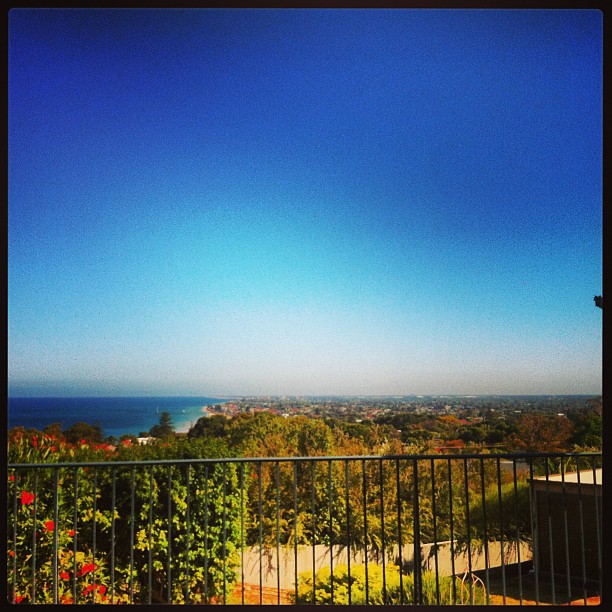
    Marino View

    As with a lot of things over the summer we too have gone into a bit of hibernation. But we haven’t disappeared altogether.

    Over the last few weeks we have been able to return to Adelaide for a bit of rest and recuperation, well for me at least. Gill is currently doing an International Medical course called Intermed that will comprise the final subject for her Grad Dip and also a bit of a refresher on some international medicine before starting her Public Health term in late Jan.

    We have been extremely blessed by being able to not only stay with some of our close friends, but to do so up at their family beach house in Marino (see the view above).

    Soon it will again be all steam ahead, with the 2013 CMS Summer Encounter starting tomorrow, and with preparations for the upcoming semester at Ridley to be finalised, and much more reading to be done.

    For now though, the view up here is rather enticing, and the cycling is starting to heat up before the TDU, and reading calls….

  • Another essay…. authoritatively!

    Another essay…. authoritatively!

    Tomorrow I will be handing up this paper, which ends the essay phase of the semester. Throughout i have written well over 20,000 words (and handed up 13,000 or so) in four papers across about 6 weeks. There is a significant part of me that thoroughly enjoyed the whole process.

    However, there is also a part of me which is glad the process is over… if only because exams are looming close on the horizon.

    For now though enjoy the Wordle from this paper.

  • Another one down….

    Another one down….

    Tis the season to be essays…. or something like that. Another essay has been written, although this was completed a little while ago and Ive been stewing on it and modifying bits for the last little while.

    The essays, and the year, march on however….

  • Another essay done

    Another essay done

    I guess this means that another essay is done. This time on how Wisdom Literature helps our understanding of mission theology.

  • Being Thankful…

    Today in chapel we had the privilege of hearing from Peter Brain, the recently retired Archbishop of Armidale, speaking on the topic of thankfulness. His brief message struck a chord with me, especially with the degree to which our society and culture is somewhat less than thankful for the things that we have.

    At the moment this is probably best seen with the Australian response to the Olympic medal haul, and the accusations that are flying around in response to the less than optimal results.

    All too often this sort of attitude pervades our churches and our Christian walk as well, rather than being thankful for even the little things that we do have in life. How much does the whinging and negativity of our world spill over and threaten to drown the church. How much would we, and our communities be changed by being thankful for what we have, even things as little as the sunset.

    In all of this I’m reminded of the power of being thankful, and of the transformative attitude which that brings. I don’t think I’ve seen it presented more clearly than in the life of Mary Karr, a poet and essayist. She writes:

    So Tom suggested that I start thanking God as I went through the day. And I said, ‘What are you talking about?’ He said, ‘Well, you know, if your car has a flat and somebody stops and helps you, just say thanks.’ I said, ‘That’s ridiculous.’ But again, over time I started doing it, and I found a kind of quiet core ‘south of my neck’ is the only way I can put it, where I began to get some sense of peace or certainty or clarity or quiet, just a kind of quiet.

    But all of a sudden it was almost like the world bloomed into being. I realised that I had been so focused on complaint for most of my life that I had just missed a lot of the good things that were going on. My world view, which I had thought of as so ‘realistic’ because I didn’t believe in God, was in fact very warped by a kind of naturally depressive state of mind. It’s almost like the world was black and white and it started to bleed into technicolour before my eyes.

    You can read more of her story here: http://www.abc.net.au/radionational/programs/encounter/unlikely-catholics-addiction-conversion-and-poetry/3255234 it is certainly a powerful testimony to God working through thankfulness.

    Personally its a challenge to me as well, all too often I find myself beset with a complaining spirit, rather than stopping to give thanks, and in talking to the people around me I don’t think I’m in any way unique in this.

    Perhaps we should all be stopping more often to give thanks in life, and how much of a difference would this make in our walk?

  • Words with friends…. how do we use language?

    This blog post is probably one of the more theologically oriented posts that will intersperse this blog, when I get a chance to think and write, and in this case it comes while im sitting on a plane between Melbourne and Singapore. It stems from a twitter discussion that I had with Jason Harris (@tojasonharris) during the Oxygen11 conference, on the topic, and has been fleshed out by a couple of shorter discussions with Arthur Davis (@arthurgdavis and blog) and others around college.

    I’m sure that everyone reading this would be familiar with the saying that a picture can convey a thousand words, although the linguistic corollary that a word may have a thousand meanings may be slightly more hazy to some out there. Yet despite it being somewhat less common, I think that intrinsically we all know it to be true. The wide range of meanings imbued within a word are readily apparent to even a young child in primary school being called a ‘nerd’ for the first time: What does it mean… i don’t even like Star Trek… i like books though; and the connotations rapidly progress onwards, like an avalanche tumbling down a mountain.

    However, it appears that the general populace is commonly less aware of the various methods that the nuances of language may be used to influence and even generate the opinions and populace of a wider community. While I was studying Psychology at the University of Adelaide, I came across the work of Dr Martha Augoustinos, including her paper on the different uses of discourse regarding people seeking refuge in Australia via non-standard seafaring methods. In a rough summary, some papers would refer to such people as the term ‘refugees’, which has a relatively positive meaning, while others would choose ‘boat people’, a relatively neutral descriptor, and yet other media would opt for negativistic language such as ‘illegal immigrants’. Unsurprisingly the discourse features that were chosen by each media outlet harmonised nicely with their own intended audience, and polemic. Each term describes the selected people, although all portray them in wildly differing lights.

    Ok, ok, I hear you cry, what relevance does this have to me? Fair question, and indeed one which I think needs addressing. For, I think, that even in the Church we have a tendency to place labels completely infused with meaning upon people, whether or not they completely endorse or embody all aspects of that label. Furthermore, as social psychology has tended to indicate, these labels are excellent tools for our psyche to orient our sense of in-group identification, and in correlation our out-group tendencies. Lets go for a quick hypothetical example:

    Bob is living in Sydney, he is a strong Christian, and has been studying the bible for most of his life, he works in the city and all around him he finds that there are strong women who are in various positions of leadership. Through his experience he sees women capable of exercising leadership, and through cross pollination surmises that given equal training and equal capabilities, there should be little to nothing wrong with a woman being in a position of leadership in the Church; excited by his new theological thought process he enthusiastically announces at bible study that he believes in womens’ ordination. His bible study leader John is perturbed, and after a bit of quick Googling he discovers that the strain of theology that espouses this is commonly labelled as Egalitarian, and reading on he quickly prepares a bible study for the next week dealing with the subordination of the Trinity. Bob on the other hand still believes in an orthodox exposition of the subordination of the Trinity.

    Now this example is admittedly a bit far fetched, but the use of labels to classify and segregate in- and out-groups is common, even within the Church, and can have disastrous consequences; and its not just the quick Complementarian and Egalitarian descriptors which are bandied around. Reformed, Evangelical, Arian, Modalism, and thousands more are slapped on people regularly, even if they may not hold all of those beliefs; and whether we intend it or not  these labels are quick to cause division within the Church.

    So what should we be doing about it? Before we consider that perhaps its worth considering two existing outcomes of it. Firstly one area that I have lived in has, either consciously or unconsciously, decided to prioritise the unity of the Church over individual differences, and therefore very few people have opportunities to talk about controversial issues, which are inevitably the issues that end up gaining a label, and dividing the Church. As much as that may appear healthy, the suppression of discourse commonly leads towards dissension and fracture anyway, and so it is likely to be counterproductive in the longer term.
    The other end of the spectrum in my experience is an area where these sort of issues are on the table at all times, discourse and even support of a label or position is even encouraged. Unfortunately while fleeing from suppression and fostering discourse the opposing situation has become as fractured as a vase brutally discarded, and subsequently labels are thrown around with little to no pastoral regard for their consequences.

    What then is the solution? I, for one, don’t know for certain; I do know however, as with many solutions, lies somewhere between the two opposites which I have experienced, and for each individual the ideal is likely to be different. Perhaps the better question is how we can foster an environment which is non-judgemental and divisive within our churches?
    Anyone have any ideas or feedback?
  • Bugs in the System

    Well it seems that we have had some bugs somewhere in the system, so it appears that some of our posts havnt been going live.
    Expect a backlog of posts from the last little while 🙂

  • Travel Series: Strasbourg, Schwarzwald, Konstanz

    The next section of the trip was a little bit of a blur for me. I managed to contract some sort of bug as we left Heidelberg and so although we kept up with most of our plans the next few days couldn’t be as full as we had hoped.


    Nevertheless, our first stop from Heidelberg was Strasbourg. The first thing we noticed about going into France was the drivers. In Germany even though everyone is driving at ridiculous speeds on the Autobahn, the drivers are very responsible, will never undertake, and rarely do slow drivers sit in the fast lane. The short time that we drove in France demonstrated that this is not a general European trait! French drivers are much more like Aussie drivers.

    Strasbourg was a fascinating mix of French and German culture. It was certainly a bit of a shock to our systems trying to work out how to communicate in French rather than German! We visited the very grand catholic cathedral and then also visited Martin Bucer’s, and Calvin’s churches. The outstanding feature of the protestant churches compared to the catholic was how bare they were. Bucer had particularly made a stand against iconography and although there were still stained glass windows, the church was much more sparsely decorated, and interestingly brighter than the cathedral.

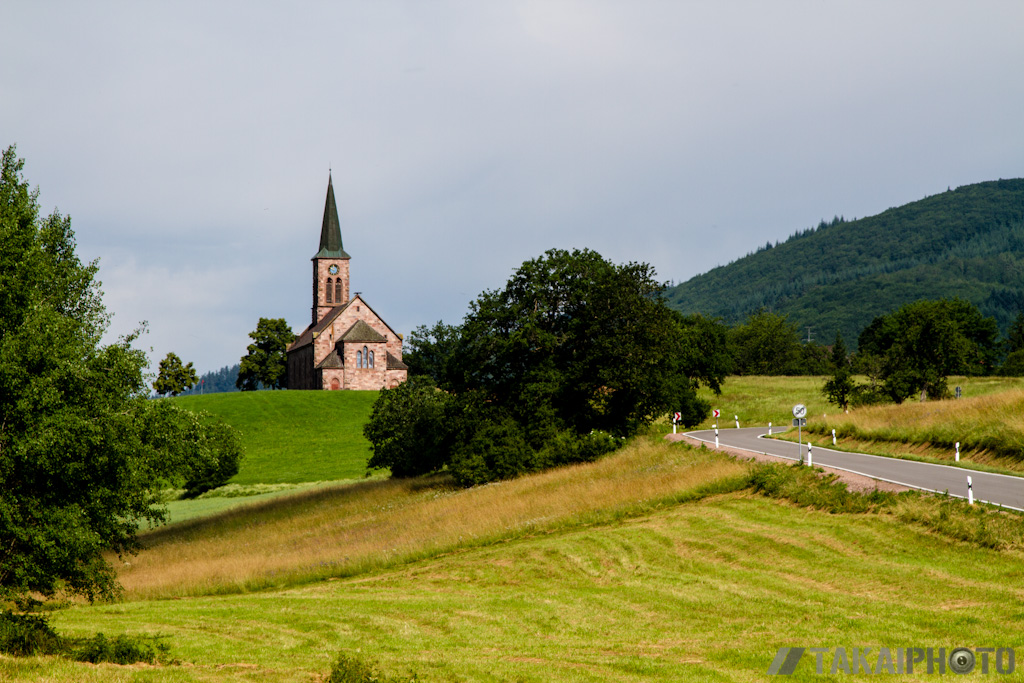
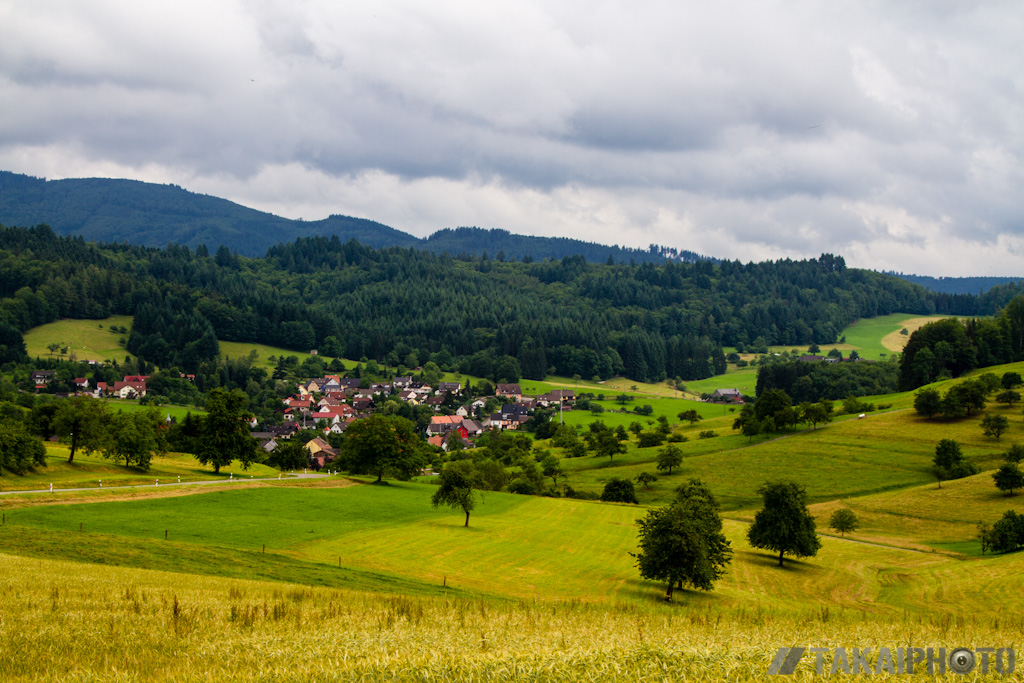
    We went on to stay in the Black Forest region for a few nights. It was good timing as we simply rested and I certainly needed it, feeling under the weather. We did get to look around the beautiful scenery and really enjoyed the sense of isolation within God’s creation.

    From here we drove through the hills towards Lake Constance. The scenery was striking and very enjoyable. When we arrived at Konstanz we were able to visit the Jan Hus museum. He was a Czech reformer who was burnt at the stake in the 1400s for his stance against the Catholic church. We also visited the memorial at the site where he was burnt a the stake, which is right in the middle of a residential area and next to a bus stop! Konstanz itself was much busier that I had expected, it is on the shores of Lake Constance and is obviously a popular tourist destination with a lot of Italian influence. The weather was great and we stayed in a lovely guesthouse for the night before heading onto Switzerland the next day.