Blog

  • Academic Catchphrase – Help Sourcing a Calvin Quote on ‘Muzzling Dogs.’

    Academic Catchphrase – Help Sourcing a Calvin Quote on ‘Muzzling Dogs.’

    UPDATE: See end of blog post.

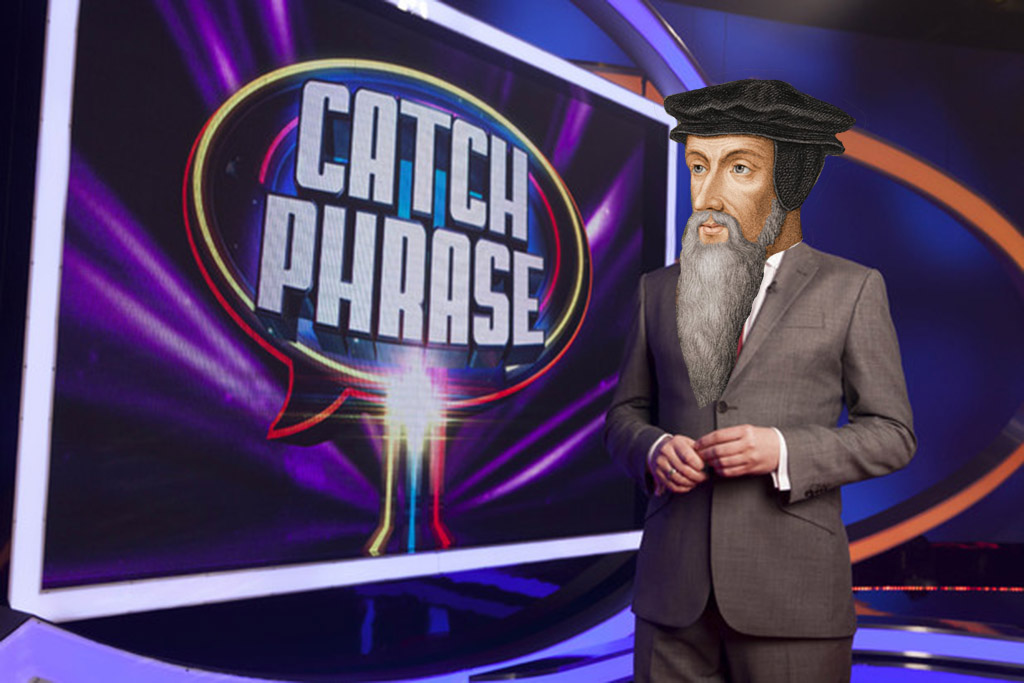
    At times finding quotes and references in student essays, and even in academic works, can be a bit like the old gameshow Catchphrase. Although on the whole quotations should be clearly referenced, and therefore relatively easily found, there are occasionally those which send you deep down the rabbit hole and turn up only loose ends. One of these quotes that keeps raising its head is this quote attributed to Calvin:

    ‘But we muzzle dogs, and shall we leave men free to open their mouths as they please.’

    Over the last couple of decades it has been popularised in a wide variety of sources, and generally attributed to Calvin’s works on Deuteronomy. It is understandable why it has become popular: it is polemical, expresses a censorious sentiment that is abhorrent to modern ears, and does it with a degree of vitriolic rhetoric that grabs the attention. On that basis it gets trotted out regularly to support issues of religious censorship such as this piece from the ABC on the Zaky Mallah/QandA affair: http://www.theage.com.au/comment/the-abc-wasnt-wrong-to-have-zaky-mallah-on-qa-20150623-ghvaow.[ref]Thanks to a friend for pointing this one out[/ref] However, the majority of these secondary works, if they cite anything at all, refer not to any work by Calvin, but to other secondary literature.

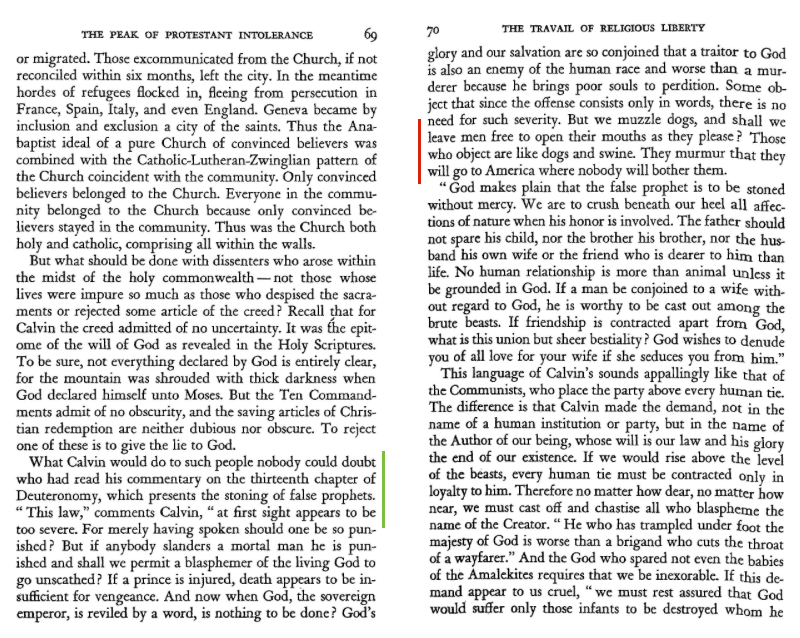
    When these references are chased through the rabbit warren eventually lead back to The Travail of Religious Liberty by Roland Bainton (1951).[ref]The full text of this is out of copyright and archived on Archive.org here: https://archive.org/details/travailofreligio012230mbp[/ref] The quote itself is found on page 70 of the book, but has no citation for the quote itself (update: citations were in an end-note that was missing from my copy). For context, here is the two page spread extracted from the archive.org edition with the pertinent pieces highlighted:
    Screen Shot 2015-09-03 at 10.25.50 am

    The full quote reads:

    ‘But we muzzle dogs, and shall we leave men free to open their mouths as they please? Those who object are like dogs and swine. They murmur that they will go to America where nobody will bother them.’ [ref]Bainton, Roland H. The Travail of Religious Liberty – Nine Biographical Studies. Philadelphia, PA: Westminster Press, 1951.,70.[/ref]

    In the text this quote has no ending quotemark, although the next paragraph starts with a further quotemark, and so one may presume that these words are intended to be cited as a quote from Calvin, especially as the opening quotemark on page 69 reads ‘“This law,” comments Calvin “at first sight…’ It is relatively safe to take the understanding that Bainton is intending to quote Calvin at this point.

    Indeed in the opening sentence of this paragraph he writes:

    ‘What Calvin would do to such people nobody could doubt who had read his commentary on the thirteenth chapter of Deuteronomy’[ref]Roland H. Bainton, The Travail of Religious Liberty – Nine Biographical Studies (Philadelphia, PA: Westminster Press, 1951)., 69[/ref]

    From this the natural reference for Bainton is that of Calvin’s words on Deuteronomy 13. However, here lies the multi-faceted problem.

    Firstly, in the reference editions of Calvin’s commentaries, there is no distinct commentary on Deuteronomy. Rather there is a commentary on the Harmony of the Law, which contains many of his words on Deuteronomy. It would be a reasonable expectation to find this quote in the Harmony of the Law when Calvin deals with Deuteronomy 13, and it was my first port of call, but there is nothing there. I can find no references to dogs, canis, and muzzling can be found in any of the versions of the work I have looked at (the work from the Calvin Translation Society is the primary reference here).

    The second location to search was that of the Institutes, as Calvin occasionally draws upon various passages and provides a mini-commentary to support his points. Again no references to muzzling dogs may be found in any of the four editions of the Institutes that I referred to.

    The third place to search was Calvin’s sermons on Deuteronomy that he preached in October of 1555. At first this source seems to yield some parallels, with Calvin preaching regarding ‘dogs’:

    ‘At a word, men would have either dogs or swine in the pulpit. This is the thing that they seek for; and this is mens desires in most places; who instead of good and faithful servants to God, do choose dogs and swine’[ref]Calvin, John. Sermons on Deuteronomy. Translated by Arthur Golding. Facsimile edition edition. Edinburgh; Carlisle, Pa.: Banner of Truth, 1987., 538[/ref]

    In this sermon, and the sermon preached in the following week, Calvin does talk about dogs and swine (dogges and ſwine) in a few places. However, all but one are paired as ‘dogs and swine,’ while the final reference is to the Papists and Cardinals as being dogs. Throughout his sermons on Deuteronomy I can find no reference to muzzling at all.

    These three locations form the core of the material that Calvin wrote or preached on Deuteronomy. But in case I was missing something I also ran searches for ‘muzzling’ and ‘dogs’ throughout all of the resources I could find electronically (the Calvini Opera, Archive.org, CCEL, StudyLight etc provided ample resourcing). Logos, DevonThink, were used for basic searches and a custom LSA[ref]Latent Semantic Analysis is a natural language computational linguistics tool[/ref] corpus was used to see if any inferences and alternately translated words could be detected. None of these searches returned any significant results, with the majority of hits being those found in Calvin’s sermons on Deuteronomy 13. All in all I cannot find any reference to the core of the original quote regarding muzzling dogs anywhere in Calvin’s works.

    However, I have another reservation about the full quote from Bainton’s book. The quote continues on to indicate that ‘they murmur that they will go to America where nobody will bother them.’ Given that Bainton is talking about Protestant religious persecution in this chapter, this indication seems somewhat anachronistic. Presuming the quote is genuine, at latest it would have been written in c.1559 when the last of the material on Deuteronomy (Commentary on the Harmony of the Law) was written, as from this quote in Vie de Calvin

    Towards the end of that year [1559] they began in the Friday meetings the exposition of the four last books of Moses in the form of a Harmony, just as Calvin assembled the material in his commentary which he had published afterwards. [ref]CO 21:90. See DeBoer Origin And Originality Of John Calvin’s ‘Harmony Of The Law’, The Expository Project On Exodus-Deuteronomy (Acta Theologica Supplementum 10, 2008) for more details[/ref]

    At this time the prime settlements in America were Catholic in nature. The only reference to a Protestant site that I can find is that of Charlesfort-Santa Elena in South Carolina, the site of a Hugenot settlement. However, apart from this failed settlement where may this American settlement refer to. Indeed if, as Bainton is arguing, this quote is referring to Protestants fleeing Europe over persecution (Bainton later links the Michael Servetus incident here), then it would make no sense to flee to a location that was experiencing significant religious persecution if they want to go somewhere where ‘nobody will bother them.’ This sentiment fits far better in the early-17th century, rather than the mid-16th century.

    This historical tangent aside, what do we make of this quote? Certainly if one wants to convey the sentiment of religious persecution and debate, a case may be mounted from Calvin’s works. But I would argue that this quote is not a reliable source for it. I still cannot find any reference to the quote, nor any significant material on fleeing to America, in any of Calvin’s works. I have enquired with some Calvin scholars to no avail—or with some no reply.

    Therefore I am turning to the broader internet, if anyone can supply the location of the quote I would be very interested.

    UPDATE:

    It appears that in my prejudice for trusting the validity of physical books over archive.org scans I had missed that Travails has its sourcing in end notes after the final chapter. Unfortunately the copy that I had sourced from a local library was rebound and missing the sources and index at the end of the book. Thanks to Richard Walker for highlighting this to me, see his Disqus comment for more details (unless Disqus isn’t loading again).

    However, I’m still not convinced by the translation that Bainton has supplied and will blog on that later.
  • Book Review: Understanding Gender Dysphoria – Mark Yarhouse

    Book Review: Understanding Gender Dysphoria – Mark Yarhouse

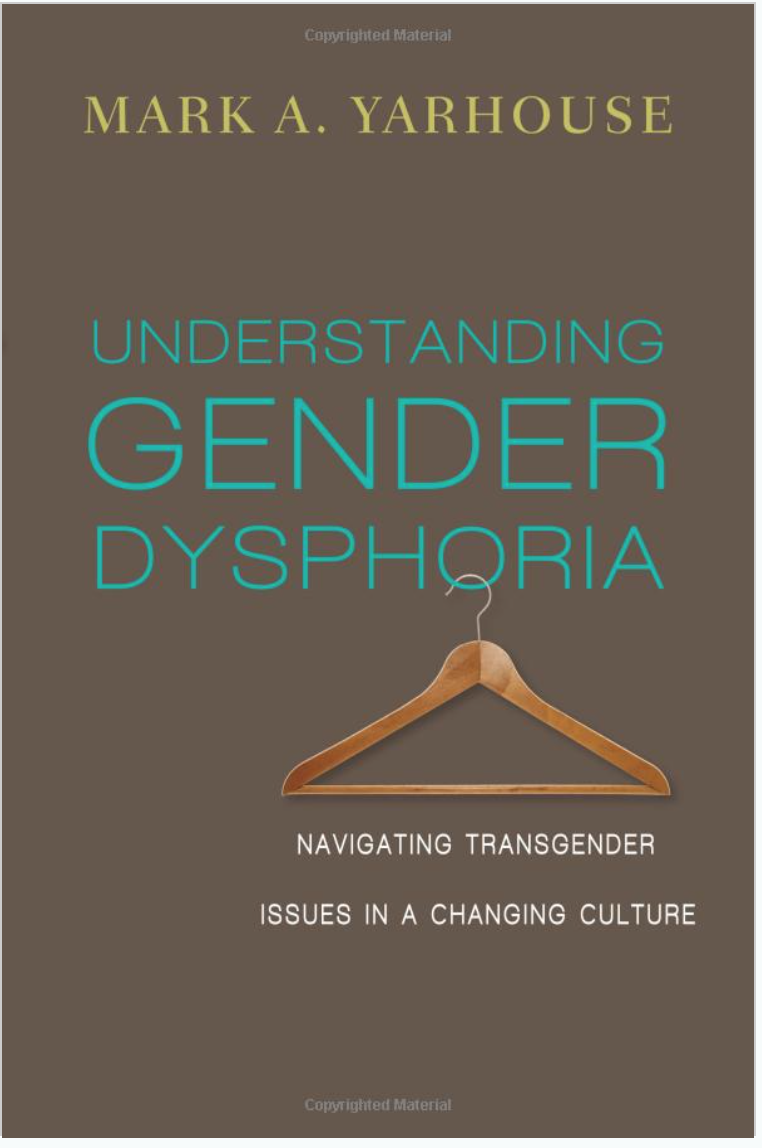
    Understanding Gender Dysphoria
    Mark Yarhouse; 2015. | IVP Academic | 191 pages
    978-0-8308-2859-3

    Gender dysphoria (GD) and transgender issues are currently a hot topic in the media and everyday discourse, thanks in no small part to the topic being thrust into the limelight by celebrity events. However, the current media focus on the topic doesn’t do justice to the complexity of the issue. Especially given the superficial gloss awarded to the psychological and medical aspects. From a psychological perspective, Gender Dysphoria [302.85]—or Gender Identity Disorder (GID) as it was known—has been described in the Diagnostics and Statistics Manual (DSM)—the psychological disagnostic handbook—since version III (1980) under different categories. My own interest in the topic originated with two friends announcing their identification as ‘trans’ and ‘gender identity dissonant’ (yeah, he was a Psych friend) around fourteen years ago. In particular, there has been a lack of helpful, well thought through analysis from a Christian perspective.

    A few books have been released recently, intent on speaking to this modern interest in gender dysphoria, and the first for review is the aptly titled Understanding Gender Dysphoria by Mark Yarhouse. This is a relatively slim book from Yarhouse, given his previous work on Modern Psychopathologies and books on therapy. As with his previous work he writes from a distinctly Christian perspective, although firmly embedded within the psychological discipline as a well-rounded practitioner. As such this book walks the fine line between disciplinary specificity and appealing to a broader audience. The introduction describes this tension well:

    ‘This book invites Christians to reflect on several issues related to these findings [sexual identity research], a broader research literature…and other anecdotal accounts. …I note that as we wade into this particular pool, we are going to quickly be in the deep end, as the topic is complex.’ (p11)

    However it is this tension that makes this book both appealing and somewhat unsatisfying. From my own background I will be reviewing it from both a psychological and a theological perspective, with all the conflict and overlap that this presents.

    Given Yarhouse’s aim of engaging with a broad Christian audience, he starts from a point that is relatively accessible to his audience. However, this accessible starting point is not without its costs, as the first few pages present a steep learning curve. By the second page of the first content chapter Yarhouse is deep within identity theory, chromosomal difference, and introducing a spectrum of gender identification. Although this book may be written for a lay audience it expects a strong degree of education, reflection and analysis. Drawing from his psychological background Yarhouse helpfully differentiates between biological/chromosomal sex, gender identity, and gender role/acts. It is this degree of nuance that is useful in defining aspects of the discussion up front.

    From the first chapter that seeks to appreciate the complexity surrounding gender dysphoria, the second chapter attempts to assemble a useful Christian perspective on the topic. The opening anecdote sets the tone for the chapter by highlighting a limited and closed-minded approach. Throughout this model building Yarhouse draws upon a biblical theology of humanity. From this he proposes three preliminary models for engaging with gender dysphoria: the integrity framework, the disability framework and the diversity framework. While these three frameworks represent usable approaches it is worth noting that of them none will please everyone. Conservative Christians will likely follow after the integrity framework, while abhorring the diversity framework. Similarly staunch supporters of Gender Dysphoria (in the DSM-5 sense) will likely support the diversity model while decrying the integrity framework. Nevertheless these three frameworks are a useful heuristic for approaching the issue. Yarhouse attempts to blend these three frameworks in presenting an integrated model that acknowledges ‘integrity of sex differences,’ drives for ‘compassionate management of gender dysphoria,’ and validates ‘meaning making, identity and community.’ From a theological perspective the anthropology feels quite shallow and I wish it wrestled further with the imago dei and Christian identity. Still this section is a good introduction to the topic, and will be useful even to those with no faith convictions whatsoever, due to the paucity of helpful literature on the topic. [ref]The majority of literature at a lay-level provides brief glosses at best, while more in-depth literature tends towards ‘clinicalisation’ and diagnostic issues.[/ref]

    From this chapter, the book moves onto an investigation of the Phenomenology and Prevalence (Ch4) and Prevention and Treatment (Ch5) of Gender Dysphoria. These chapters are presented from the perspective of the DSM-5 with some minor comparisons with the previous DSM-IV. Here Yarhouse’s clinical practice is set centre stage, with regular anecdotal excurses supporting and highlighting facets of the clinical definitions. Personally from my background in Socio-cognitive psychology, I would wish for more in these chapters on the DSM-5 update to the DSM-IV given the change from Gender Identity Disorder to Gender Dysphoria. This change in the DSM-5 acknowledges the increasing ‘medicalisation’ of the diagnostic criteria, but seemingly sidelines many of the identity issues in favour of focusing on the ‘distress’ involved in the diagnosis. (Koh, 2012) This aspect of identity and gender is the primary area that my inner socio-cognitive psych wants to see addressed and engaged with further from a Christian perspective, especially concerning issues of cognitive dissonance in this sphere.

    The final section of the book envisages a Christian response from both individuals and the broader community (or institution). These chapters seek to cement the theory and specialist praxis within the sphere of Christian community. Ultimately these chapters are likely to be the most useful to the intended audience and have the most impact; my psychological and theological wishes aside. These chapters paint a picture of a church that seeks to love and engage with those who have gender identity concerns. Furthermore, the picture that Yarhouse paints is certainly not the whitewashing of the issue that is commonly presented, nor is it the seemingly random spatters of paint that resemble a church that has not wrestled with these issues. The practical application here will greatly benefit churches and individuals alike.

    Ultimately this book provides an invaluable foray into the issues surrounding Gender Dysphoria/Gender Identity Disorder. It seeks to present a strong case for understanding gender dysphoria from a biblical, theological, pastoral and psychological standpoint. The argument presented will certainly not please everyone, with many conservatives seeing it as capitulating and many progressives seeing it as not radical enough. Personally there are times I wish that certain issues were investigated further, or extricated from the holistic model to be examined individually. However, despite these issues the book makes an important contribution to a sorely neglected issue within the church, and our society, today. All readers, even those who have no faith affiliation, are likely to find this book useful in addressing the basis of their exploration in understanding gender dysphoria.

    I hope that Gill can also review this book from a medical perspective in the near future.

    This book review was originally published on Euangelion and archived here. 

  • Personal Stories and Narrative Identity

    Personal Stories and Narrative Identity

    Identity is a hot topic in our society, with regular articles on ‘How to find your identity’ and what identity means in a shifting culture. Advocates on all sides of the culture, gender and sexuality wars also appeal to identity as a core ideal worth defending. However, from the broad usage of ‘identity’ across these different scopes I get the feeling that many of these ‘dialogues’ are really talking cross-purposes and using different definitions of identity. So how do we think about identity?

    Well one of the helpful ways of thinking about various forms of identity is from the perspective of story telling. Simply put if you were to tell the story of your life how would you go about recounting it? What would you emphasise, and what would you leave out? Which events have shaped your life, and which have fallen by the wayside unnoticed? How do you integrate all the different facets and experiences that you have?

    I stumbled across an article over on the Atlantic that elaborates on some aspects of Narrative Identity from the perspective of telling our own personal story. It is a very useful way of figuring out identity issues, and as we struggle in a world that values identity highly, but doesn’t have a strong grasp on it, it will become invaluable. For Christians the value of Christian identity is similarly core, although just as tenuously grasped.

    This short snippet gives the gist of the article:

    In the realm of narrative psychology, a person’s life story is not a Wikipedia biography of the facts and events of a life, but rather the way a person integrates those facts and events internally—picks them apart and weaves them back together to make meaning. This narrative becomes a form of identity, in which the things someone chooses to include in the story, and the way she tells it, can both reflect and shape who she is.  A life story doesn’t just say what happened, it says why it was important, what it means for who the person is, for who they’ll become, and for what happens next.

    I highly recommend you go and read the rest: http://www.theatlantic.com/health/archive/2015/08/life-stories-narrative-psychology-redemption-mental-health/400796/

    In addition I will continue to be posting things on identity, gender and social identity in the next little while. Many of which will build on some of the concepts that I’m raising now.

    Let me know in the comments what you think of Narrative Identity.

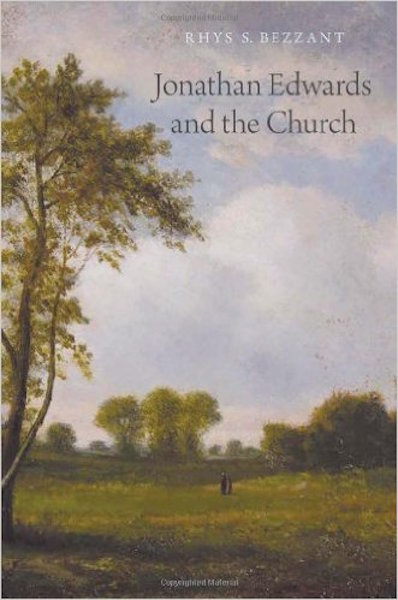
  • Book Review: ‘Jonathan Edwards and the Church’ by Rhys Bezzant

    Book Review: ‘Jonathan Edwards and the Church’ by Rhys Bezzant

    Jonathan Edwards and the Church
    Rhys S. Bezzant; 2014. | OUP USA | 328 pages
    978-0-19-989030-9


    Although Jonathan Edwards wrote and preached on an exceedingly wide variety of theological subjects, many scholars declare that he did not have any independent ecclesiology. Rather that his ecclesiological impulses were driven by social and broader theological focuses. In Jonathan Edwards and the Church Rhys Bezzant demonstrates that Edwards actually held a robust ecclesiology that took into account both social and theological drivers. Bezzant sets out to expound Edwardsean on his oft-repeated model of the church as a ‘focused domain where God’s promises, presence and purpose are to be discovered.’ (ix) In doing so he opines that Edwards’s ecclesiology was ultimately ‘a revivalist ecclesiology within a traditional ecclesiology of nurture and institutional order.’ (xi)

    In order to investigate Edwards’s ecclesiology Bezzant follows a diachronic model, describing the various aspects of Edwards’s ministry, writings and church engagement throughout his life. In chapter one Bezzant paints a rich picture of the church world of the New England colonies before Edwards’s ministry, highlighting a vast array of ecclesiological and social pressures upon the Puritan endeavour. Chapters two, three, and four trace Edwards’s ecclesiological development through the three primary stages of his life—delineated by two works A Faithful Narrative in 1735 and A Humble Attempt in 1747. Bezzant traces Edwards’s reflections from his less-conventional conversion narrative through his early life, developing theology and burgeoning ministry—the period heavily influenced by the Great Awakening—and then into his mature ecclesial ministry and global focus. These chapters mine the depths of Edwards’s own writings—recently published as a letterpress edition by Yale University Press—as well as the copious secondary literature on the variety of topics. Within the investigation of Edwards’s writings these chapters are shaped by the contours of the New England history and are firmly set within their broader context.

    Throughout Bezzant helpfully shows how wider theological and social concerns impacted upon the fledgling colonies and does not seek to divorce Edwards from his historical milieu. This dual focus assists in understanding Edwards’s ecclesiology as well as how it has shaped evangelical patterns in the following generations. Although there is little room for sustained modern theological reflection and application—likely a product of this forming a doctoral dissertation for the Australian College of Theology—the passion for the church of Bezzant and Edwards shines through and any astute reader will be able to draw concrete links and applications with ease. Observations such as Edwards’s description of the church functioning as a tree are ripe for reflection and harvest by the reader. (101) However, when the space permits, brief observations gleam from the text such as when Bezzant observes ‘the church is an expression not just of pastoral or apocalyptic functions but of prophetic aspirations too.’ (198)

    In the final chapters Bezzant draws the themes of the book—and Edwards’s ecclesiology—together and highlights the weekly ecclesiological routine of Northampton and the broader New England church. This summary in chapter five focuses upon worship, discipline and polity and assists the reader in seeing how Edwards’s ecclesiological vision played out at a broader scale—even if imperfectly. Finally Bezzant reflects upon the ecclesiological tensions and pressures present within Edwards’s ministry and concludes that his ecclesiology ‘highlights the orderly processes but not the ordinary origins of the church’s life.’ (260) This organising theme of ‘orderly but not ordinary’ plays out throughout the book and helps to strike a balance between the extremes of each theme.

    While Jonathan Edwards and the Church is aimed at an academic audience, the book will appeal to academics, clergy and intent readers of all stripes. It reads easily and engagingly covering a wide variety of theological and social topics with ease. From start to finish Bezzant is comfortable with Edwards as his primary interlocutor and with the host of secondary voices in the galleries. If there is one minor quibble it is that the diachronic path can make tracing certain theological themes hard at times, but not insurmountable. Although he provides little modern theological application, this is likely of benefit as the observations in Jonathan Edwards and the Church are at their best when properly digested and contextualised. Ultimately it is fitting to end with the words that Bezzant chose to end his book with:

    ‘His [Edwards’] insights, scattered amongst his works, can be for us today a modest lamp for our path, even when we struggle to fulfill our own calling to be a city on a hill.’ (260)


    This review originally commissioned for Sparklit and EFAC Vic-Tas.

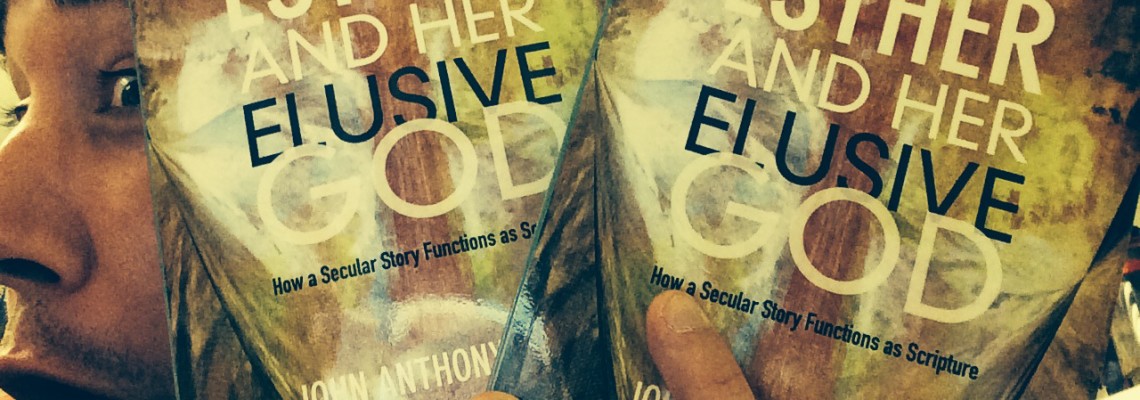
  • Book Review: Esther and Her Elusive God

    Book Review: Esther and Her Elusive God

    One of the many joys of having children is getting to experience different aspects of your childhood all over again, albeit in a different form. I have alluded to some of these via the various reinterpretations of children’s stories and nursery rhymes on this blog. However, given my current training in biblical studies one of these aspects that interests me is how various bible stories are presented for kids. These stories come in a variety of forms, from the simple board picture books through to cartoons.

    hqdefaultBut out of the whole host of stories there are a few that irk me with their retelling: Daniel, David, Jonah etc. Notable amongst these is the book of Esther, which usually gets transformed into a Disney/Cinderella type redemption narrative. Therefore it was with interest that I saw that a friend of mine published his thoughts on the book of Esther last year in Esther and Her Elusive God.

    This book from John Anthony Dunne squarely addresses the elephant in Esther’s room: the lack of God in the story. Dunne begins by proposing that the point of Esther isn’t that God is merely the subtext behind the action that is going on. But rather that the book functions to highlight ‘that the elusive God of Esther was steadfast and faithful, preserving his people though they did not deserve it.’ (5) In order to address this point he considers the secular nature of the story through three aspects: the Compromise of the Israelites in the narrative, the relationship of the narrative to the Covenant, and the reception history of the book of Esther and its subsequent modifications in the Septuagint (LXX) and Alpha Text (AT). Throughout the book Dunne provides convenient comparisons with modern retellings of the story, and their emphases on the changed narrative in order to reintroduce and highlight God in the story.

    The analysis portion of the book is carefully, slowly and cumulatively argued and builds a strong picture of the secular nature of the book. In this section the primary weakness and likely stumbling block for many readers lies in the treatment of Esther 4:13-14 which many scholars point to as the recognition of the implied deus ex machina at work. However, even here the argument makes cumulative sense if taken as a whole and this should not cause a careful reader too many issues. The final chapter of this the first part of the book addresses the redaction and additions present within the LXX and AT. This chapter presents some of the changes to the Masoretic throughout the lifespan of the book, although it would have been useful for the associated appendix to be integrated into the chapter as a whole.

    If the first part of the book advocated for a negative reading of the lack of God in the book of Esther, the second part asks the question of why the book is in the bible at all. In these last thirty odd pages Dunne drives home his argument that the secularity of Esther and its presence and context within the canon actually highlights the providence of God in the story. Here he argues that like Job, the book of Esther is another exception that proves the rule, that ‘Esther [is] a tale of how good things happen to undeserving people.’ (125) These two chapters as the crux of the book are arguably the highlight of the careful argument that has gone before, and I wish that he had the time and space to expand on this application further.

    Overall I believe Dunne provides a convincing argument, and one that resolves many of the aspects of the book that have irked me in the past without simply being a hagiographic retelling. However, in getting his argument across occasionally the book comes across as somewhat vindictive and vilifying in its highlighting the moral, cultic and covenantal failings of the characters. This slight polemical tone jars with Dunne’s otherwise laid-back style and will hamper the absorption by some audiences. This aside I found it an enjoyable and convincing read, and look forward to thinking about how it will impact on my preaching and retelling of the story for children.

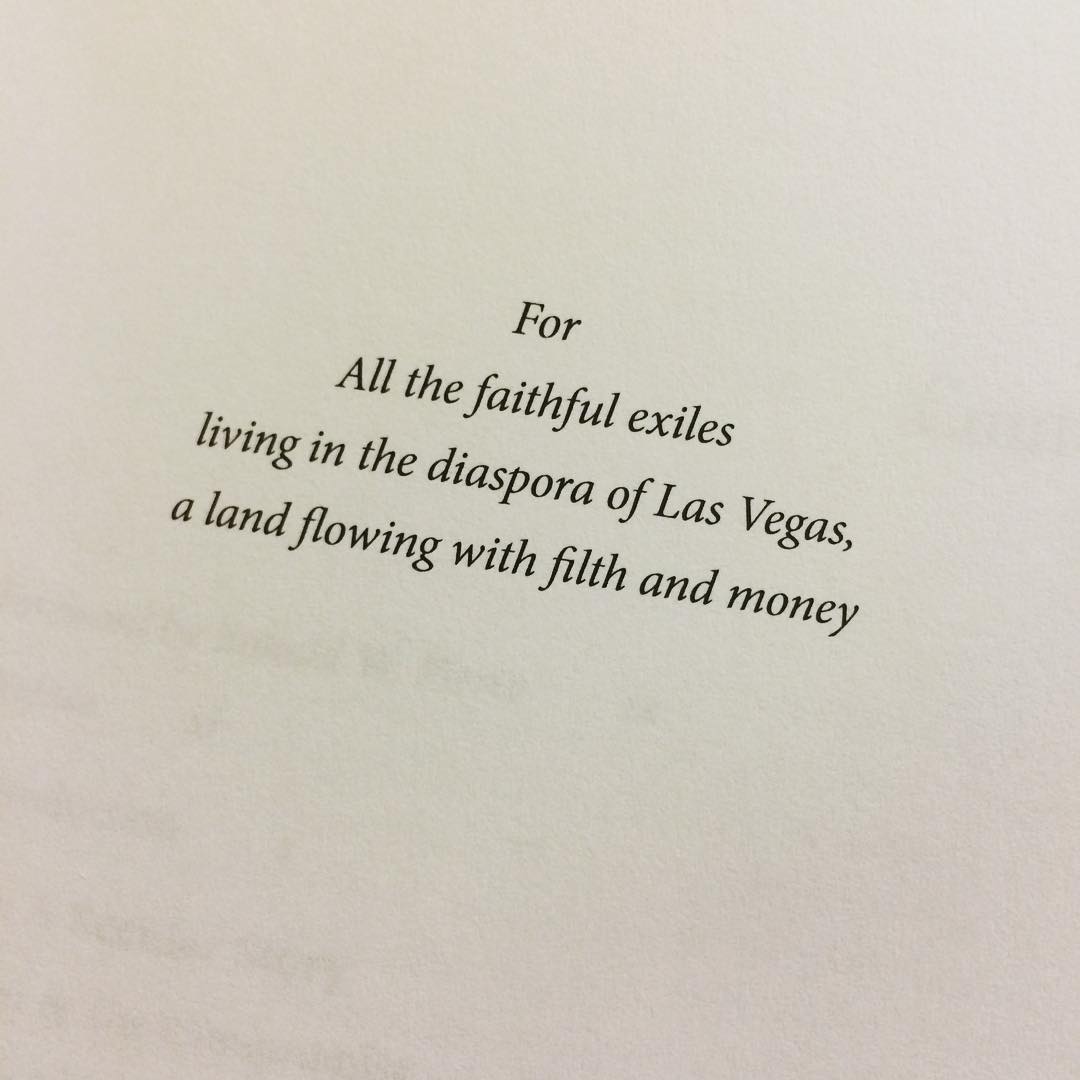
    In addition I quite like the dedication:

    10570005_953244694698823_1468668219_n


    John Anthony Dunne, Esther and Her Elusive God:How a Secular Story Functions as Scripture, Eugene: Wipf & Stock, 2014.

    Available: Amazon

  • Racism, Identity and Identities: a Question of Salience

    Racism, Identity and Identities: a Question of Salience

    Yesterday I had the time to read an excellent long form report from Gary Younge—a British reporter for the Guardian—on his upcoming departure from the United States, where he has been reporting for the past twelve years (http://www.theguardian.com/us-news/2015/jul/01/gary-younge-farewell-to-america). Throughout his report he notes that the overwhelming reason for his imminent departure is the continual subtext of racism that he identifies as present in his environment. Now while there are a swathe of interesting observations and great points in his article, I want to focus on just one aspect: identity and racism.

    In amongst his reflections of the swirling maelstrom of race relations he recounts an exchange he had with his son while walking to school:

    Explaining the complex historical and social forces that make such a dance necessary is not easy at the best of times. Making them comprehensible to a child is nigh impossible without gross simplifications and cutting corners. Once, during our 10-minute walk to daycare, my son asked if we could take another route. “Why?” I asked.

    “Because that way they stop all the black boys,” he said.

    He was right. Roughly twice a week we would pass young black men being frisked or arrested, usually on the way home. He was also four, and until that point I was not aware that he had even noticed. I tried to make him feel safe.

    “Well don’t worry. You’re with me and they’re not going to stop us,” I told him.

    “Why not?” he asked.

    “Because we haven’t done anything,” I said.

    “What have they done?” he asked.

    He had me. From then on we took another route.

    In amongst all of the social issues going on and the complexity of issues on the street, his son has rapidly assessed the situation at hand and identified a core issue: blackness. However this isn’t merely an issue with the melanin content of skin, but of something deeper—an identity of blackness. But some would argue that Gary Younge doesn’t fit the typical stereotype for the target of racial interactions, he is educated, employed and is British, not American.

    Yet here is where I think the crux lies for our modern society. We don’t deal well with identity.

    Within Psychology the stream of questioning that addresses this area is logically called Identity Theory. As Stryker and Burke write:

    Identity theory began with questions about the origins of differential salience of identities in persons’ self-structures and why identity salience may change over time (e.g., Stryker 1968; Wells and Stryker 1988). These questions led to the development of theory concerning ways in which people are tied into social structure and the consequences of these ties for their identities. [ref]Stryker, Sheldon, and Peter J. Burke. “The Past, Present, and Future of an Identity Theory.” Social Psychology Quarterly, no. 4 (2000): 284-297, 287.[/ref]

    Sounds logical enough. Certainly for Younge, the black American population, and every one of us we are each tied into our social structures by our identities. Not just black or white, but father, student, worker, mother, wife, single, married, and many more.

    But in this case what matters is the salience of those identities. When Gary Younge receives an extra frisking at a checkpoint, or Trayvon Martin was shot dead, or any one of the myriad of instances of racial abuse, the identity factor that matters is mainly reduced to one aspect: race. The other identities just don’t matter. All the other identities: gender, education, family relations, are all ignored in favour of the identity that is perceived to be most salient: race.

    In this aspect we can see one of the issues: we are terrible at engaging with multiple identity factors, and seek to reduce them to a single factor. Be it race, sexuality, religion, or many more. In each encounter one identity factor will likely be more salient than the others, and correspondingly others will perceive one factor as more salient than the others in our lives.

    Perhaps then the real solution to racism isn’t how to reduce the identity based discrimination, but how to broaden the salience of the perception of identity factors. This is a topic that I intend to explore further on this blog, keep an eye out.

    For now though, have a read of Gary Younge’s reflections, it is well written, sobering and eye opening: http://www.theguardian.com/us-news/2015/jul/01/gary-younge-farewell-to-america

  • Zotero++ Addons and Extensions

    Zotero++ Addons and Extensions

    For a while now I have had some minor annoyances with Zotero and how it integrates with Scrivener. A lot of it has to do with needing to use Word for the final output stage as the RTFScan in Zotero gives you very few other options.

    One of the problems here is that the Zotero shortcode referencing for these two citations looks the same:

    Dunn, James D. G. “John and the Oral Gospel Tradition.” Jesus and the Oral Gospel Tradition. Edited by Henry Wansbrough. Journal for the Study of the New Testament 64. Sheffield: JSOT, 1991.
    ———. The Partings of the Ways: Between Christianity and Judaism and Their Significance for the Character of Christianity. London : Philadelphia, Pa: SCM Press ; Trinity Press International, 1991.

    They both are cited as {Dunn, 1991} which leads to odd shortcodes such as {Dunn-Partings, 1991} etc.

    Well this morning I found a very neat option to do away with both the RTF Scan output, and therefore Word, and also to further differentiate citations. It also integrates Scrivener and Zotero with LaTeX, which will help with odd formatting and improve the output (as you don’t have Word messing about with all your nice formatting output from Scrivener).

    The core of this method comes from the Better BibTeX portion of the Zotero++ project: https://zotplus.github.io/better-bibtex/index.html

    This allows Zotero to integrate seamlessly with BibTeX and therefore allow you to export from Scrivener using the LaTeX markdown. This allows you to use nice Citekeys, which look like this: [#dunn_partings_1991] Those Citekeys are unique when exported from Zotero++ and so no more confusion of references.

    Tim Brandes has a good explanation of how to use Scrivener with MMD and BibTeX over here: http://timbrandes.com/blog/2012/02/28/howto-write-your-thesis-in-latex-using-scrivener-2-multimarkdown-3-and-bibdesk/

    In the next little while I will be experimenting with how it all works together, and will write somewhat of a guide for it. But from what I can tell it should all work well.


    In addition the Zotero++ project also hosts a few other neat plugins, such as AutoIndex that will regularly re-index your Zotero library keeping it all nicely up to date. Go check the site out.

  • The OODA loop and Cognitive Biases

    The OODA loop and Cognitive Biases

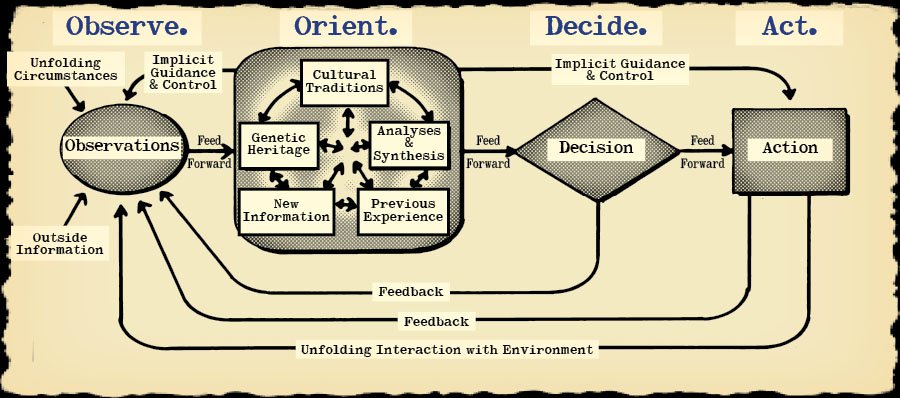
    This morning I gave a brief talk on several of the cognitive biases that have featured on here over the last few months, and their often stormy relationship with our rapid decision making/heuristic processes. During that talk I mentioned the OODA (Observe-Orient-Decide-Act) loop briefly, and a couple of people asked questions over morning tea on the loop. If you aren’t up to speed on the OODA loop then read this good article on it on the Art of Manliness blog here: http://www.artofmanliness.com/2014/09/15/ooda-loop/.  On the drive home I was considering at which levels our intrinsic cognitive biases affect the OODA loop. Using this diagram the Art of Manliness blog,t he majority of our cognitive biases unsurprisingly impact the Orient stage of the process.

    OODA-Loop-2-1

    However, even within this larger model (many other models just have the four stages  in linear or cyclic fashion) there isn’t any neat place for the biases. I would suggest that they act within the Orient stage as a sixth box, affecting the others, and also within the ‘Implicit Guidance & Control’ and Feed Forward stages of the O-O section of the loop. 

    Perhaps we need to do further thinking on where our biases affect our rapid decision making processes. Anyone have a version of the OODA model that incorporates biases tightly?

  • Dystopian Dr. Seuss reinterpretations

    Dystopian Dr. Seuss reinterpretations

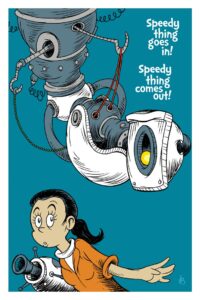
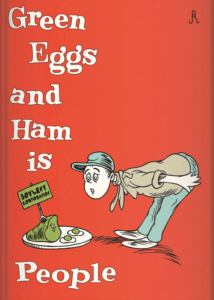
    Many of you will know that since becoming a dad, and reading lots of kids books again that I have become a bit of a fan of interesting reinterpretations of various kids books and stories. One of our little man’s favourite series is the Dr. Seuss books, and so we go through them regularly. So I was fascinated to see a series of fairly dystopian renderings of the Dr. Seuss artwork to other stories by an artist calling himself DrFaustus. All of the work here is his originals, and here are some of my favourites:

    There are plenty more on his DeviantArt site: http://drfaustusau.deviantart.com/gallery/34733511/Seussian-Gallery

    Excellent work!

  • What Font to Use?

    What Font to Use?

    Recently i have been doing a bit of graphic design and putting together a visual style guide, and i came across this handy page: http://www.smashingmagazine.com/2010/12/14/what-font-should-i-use-five-principles-for-choosing-and-using-typefaces/

    The author essentially goes through his Five guidelines for picking fonts, and working with them. Even better though his guidelines are couched and contextualised in a fashion concept, and so give a broader comparison.
    Helpfully he also takes the reader through a selection narrative, so that everyone can see how their font selections work together.

    However, there probably needs to be a 6th guideline added: Never use Comic-Sans. For the reasoning there see here: http://www.comicsanscriminal.com

    Really recommend reading it if you are doing anything with graphic design, even if (or especially if) you are merely dabbling in it.