Category: Theology

  • Book Review: Esther and Her Elusive God

    Book Review: Esther and Her Elusive God

    One of the many joys of having children is getting to experience different aspects of your childhood all over again, albeit in a different form. I have alluded to some of these via the various reinterpretations of children’s stories and nursery rhymes on this blog. However, given my current training in biblical studies one of these aspects that interests me is how various bible stories are presented for kids. These stories come in a variety of forms, from the simple board picture books through to cartoons.

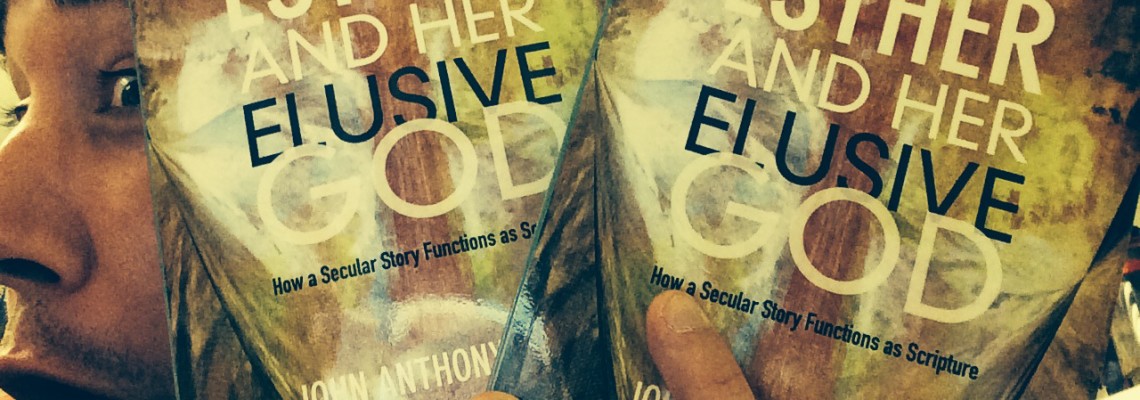
    hqdefaultBut out of the whole host of stories there are a few that irk me with their retelling: Daniel, David, Jonah etc. Notable amongst these is the book of Esther, which usually gets transformed into a Disney/Cinderella type redemption narrative. Therefore it was with interest that I saw that a friend of mine published his thoughts on the book of Esther last year in Esther and Her Elusive God.

    This book from John Anthony Dunne squarely addresses the elephant in Esther’s room: the lack of God in the story. Dunne begins by proposing that the point of Esther isn’t that God is merely the subtext behind the action that is going on. But rather that the book functions to highlight ‘that the elusive God of Esther was steadfast and faithful, preserving his people though they did not deserve it.’ (5) In order to address this point he considers the secular nature of the story through three aspects: the Compromise of the Israelites in the narrative, the relationship of the narrative to the Covenant, and the reception history of the book of Esther and its subsequent modifications in the Septuagint (LXX) and Alpha Text (AT). Throughout the book Dunne provides convenient comparisons with modern retellings of the story, and their emphases on the changed narrative in order to reintroduce and highlight God in the story.

    The analysis portion of the book is carefully, slowly and cumulatively argued and builds a strong picture of the secular nature of the book. In this section the primary weakness and likely stumbling block for many readers lies in the treatment of Esther 4:13-14 which many scholars point to as the recognition of the implied deus ex machina at work. However, even here the argument makes cumulative sense if taken as a whole and this should not cause a careful reader too many issues. The final chapter of this the first part of the book addresses the redaction and additions present within the LXX and AT. This chapter presents some of the changes to the Masoretic throughout the lifespan of the book, although it would have been useful for the associated appendix to be integrated into the chapter as a whole.

    If the first part of the book advocated for a negative reading of the lack of God in the book of Esther, the second part asks the question of why the book is in the bible at all. In these last thirty odd pages Dunne drives home his argument that the secularity of Esther and its presence and context within the canon actually highlights the providence of God in the story. Here he argues that like Job, the book of Esther is another exception that proves the rule, that ‘Esther [is] a tale of how good things happen to undeserving people.’ (125) These two chapters as the crux of the book are arguably the highlight of the careful argument that has gone before, and I wish that he had the time and space to expand on this application further.

    Overall I believe Dunne provides a convincing argument, and one that resolves many of the aspects of the book that have irked me in the past without simply being a hagiographic retelling. However, in getting his argument across occasionally the book comes across as somewhat vindictive and vilifying in its highlighting the moral, cultic and covenantal failings of the characters. This slight polemical tone jars with Dunne’s otherwise laid-back style and will hamper the absorption by some audiences. This aside I found it an enjoyable and convincing read, and look forward to thinking about how it will impact on my preaching and retelling of the story for children.

    In addition I quite like the dedication:
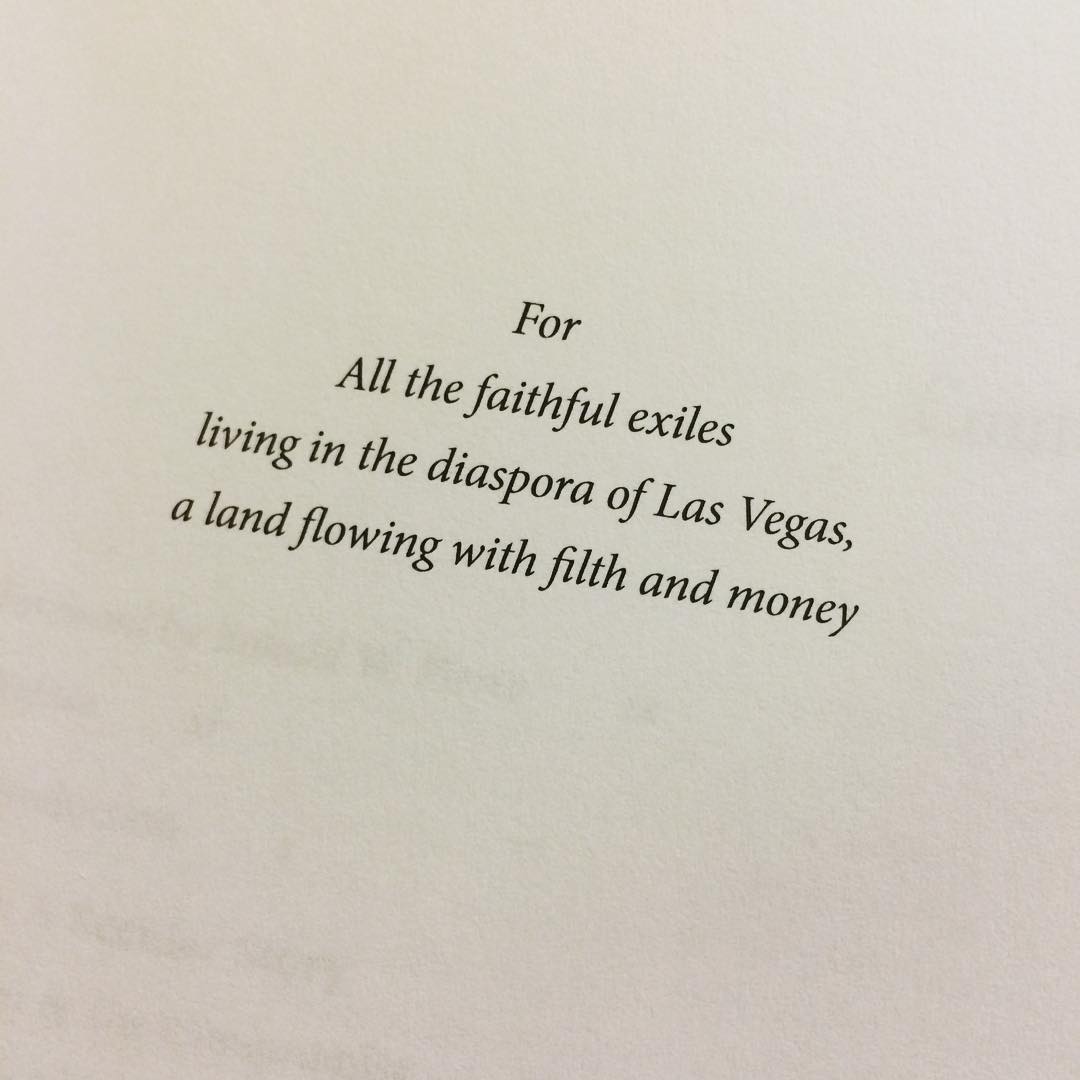
    10570005_953244694698823_1468668219_n


    John Anthony Dunne, Esther and Her Elusive God:How a Secular Story Functions as Scripture, Eugene: Wipf & Stock, 2014.

    Available: Amazon
  • Perfection and Excellence – What do we strive for?

    Perfection and Excellence – What do we strive for?

    ‘Perfect’ it seems has become a dirty word today, and even amongst Christian circles, which I find exceedingly curious. On Sunday I preached at my church (St Matt’s Prahran) on the line in the Lord’s Prayer ‘your will be done, on earth as in heaven’, as part of our series on the Lord’s Prayer. In the sermon I referred to Romans 12:2, where Paul speaks of discerning the will of God, and specifically describes it as: ‘will of God, what is good and acceptable and perfect.’ (Rom 12:2). As part of this I spoke about striving for, and conforming our will to God’s perfect will, and the implication for this as we work out God’s will in our life is that we too need to be striving for perfection and holiness in enacting that perfect and holy will (c.f. Phil 2:12-18). This suggestion was met with significant consternation and challenge, from a variety of angles, and at one level perhaps I shouldn’t have been surprised. Yet in many ways I am, and let me explain why.

    Romans 12:2 describes God’s will as ‘good and acceptable and perfect’ and the Lord’s Prayer calls us to pray that ‘your will be done’, essentially through us as God’s hands and feet in the world. Although we may not perceive or understand the perfection of God’s will from our perspective, scripture still affirms its perfection. However, certainly ‘Perfect’ has some different connotations and excess baggage in our modern world, but it doesn’t mean that it is bereft of meaning. To translate it as anything less than ‘perfect’ in the traditional sense is translationally and theologically doing ourselves a disservice. Rather it is up to us to redefine, or in this case restore the definition of the word, through our understanding and speaking about of the perfection of God and his will.

    But as people we are certainly not perfect, a quick scan of the news headlines shows in stark contrast our imperfection and failings. So how do we, as imperfect people, do the perfect will of God? Firstly I think we must acknowledge that even if we strive for perfection we won’t achieve it. Most, if not all, of our human endeavours, no matter the high quality and strivings for perfection, fall short in many ways. So many ways that we even have coined an -ism for it: ‘perfectionism.’ Now this certainly has its own set of failings and ‘costs associated with consistent failure to meet the high standards demanded.’ It is a trap we can fall into, and a danger we must avoid. However, if we are to be doing the will of God this doesn’t mean we don’t strive for the perfection of God’s will.

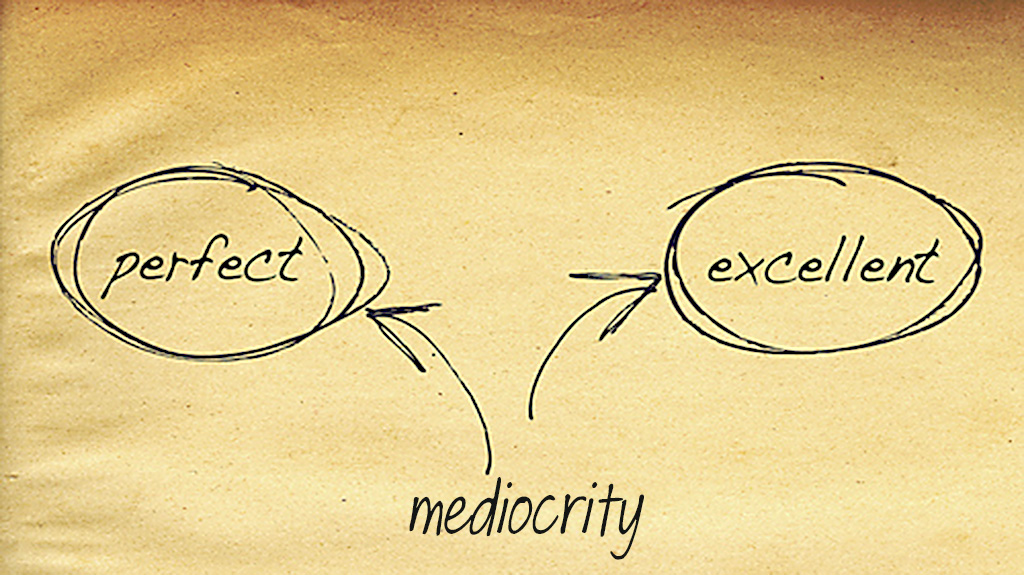
    The danger of not aiming for the perfection of God’s will was keenly noted by Francis Schaffer in his book Addicted to Mediocrity: ‘The modern Christian world … is marked, … one outstanding feature, and that is its addiction to mediocrity.’ While he was focused on the realm of arts and culture, his astute observation applies further afield. Often Christians so keenly recognise our human failings that we don’t strive for the perfect will of God, and settle for something far less than that. A mediocrity that only minimally glorifies God in the world.  A useful book I have read on this recently was Excellence: The Character of God and the Pursuit of Scholarly Virtue by Andreas Köstenberger. Although it focuses mainly on academic scholarship, the virtues he writes about are applicable to all walks of life.

    So how do we strive for the perfect will of God, while balancing that with our own human failings? Firstly I think we strive for God’s perfection, but in the full knowledge that now we will only achieve excellence. We may have to cap our expectations and endeavours so that we don’t fall into human perfectionism, all the while keeping in front of us the vision of that future perfection. It means more than just getting by, or ‘P-s make degrees’, or just scraping over the line. Secondly, it also means that we don’t create a type of ‘works righteousness’ based cultic practice around our personal perfection. Ultimately our perfection is found in Christ, not in our own endeavours, as it is Christ who has saved us, not by our own works. Finally, those good works prepared for us to do, we should do them to the best of our ability, eschewing mediocrity, praying that God’s perfect will be done, and working from that perfect script, even if we know we will only achieve excellence on this earth.

  • What is the Point?

    What is the Point?

    Recently I was at the ETS and then SBL/AAR conferences in the US, with about 15,000 people descending on San Diego for the SBL/AAR conference alone. While one of the Ridley lecturers, Andrew Malone, and I were heading out for dinner we encountered a lady who challenged us on what is the point in studying the bible if for so many it doesn’t change our actions. He has eloquently blogged about it over on the Ridley site here:
    http://www.ridley.edu.au/college-life/so-what/

    Let me briefly quote from his blog:

    All too many Christians known to us and to Amy are simply lazy or selfish when it comes to putting theory into practice … It’s our job to ensure that the members of God’s church for whom we’re responsible (and we ourselves) are adept and conscientious at asking ‘so what?’ and putting the theory into practice. Yes, we need to know how to distinguish Greek genitives and to rightly interpret Genesis and Hebrews. And we also need to know why and how to share Jesus’ compassion with a sin-laden society that’s made in God’s image, a compassion that quells physical hunger as readily as it strives to furnish spiritual nourishment. And we need to get on with it.

  • Enclave Theology and Social Identity

    Enclave Theology and Social Identity

    Mike Bird has a brief piece over here on the prevalence of Enclave Theology: http://www.patheos.com/blogs/euangelion/2014/10/enclave-theology/ which relates back to the previous post on how labels are used in scholarship. He quotes from George Hunsinger

    By ‘enclave’ theology, I mean a theology based narrowly in a single tradition that seeks not to learn from other traditions and to enrich them, but instead to topple and defeat them, or at least to withstand them.

    Broadly speaking this can be seen as a polemical form of legitimation of social identity in the wider social sphere. Similarly to how labels are used as well.

    However, ultimately the monsters outside the door become the monsters inside. As Pierre Bourdieu wrote

    social identity lies in difference, and difference is asserted against what is closest, which represents the greatest threat

  • Larry Hurtado on Labels in Scholarship

    Larry Hurtado on Labels in Scholarship

    This morning I noticed that Larry Hurtado has blogged on the prevalence of reductionistic and entrenched camp labels and their usage in scholarship. I must say I couldn’t agree more with the sentiment and how poisonous reductionistic and pejorative labels can be. Both when they are used to shore up weak and insufficient argument, and when they are used to compromise and tear down the arguments of others.

    I especially liked his take on scholarly works:

    But to my mind, for scholarship to mean anything, the only thing that counts is what a given scholar says/writes, and how well based it is:  How well it takes account of all relevant evidence, how soundly it is reasoned, how well it engages the positions of others, etc.

    As scholars and students, and even more as Christians, we should strive after excellence in our scholarly works, rather than bandying around labels to support or tear down.

    I do encourage you to read it on his blog over here: http://larryhurtado.wordpress.com/2014/10/20/more-on-labels-and-scholarship/

  • TGC on the Mars Hill Postmortem

    TGC on the Mars Hill Postmortem

    Following on from the last post I see that TGC has their 4 points of Mars Hill Postmortem, over here: http://www.thegospelcoalition.org/blogs/trevinwax/2014/10/16/the-mars-hill-postmortem/

    Their fourth point is roughly the point I was making in a cliff note form. I do encourage you to read their first three points though. But perhaps most poignant in there are these quotes from Tim Keller and John Stott:

    Tim Keller describes a “gospel-based ministry” not merely in terms of doctrinal correctness but as being “marked by loving honesty, not spin, image, and flattery.”

    Likewise, John Stott writes: The Christian minister should be preoccupied with the people’s spiritual progress and care nothing for his own prestige. 

    I highly encourage reading the whole thing.

  • A Cult of Personality – whose persona to follow?

    A Cult of Personality – whose persona to follow?

    Originally I wasn’t going to write on this topic, but this morning I was reading an old friend’s blog and started thinking about the situation, and these thoughts became notes, and became a small comment, and now this brief post. So the logical starting point for this post is here: http://www.dylanmalloch.com/2014/10/mark-driscoll-theology-vs-behaviour.html and with Mark Driscoll’s sudden resignation from Mars Hill (Christianity Today).

    Many of the words written on Driscoll’s sudden resignation have focused on specific aspects of his life, ministry, theology or church, but while these are all good perspectives to explore, I’m not convinced that these explorations will go much further than skin deep. Mark DriscollWhile there are a plethora of facets, historical and present, theological and personal, and many more that serve to build a bigger and stronger picture of the situation at hand, but one aspect I think has been overlooked a bit. I think that it is not the theological credentials or creeds that is at stake here, rather it is more about the cult of personality that was built up around Driscoll, and that is certainly not unique.
    Rather we see the same sort of implosions and resignations across a wider range of the church including many non-conservative Reformed Evangelicals. Issues with various pastors and leaders are rife in the wider church, and while snippets are heard briefly, they certainly don’t make national news headlines. I think that the case with Mars Hill got significant air time because traditionally conservative evangelical Christianity has followed the example set forth in 1 Corinthians and has rejected cults of leadership in the same fashion that is found in Paul’s admonition.

    However, our society as a whole certainly has not shied away from following after leaders and personalities, and perhaps the best example of this is MTV and the plethora of people following after the strong personalities in the public space. The cult of personality  appears intrinsic in human nature, and I think it probably reflects the middle category of Maslow’s hierarchy of needs: Love and Belonging. These needs are further intensified by interacting with strong social identity markers in an ever splintering social world, and seeking an in-group to feel at home with.

    But I think just as the Church is in the world, it imbibes this ever nervousness over social identity and so we too can be just as obsessed with status and and personality as early Corinthian church was. Just as the Corinthian’s were divided over Apollos vs Paul vs Cephas (1 Corinthians 1:12) so too the modern church follows after Driscoll, Calvin, Dollar, Houston etc etc. Across the church as a whole there are strong tendencies towards cults of personality, and driven by a complex web of social identity construction and formation. While certainly a cult of personality needs a personality to follow after, I think there is also a strong onus on those sitting in the pews, the general congregation, and the Church catholic.

    Perhaps a few illustrations are warranted. The cult of personality is easiest to see in the case of Driscoll and the wider range of mega-church preachers, and even easier again to see with itinerant preachers such as Creflow Dollar. But I was a bit stunned this week to find that the cult of personality doesn’t actually need a living breathing person to follow after.

    This week I discovered a 10626606_726511277385898_8876200350693483732_nnasty little practiced called ‘grave sucking’, basically involving the veneration of grave sites of various Christian leaders. Simply put these people head out to a grave, and believe that they can ‘suck’ special blessings from the corpse of the dead. See the thumbnail for an example. A cult of personality without even a person to physically follow.
    Of course there is the theologically sanitised version of this, where people follow theological tradition in such a slavish way that they may as well be physically following the individual in question. Hyper-Calvinists, hyper-Lutherans etc. Arguably the differentiating factor here is disagreement. While I follow the reformed Anglican tradition, and i think highly of Calvin’s theology, I occasionally disagree with his interpretation or application of scripture. This can be extrapolated out slightly, where it is not only a personage to follow, but an ideological slavishness. One recent example of this has been the engagement and accusations of ‘going Catholic’ towards a swathe of Reformed Protestant scholars  that sits somewhere between confusing and bizarre. I wont write more on this, but simply refer to Mike Bird’s blog article on the topic: http://www.patheos.com/blogs/euangelion/2014/10/setting-the-australian-church-record-straight-about-justification/

    One interesting indicator I found recently on the health of wider Anglicanism on this topic has been the responses to the admission from Justin Welby the Archbishop of Canterbury over the interaction between faith and doubt. http://www.theguardian.com/uk-news/2014/sep/18/archbishop-canterbury-doubt-god-existence-welby Interestingly there has been significant backlash from some in the church who believe that leaders should be infallible, and certainly not doubting anything whatsoever. When a leader admits that they are not on the pedestal that they have been set upon, then they are set on by the swathes of Facebook and Twitter commentators. Perhaps the less said about that the better.

    The final point I will adduce is the astute and active denial of the cult of personality that some leaders, such as Tim Keller, have engaged with. Keller commonly refuses to pose for selfies, chooses to speak less on stage than others if possible, and his appearance here in Australia this year was likely a one off event. His choice to actively undercut any cult of personality as much as he can certainly says something about the human tendencies at play here.

    So if these psychological and social issues are at play then what can be done to move forward here. In our sinful state I think that it is likely folly to be attempting to change our intrinsic psycho-social disposition. However, I think that there is one aspect to our social identity formation, and desire to follow after a personality that can be recognised. Namely that we do have a personality to follow, one who was a living breathing fleshly person, and indeed is so now. In the end the only persona that we should be following of is the second person of the tres persona una substantia. As Christians our cult of personality should be, must be, and is centred around Christ. It should be psychologically cathartic, socially comforting, and strongly identity building.

    christcentered

  • Pope Francis a Universalist? Perhaps….

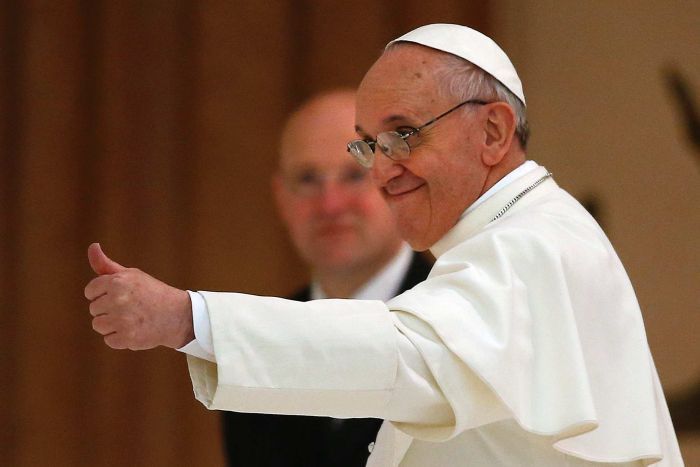
    4577728-3x2-700x467In the midst of other worldwide theological furores, and local stuff with heretical bishops and the like, it seems that even Pope Francis is taking his share of the limelight. According to the Huff this week Pope Francis strongly implied a universalist position with his statement:
    “The Lord has redeemed all of us, all of us, with the Blood of Christ: all of us, not just Catholics. Everyone! ‘Father, the atheists?’ Even the atheists. Everyone!”
    The Huff has reported on it here: http://www.huffingtonpost.com/2013/05/23/atheists-like-what-they-see-in-pope-francis-new-openness_n_3329548.html and the Irish here: http://www.irishcentral.com/news/Atheists-big-fans-of–Pope-Francis-openness-and-good-works-among-those-in-need-209048751.html

    Now that does sound very universalist, with all people being redeemed by the cross, not just the Catholics, and it appears that Francis’ handlers think so too. A couple of days later they issued a correction to Francis’ homily, clearly stating that all who are apostate from the Catholic church are condemned:
    “Although they are otherwise good, moral people they are still doomed to burn in a lake of fire for having the temerity to have been born outside of Catholicism or having chosen to remain so.”
    http://www.irishcentral.com/story/ent/manhattan_diary/vatican-corrects-infallible-pope-atheists-will-still-burn-in-hell-208987111.html

    This has raised some eyebrows around the world, with the “moral atheists” obviously being rather unhappy about it, as too are many Protestants who thought that there might have been some form of reconciliation on the table. However, to me it sounds like a whole bunch of semantics over three words: ‘redeemed’, ‘salvation’ and ‘infallible’.

    Firstly, when Francis talks about ‘redeemed’ does he merely mean that Christ’s sacrifice on the cross was sufficient for all humanity, but will only be effective for those who believe (whether you take an election or free will argument)? I would suggest that this is probably the easiest orthodox reading of Francis’ statement, but it does end up slightly semantically skewed. All of humanity redeemed, but not all of humanity justified… its hard to see how those two can be separated. Indeed, this seems to be the place that his handlers have ended up when they issue the correction.

    Secondly, along with the redemption question, and tightly linked, is the issue of what does Francis think it means to have ‘salvation.’ Is it for him simply a position of being able to do good works? Or is it to stand justified before the throne in Christ? Without further homilies or statements to rely on its a bit hard to tell at the moment, but from this homily it does seem to trend towards the ability to do good works. Now I don’t want to be heard saying that doing good works is outside of the realm of anyone who is not in Christ, and I want to affirm that it does come back to the view of the image of God in humanity. But to equate good works with justification and salvation is stretching it….. a lot.

    Finally, infallibility. The doctrine has been swirling around for quite a few years now, with various Popes taking differing stances on it. Pope John XXIII is recorded as saying: “I am only infallible if I speak infallibly but I shall never do that, so I am not infallible.” But it seems that the principal place for the Pope to be infallible is when they are ex cathedra. Is a homily ex cathedra? Perhaps, but Francis’ handlers certainly don’t think so.

    It will be interesting to see how this one plays out, and I wonder whether Francis has been reading Rob Bell?

  • Another essay…. authoritatively!

    Another essay…. authoritatively!

    Tomorrow I will be handing up this paper, which ends the essay phase of the semester. Throughout i have written well over 20,000 words (and handed up 13,000 or so) in four papers across about 6 weeks. There is a significant part of me that thoroughly enjoyed the whole process.

    However, there is also a part of me which is glad the process is over… if only because exams are looming close on the horizon.

    For now though enjoy the Wordle from this paper.

  • Being Thankful…

    Today in chapel we had the privilege of hearing from Peter Brain, the recently retired Archbishop of Armidale, speaking on the topic of thankfulness. His brief message struck a chord with me, especially with the degree to which our society and culture is somewhat less than thankful for the things that we have.

    At the moment this is probably best seen with the Australian response to the Olympic medal haul, and the accusations that are flying around in response to the less than optimal results.

    All too often this sort of attitude pervades our churches and our Christian walk as well, rather than being thankful for even the little things that we do have in life. How much does the whinging and negativity of our world spill over and threaten to drown the church. How much would we, and our communities be changed by being thankful for what we have, even things as little as the sunset.

    In all of this I’m reminded of the power of being thankful, and of the transformative attitude which that brings. I don’t think I’ve seen it presented more clearly than in the life of Mary Karr, a poet and essayist. She writes:

    So Tom suggested that I start thanking God as I went through the day. And I said, ‘What are you talking about?’ He said, ‘Well, you know, if your car has a flat and somebody stops and helps you, just say thanks.’ I said, ‘That’s ridiculous.’ But again, over time I started doing it, and I found a kind of quiet core ‘south of my neck’ is the only way I can put it, where I began to get some sense of peace or certainty or clarity or quiet, just a kind of quiet.

    But all of a sudden it was almost like the world bloomed into being. I realised that I had been so focused on complaint for most of my life that I had just missed a lot of the good things that were going on. My world view, which I had thought of as so ‘realistic’ because I didn’t believe in God, was in fact very warped by a kind of naturally depressive state of mind. It’s almost like the world was black and white and it started to bleed into technicolour before my eyes.

    You can read more of her story here: http://www.abc.net.au/radionational/programs/encounter/unlikely-catholics-addiction-conversion-and-poetry/3255234 it is certainly a powerful testimony to God working through thankfulness.

    Personally its a challenge to me as well, all too often I find myself beset with a complaining spirit, rather than stopping to give thanks, and in talking to the people around me I don’t think I’m in any way unique in this.

    Perhaps we should all be stopping more often to give thanks in life, and how much of a difference would this make in our walk?