Category: Culture

  • Being Thankful…

    Today in chapel we had the privilege of hearing from Peter Brain, the recently retired Archbishop of Armidale, speaking on the topic of thankfulness. His brief message struck a chord with me, especially with the degree to which our society and culture is somewhat less than thankful for the things that we have.

    At the moment this is probably best seen with the Australian response to the Olympic medal haul, and the accusations that are flying around in response to the less than optimal results.

    All too often this sort of attitude pervades our churches and our Christian walk as well, rather than being thankful for even the little things that we do have in life. How much does the whinging and negativity of our world spill over and threaten to drown the church. How much would we, and our communities be changed by being thankful for what we have, even things as little as the sunset.

    In all of this I’m reminded of the power of being thankful, and of the transformative attitude which that brings. I don’t think I’ve seen it presented more clearly than in the life of Mary Karr, a poet and essayist. She writes:

    So Tom suggested that I start thanking God as I went through the day. And I said, ‘What are you talking about?’ He said, ‘Well, you know, if your car has a flat and somebody stops and helps you, just say thanks.’ I said, ‘That’s ridiculous.’ But again, over time I started doing it, and I found a kind of quiet core ‘south of my neck’ is the only way I can put it, where I began to get some sense of peace or certainty or clarity or quiet, just a kind of quiet.

    But all of a sudden it was almost like the world bloomed into being. I realised that I had been so focused on complaint for most of my life that I had just missed a lot of the good things that were going on. My world view, which I had thought of as so ‘realistic’ because I didn’t believe in God, was in fact very warped by a kind of naturally depressive state of mind. It’s almost like the world was black and white and it started to bleed into technicolour before my eyes.

    You can read more of her story here: http://www.abc.net.au/radionational/programs/encounter/unlikely-catholics-addiction-conversion-and-poetry/3255234 it is certainly a powerful testimony to God working through thankfulness.

    Personally its a challenge to me as well, all too often I find myself beset with a complaining spirit, rather than stopping to give thanks, and in talking to the people around me I don’t think I’m in any way unique in this.

    Perhaps we should all be stopping more often to give thanks in life, and how much of a difference would this make in our walk?

  • Words with friends…. how do we use language?

    This blog post is probably one of the more theologically oriented posts that will intersperse this blog, when I get a chance to think and write, and in this case it comes while im sitting on a plane between Melbourne and Singapore. It stems from a twitter discussion that I had with Jason Harris (@tojasonharris) during the Oxygen11 conference, on the topic, and has been fleshed out by a couple of shorter discussions with Arthur Davis (@arthurgdavis and blog) and others around college.

    I’m sure that everyone reading this would be familiar with the saying that a picture can convey a thousand words, although the linguistic corollary that a word may have a thousand meanings may be slightly more hazy to some out there. Yet despite it being somewhat less common, I think that intrinsically we all know it to be true. The wide range of meanings imbued within a word are readily apparent to even a young child in primary school being called a ‘nerd’ for the first time: What does it mean… i don’t even like Star Trek… i like books though; and the connotations rapidly progress onwards, like an avalanche tumbling down a mountain.

    However, it appears that the general populace is commonly less aware of the various methods that the nuances of language may be used to influence and even generate the opinions and populace of a wider community. While I was studying Psychology at the University of Adelaide, I came across the work of Dr Martha Augoustinos, including her paper on the different uses of discourse regarding people seeking refuge in Australia via non-standard seafaring methods. In a rough summary, some papers would refer to such people as the term ‘refugees’, which has a relatively positive meaning, while others would choose ‘boat people’, a relatively neutral descriptor, and yet other media would opt for negativistic language such as ‘illegal immigrants’. Unsurprisingly the discourse features that were chosen by each media outlet harmonised nicely with their own intended audience, and polemic. Each term describes the selected people, although all portray them in wildly differing lights.

    Ok, ok, I hear you cry, what relevance does this have to me? Fair question, and indeed one which I think needs addressing. For, I think, that even in the Church we have a tendency to place labels completely infused with meaning upon people, whether or not they completely endorse or embody all aspects of that label. Furthermore, as social psychology has tended to indicate, these labels are excellent tools for our psyche to orient our sense of in-group identification, and in correlation our out-group tendencies. Lets go for a quick hypothetical example:

    Bob is living in Sydney, he is a strong Christian, and has been studying the bible for most of his life, he works in the city and all around him he finds that there are strong women who are in various positions of leadership. Through his experience he sees women capable of exercising leadership, and through cross pollination surmises that given equal training and equal capabilities, there should be little to nothing wrong with a woman being in a position of leadership in the Church; excited by his new theological thought process he enthusiastically announces at bible study that he believes in womens’ ordination. His bible study leader John is perturbed, and after a bit of quick Googling he discovers that the strain of theology that espouses this is commonly labelled as Egalitarian, and reading on he quickly prepares a bible study for the next week dealing with the subordination of the Trinity. Bob on the other hand still believes in an orthodox exposition of the subordination of the Trinity.

    Now this example is admittedly a bit far fetched, but the use of labels to classify and segregate in- and out-groups is common, even within the Church, and can have disastrous consequences; and its not just the quick Complementarian and Egalitarian descriptors which are bandied around. Reformed, Evangelical, Arian, Modalism, and thousands more are slapped on people regularly, even if they may not hold all of those beliefs; and whether we intend it or not  these labels are quick to cause division within the Church.

    So what should we be doing about it? Before we consider that perhaps its worth considering two existing outcomes of it. Firstly one area that I have lived in has, either consciously or unconsciously, decided to prioritise the unity of the Church over individual differences, and therefore very few people have opportunities to talk about controversial issues, which are inevitably the issues that end up gaining a label, and dividing the Church. As much as that may appear healthy, the suppression of discourse commonly leads towards dissension and fracture anyway, and so it is likely to be counterproductive in the longer term.
    The other end of the spectrum in my experience is an area where these sort of issues are on the table at all times, discourse and even support of a label or position is even encouraged. Unfortunately while fleeing from suppression and fostering discourse the opposing situation has become as fractured as a vase brutally discarded, and subsequently labels are thrown around with little to no pastoral regard for their consequences.

    What then is the solution? I, for one, don’t know for certain; I do know however, as with many solutions, lies somewhere between the two opposites which I have experienced, and for each individual the ideal is likely to be different. Perhaps the better question is how we can foster an environment which is non-judgemental and divisive within our churches?
    Anyone have any ideas or feedback?

  • Holidays and Travelling… and the Reformation?

    It seems very strange that an entire semester has passed already, but indeed it has, and we have marked the end of semester with the usual venerable exam week; then it will be holidays.

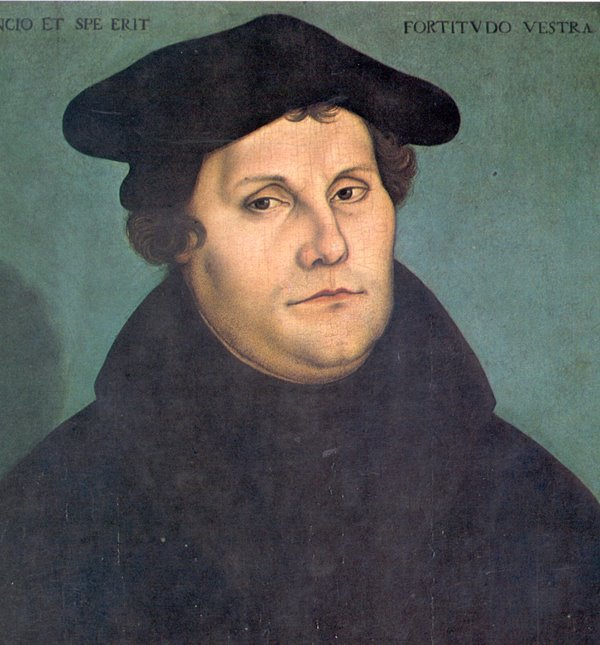
    One of the great opportunities which Ridley offers is the chance to get a hands on experience of various sites and places which have helped shape the Christian faith, such as Israel, Palestine and Jordan; or Turkey Greece and Italy; and even the heartland of the reformation: Germany and Switzerland. The reformation tour is of particular interest to us through the various readings which we have done, and also my interest in Reformed history. However, unfortunately, the Ridley tour, while it would be great, is out of our budget as a couple.

    So then, what is this holiday that I have seen on the Book of Faces, and written about here on the blog, you ask? Well, in lieu of actually being able to join in on the Ridley reformation tour we have decided to go on our own tour, courtesy of all of those pesky frequent flyer points that I’ve accumulated over the years of having to fly for work. So, while saying thanks to all of the jobs that have flown me around in the past, we cashed in most of our points and got extremely cheap flights to Europe. In addition seeing as this year will probably be the only time in the foreseeable future that we have a whole six unencumbered weeks free at the same time, we decided to make the most of it and go for pretty much the entire holidays.

    Over the next five weeks, leaving on Saturday, we will be travelling around Europe and the UK roughly following an extended Reformation tour. I have plotted our rough itinerary in Google Maps below:

    View Larger Map
    Along the way we will be catching up with some family who will be there at the same time. My dad will be in Heidelberg for a little while before a conference in Spain, and so we will be catching up with him there. Its a great opportunity to be shown around Heidelberg as my parents spent several years living there while studying at the university.
    In the UK we will be meeting up with Gill’s parents as they are currently there for the Queens Jubilee celebrations, and some other family gatherings; as well as meeting up with Gill’s family who live in the UK.

    As we travel we are hoping to be able to update the blog with things we are learning and a few photos. We will be trying to document our travels in the same fashion as the Ridley students have to for the assessment for their course, and we will be taking some reading material on the journey. The first two books on the reading list are a pair of biographies, firstly Calvin, by F. B. Gordon and secondly Luther by Kittleson.

    Keep an eye on this space for updates from Europe, and our thoughts on the books. We are very grateful for this opportunity to be able to travel and learn more about the reformation as we do so, and many thanks again to all of my previous employers who have had a hand in making this happen 😉

  • Am I, You are, are We: Australian?

    Am I, You are, are We: Australian?

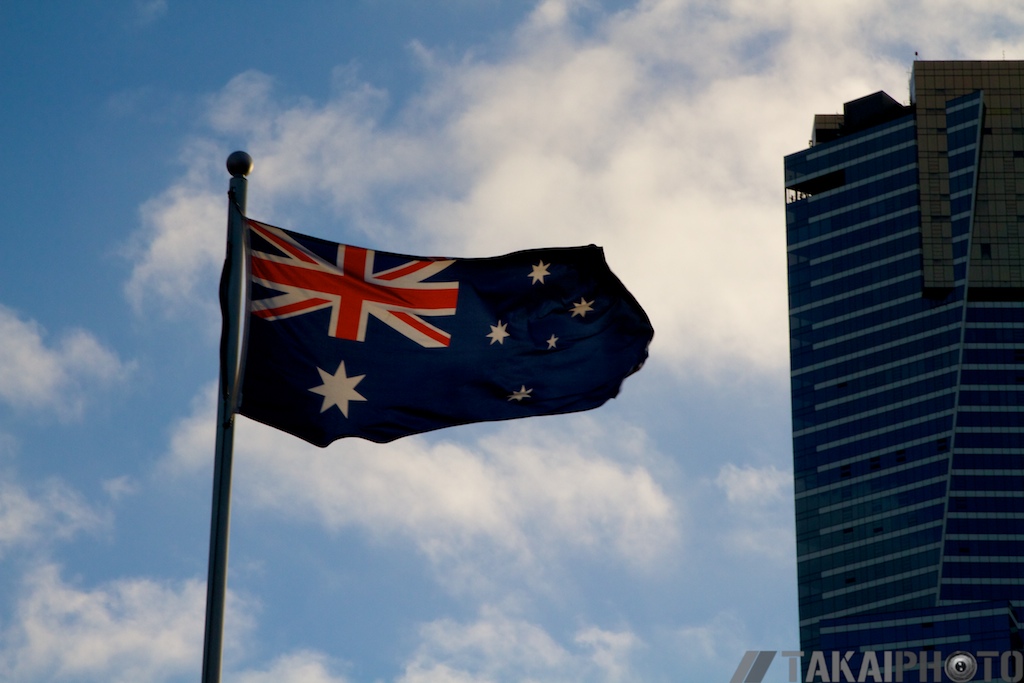
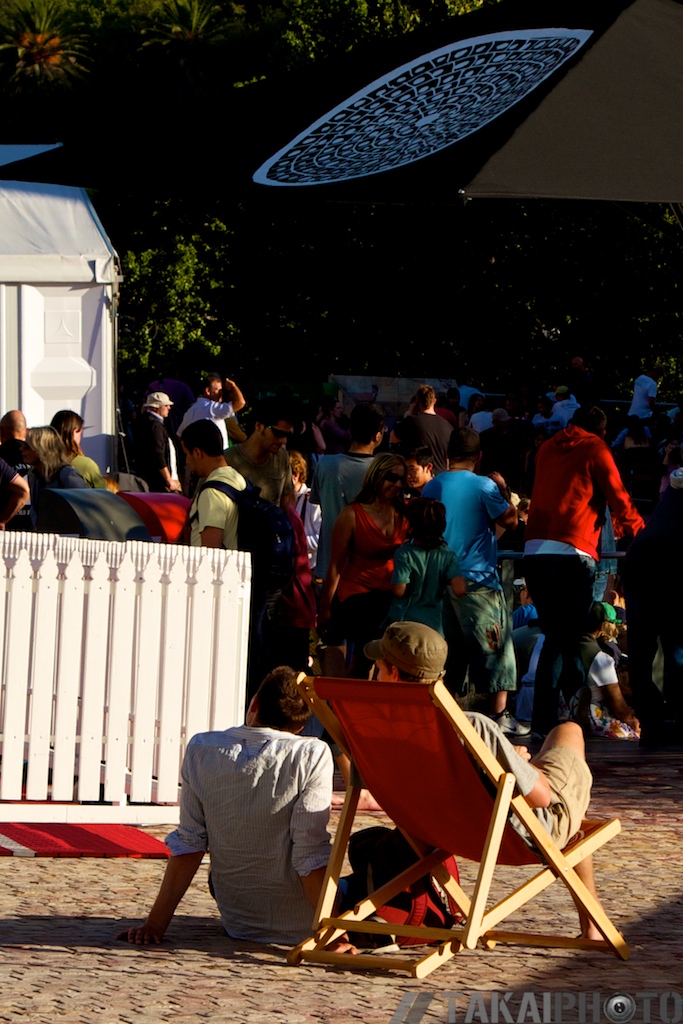
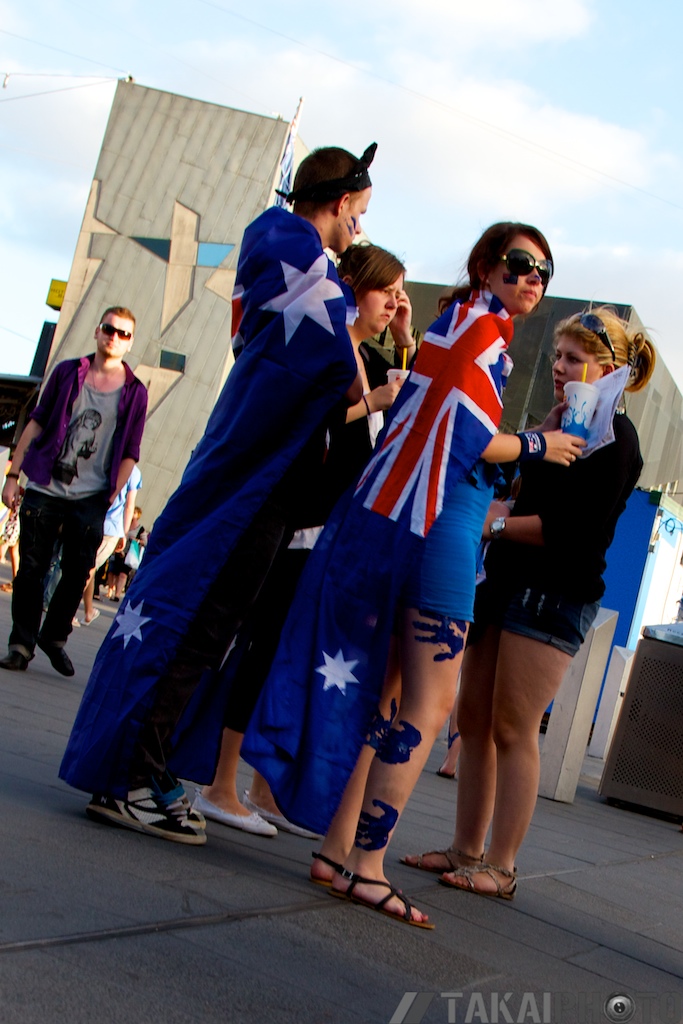
    On the weekend I was having a chat with a friend about some of the aspects of other cultures that contribute to making them unique. Take for example the pasata making day, and the other various food related gatherings, that contribute to creating a unique Italian culture. Or the various other customs that contribute to the uniqueness of other cultures, and it re-stirred some thoughts I was having around Australia Day earlier in the year about what makes us really Australian. It was with that thought that I ventured down towards Federation Square in Melbourne to have a look at what we celebrate as Australians on our national day.

    Is it the thought of wide open spaces, the family home, and the beach as so many Australians celebrate on Australia day? Or perhaps the idea of sitting on the beach in folding chair with a tinnie watching a band? Or is it the feeling nostalgia and romanticism while coming back to Australia on the national flag carrier as Qantas would desperately love for us to believe?

    Is it the idea of Ford and Holden roaring over the top of Mt Panorama for that annual gathering of the devoted? Or perhaps the all too common sight of an Aussie digger faltering home after serving their country overseas?

    We like to call ourselves the lucky country, but really what is it that makes us so lucky? Why do we consider our country as blessed as it is, and perhaps why don’t we believe that the grass is greener on the other side? Indeed, given that we pride and revere our Australian nature so highly, why do we at the same time seek to drape ourselves in the national flag?

    I, for one, am certain that there is something which draws us all together intrinsically as Australians, other than our national passports. But for all my years in and out of Australia, I havnt been quite able to pin it down to anything specific.

    Maybe you could weigh in on what makes us intrinsically Australian in the comment box below.