Category: Culture

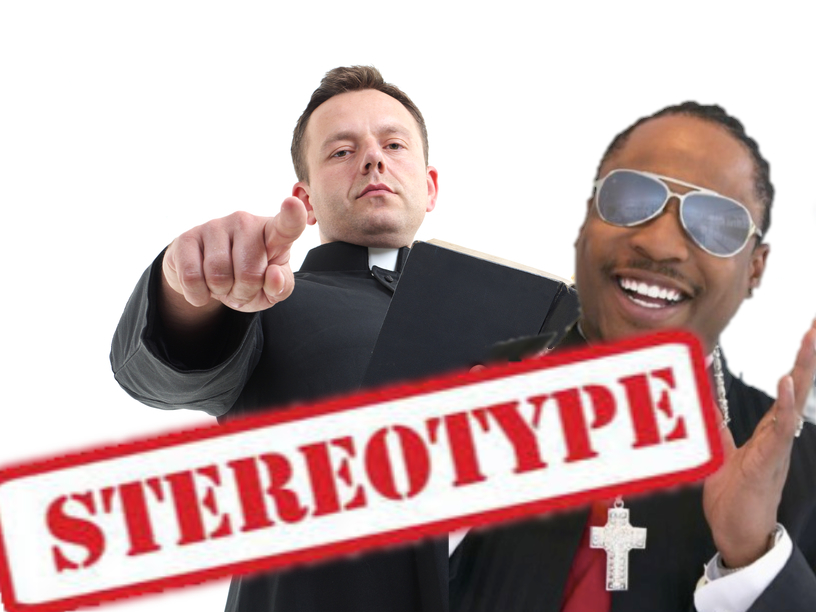
  • Stereotyping: A Preacher, The Gospel, and That Wedding.

    Stereotyping: A Preacher, The Gospel, and That Wedding.

    Disclaimer: I didn’t actually watch the wedding, and this post isn’t on the wedding per-se. But I have seen the plethora of responses to the sermon from the wedding, and this post is in relation to those. It is also psych heavy—although much is Cog.Psych 101—so if you were here for commentary on the sermon, or on wedding dresses, you have come to the wrong place.

    In the last few days I think everyone has been bombarded on social media by content about ‘that wedding’ [the Royal wedding if you have been living under a PhD driven rock like me]. However, also interesting has been the responses to the sermon from various segments of my social media feed (if you haven’t been seeing the same responses, well that is unsurprising given the opaque Facebook algorithms). In this post I want to briefly explore two of the main responses to the sermon that I have seen, and from the perspective of Social Identity Theory as I think it highlights something interesting about our interactions.

    Before we dive in though, for the sake of the conversation, I am standing on the shoulders of Penny Oakes (along with Alex Haslam and John Turner) on Stereotyping Theory[ref]Oakes, Penelope J., S. Alexander Haslam, and John C. Turner. Stereotyping and Social Reality. Malden: Blackwell Publishing, 1994.[/ref], as she has built on the work of Tajfel and Turner in the formulation of Social Identity Theory[ref]Tajfel, Henri, and JC Turner. “An Integrative Theory of Intergroup Conflict.” Pages 33–47 in Psychology of Intergroup Relations. Edited by WG Austin and S Worchel. Brooks/Cole, 1979.[/ref]. From that basis when I talk about ‘stereotyping’ I am meaning that cognitive process that we all utilise to ascribe ‘characteristics to people on the basis of their group memberships.’ [ref]Oakes et al., 1994, 1[/ref] Now I need to emphasise that this is not intrinsically a negative process, as our modern language uses it. Rather it is just a means of reducing cognitive load by perceiving people as members of social categories in the initial phase. Similarly, I will use the term prototype, which is merely the (often fictive) composite idea of the embodiment of the main characteristics of a social group. These basic definitions will be how i will use stereotype and prototype throughout this post.

    Onward therefore to the responses.

    The General Response

    The first response, to the sermon, I have seen from various friends is one of amazement and shock that such a good sermon could be preached and especially broadcast all over the world. After a bit of digging through various comment sections, I think much of this is to do with a mismatch between Bishop Curry and his sermon, and the cognitive stereotype of Bishops and wedding sermons.

    Firstly, a bit on stereotyping and dissonance. We use stereotypes as a means of cognitive minimisation, an effort to know more about an individual or group by ascribing the stereotypical characteristics of that group to the individual. This is done all the time, and we aren’t even conscious of it. In fact, just the other day an elderly lady approached me and started talking to me in an Asian language. This is a stereotypical ascription as she has ascribed the category ‘Asian’ to me on the basis of my racial presentation, and for her that category included language. Unfortunately for her my language repertoire outside of English is solely European, or dead languages, and the blank look on my face must have highlighted that. The response for her was one of sheer dissonance, effectively ‘how do you not know Asian language X, you don’t fit my category of Asian.’ It is this dissonance that draws our attention to things. Such as when Australians are shocked that a footballer graduates with a law degree, as most Australian footballers (of any code) have no tertiary education [real conversation].

    In the case of the wedding sermon it is a dissonance between the stereotype of Bishops and sermons, and what Bishop Curry actually delivered.

    Simply put, what people were expecting was:

    via GIPHY

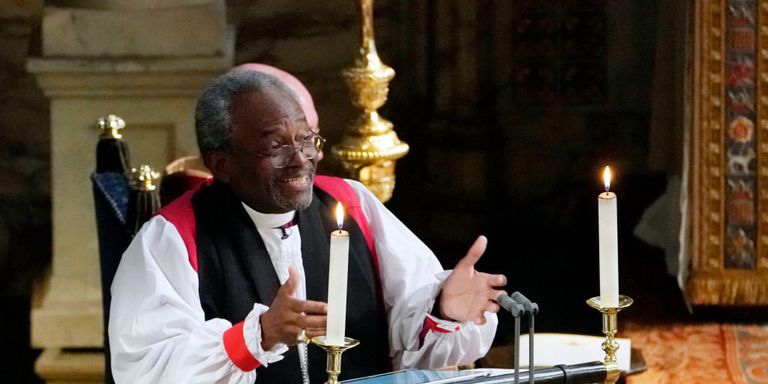
    But what they got was this:

    Needless to say this causes significant dissonance, much of which was writ large on the faces of several members of the royal family during the wedding. But it is also the same dissonance which has caused such significant engagement with the sermon and Curry. Because this dissonance forces a refactoring of the stereotypes at hand and reassessing where Curry fits. Much of this refactoring comes in the form of comparison with other social-category prototypes that might suit as a representative of a new stereotype for the individual. With this in mind it is completely unsurprising that there have been comparisons drawn with Martin Luther King, who stands as a comparative prototype for the social category that roughly exists as ‘African American preacher.’

    Now this is highly simplistic and significantly under-nuanced. But it serves as a basis of the other type of response I want to look at.


    The Conservative Evangelical Response

    The other type of response I have been seeing is that of conservative evangelicals who have lambasted the sermon as being ‘Gospel-lite,’ and ‘not a real sermon.’ Much of this initial response is in a similar cognitive vein to that of the general response. However, instead of the pre-existing social category being accessed as ‘a bumbling fumbling mumbling old fuddy duddy in a smock’ [a direct quote], there is instead a plethora of prototypes for the social-category ‘good Anglican preacher.’ Notably, one of the prototypical characteristics for the social-category involves ‘preaching the gospel.’ Now this is where the stereotype comparison resonates strongly, as many features of Bishop Curry and his sermon cohere with the social-category stereotype for ‘good Anglican preacher.’ But due to the meta-contrast ratio between ‘good Anglican preacher’ and Bishop Curry, the dissonances stand out strongly against the background consonance.

    Here the primary dissonance revolves around that prototypical characteristic ‘preaching the gospel’ and hence the plethora of articles on how/why/when/where Curry did/did not/should have articulated the gospel. Similarly this exposes a new set of dissonances regarding the content of the gospel, and a similar process ensues…


    Take Home Lessons

    So what are the take home lessons from this flurry of social media activity? Well the primary thing is that dissonance between stereotypes and reality cause interest, and the greater the dissonance between the types, the greater the interest. Furthermore, this is also the case when the dissonance occurs within a stereotype, not just outside of the stereotype. For social-identity people, both internal and external stereotype comparisons are examples of the meta-contrast ratio at work.

    In the end we should not be surprised when these sort of things attract strong interest and debate, it is breaking the stereotypical norms that we have set up, and things that break stereotypical norms are of great interest to us as social individuals, as we attempt to make sense of the world.

  • Reading Project: Intentional Community, New Monasticism, Spiritual Friendship and Rhythms and Rules of Life

    Reading Project: Intentional Community, New Monasticism, Spiritual Friendship and Rhythms and Rules of Life

    One of the practices I keep is to always have a long term reading project on the go, that is less directly related to my active research. I find this keeps me reading broadly and more agile in the way that I process and link concepts together. Over the winter break (in Australia) I completed my last reading project of N.T. Wright’s Christian Origins series, and have been debating what to start next. Some discussions in the last week have pushed me towards revisiting some thinking I have been doing for several years now on intentional community, the Benedict option, and various rules of life. Plus it seems that from the responses on Facebook others are interested in this as well, so this is where I will be doing my extra-curricular reading for the next few months.

    In discussions with people on Facebook and in the communities I’m a part of, I thought it may be useful to start compiling a list of resources and reviewing them, along with attempting to foster discussion on them. Some of these discussions will happen in person, as I am investigating setting up a reading group or two to discuss ideas. But I also want these to be more broadly reaching.

    This then is the start of the online side of the discussion, a reading list. Here is a bibliography of suggested works from a plethora of different sources, that I am hoping to read. Im also hoping to review, or have someone else review, most of the works too and make those reviews available publicly. If you have more suggested works, then please contribute them in the comments or send them to me via another method.

    Do let me know if you want to be part of this reading project, either online or in person. Reading is always more fun in community… and reading on community should be even more so again!

    For now though here is the bibliography:

    Bibliography

    Arpin-Ricci, Jamie, and Jonathan Wilson-Hartgrove. The Cost of Community: Jesus, St. Francis and Life in the Kingdom. Downers Grove, Ill: IVP Books, 2011.
    Barker, Ashley. Surrender All: A Call to Sub-Merge with Christ. Melbourne: CreateSpace Independent Publishing Platform, 2005.
    Barton, Ruth Haley. Life Together in Christ: Experiencing Transformation in Community. Downers Grove: IVP Books, 2014.
    Bonhoeffer, Dietrich. Discipleship. Unknown edition. Minneapolis: FORTRESS PRESS, 2003.
    ———. Life Together: The Classic Exploration of Christian in Community. 1St Edition edition edition. New York: HarperOne, 2009.
    Chester, Tim, and Steve Timmis. Everyday Church: Gospel Communities on Mission. 1 edition. Wheaton, Ill: Crossway, 2012.
    ———. Total Church: A Radical Reshaping around Gospel and Community. Wheaton, Ill: Crossway, 2008.
    Claiborne, Shane, and Jim Wallis. The Irresistible Revolution: Living as an Ordinary Radical. 1st edition. Grand Rapids, Mich: Zondervan, 2006.
    Claiborne, Shane, and Jonathan Wilson-Hartgrove. Common Prayer Pocket Edition: A Liturgy for Ordinary Radicals. Poc Rep edition. Grand Rapids, Mich: Zondervan, 2012.
    Duckworth, Jenny, and Justin Duckworth. Against the Tide, Towards the Kingdom: Eugene, Or: Wipf & Stock Pub, 2011.
    Edgar, Brian. God Is Friendship: A Theology of Spirituality, Community, and Society. Seedbed Publishing, 2013.
    Ford, Leighton. The Attentive Life: Discerning God’s Presence in All Things. Place of publication not identified: IVP Books, 2014.
    Hauerwas, Stanley, and William H. Willimon. Resident Aliens: Life in the Christian Colony. Anniversary ed. edition. Nashville: Abingdon Press, 2014.

    Heath, Elaine A. Missional. Monastic. Mainline.: A Guide to Starting Missional Micro-Communities in Historically Mainline Traditions. Eugene, Oregon: Cascade Books, 2014.

    ———. The Mystic Way of Evangelism: A Contemplative Vision for Christian Outreach. Grand Rapids, MI: Baker Academic, 2008.
    Heath, Elaine A., and Scott T. Kisker. Longing for Spring: A New Vision for Wesleyan Community. Eugene, Or: Wipf & Stock Pub, 2010.
    Hill, Wesley. Spiritual Friendship: Finding Love in the Church as a Celibate Gay Christian. Grand Rapids, Michigan: Brazos Press, 2015.
    Holmes, Jonathan, and Ed Welch. The Company We Keep: In Search of Biblical Friendship. Place of publication not identified: Cruciform Press, 2014.
    Janzen, David, Shane Claiborne, and Jonathan Wilson-Hartgrove. The Intentional Christian Community Handbook: For Idealists, Hypocrites, and Wannabe Disciples of Jesus. Brewster, Mass: Paraclete Press, 2012.
    Macchia, Stephen A., and Mark Buchanan. Crafting a Rule of Life: An Invitation to the Well-Ordered Way. Downers Grove, Ill: IVP Books, 2012.
    McKnight, Scot. A Fellowship of Differents: Showing the World God’s Design for Life Together. Grand Rapids, Michigan: Zondervan, 2015.
    Nouwen, Henri J. M. Reaching Out: The Three Movements of the Spiritual Life. Reissue edition. Garden City, N.Y: Image, 1986.
    Palmer, Parker J. To Know as We Are Known: Education as a Spiritual Journey. Reprint edition. San Francisco: HarperOne, 1993.
    Smith, William P. Loving Well. Greensboro, NC: New Growth Press, 2012.
    Sparks, Paul, Tim Soerens, and Dwight J. Friesen. The New Parish: How Neighborhood Churches Are Transforming Mission, Discipleship and Community. Downers Grove, Illinois: IVP Books, 2014.
    Vanderstelt, Jeff. Saturate: Being Disciples of Jesus in the Everyday Stuff of Life. Wheaton: Crossway, 2015.
    Vanier, Jean. Community and Growth. 2nd Revised edition. New York: Paulist Press, 1989.
  • A Brilliant Cultural Analysis based on Classical Music

    A Brilliant Cultural Analysis based on Classical Music

    This article, although focused on classical music, at its core is a brilliant exposition and exegesis of the current state of affairs in our society.
    From the transience of experience and rampant individualism, through to a constantly thwarted search for Australian identity, the observations in the middle section are rich and incisive.

    “Last year, at my son’s primary school Christmas concert, the children did not sing a single Christmas carol. I thought this might have been because the word “Jesus” was verboten, but the principal later reassured me that it was not. …
    I had recently returned from Germany, where a woman had asked me whether Christmas in the Australian summer could possibly be gemütlich. I sang one of the confected Australian carols I had learned as a child…
    “Oh wow,” she marvelled. “That sounds really awkward.”

    This awkwardness was writ large at my son’s concert. It was a Christmas concert in search of identity; never mind Christ, there were not even any references to Christmases past. It spoke to me of a larger Australian malaise: because we dare not confront the realities of our own past, we prefer to imagine there was no past. Instead, we busy ourselves with our home renovations and hero ingredients, and forget the Western humanistic tradition. We celebrate culture if you can eat it. (If we do acknowledge a heritage, it is frequently one of failure: Gallipoli, the Eureka Stockade, a suicidal swagman. This might look like the championing of the underdog, but nothing in today’s national actions suggests that we champion the underdog.)”

    Its a long read, but worthwhile. Read it now: https://www.themonthly.com.au/issue/2015/october/1443621600/anna-goldsworthy/lost-art-listening

  • Racism, Identity and Identities: a Question of Salience

    Racism, Identity and Identities: a Question of Salience

    Yesterday I had the time to read an excellent long form report from Gary Younge—a British reporter for the Guardian—on his upcoming departure from the United States, where he has been reporting for the past twelve years (http://www.theguardian.com/us-news/2015/jul/01/gary-younge-farewell-to-america). Throughout his report he notes that the overwhelming reason for his imminent departure is the continual subtext of racism that he identifies as present in his environment. Now while there are a swathe of interesting observations and great points in his article, I want to focus on just one aspect: identity and racism.

    In amongst his reflections of the swirling maelstrom of race relations he recounts an exchange he had with his son while walking to school:

    Explaining the complex historical and social forces that make such a dance necessary is not easy at the best of times. Making them comprehensible to a child is nigh impossible without gross simplifications and cutting corners. Once, during our 10-minute walk to daycare, my son asked if we could take another route. “Why?” I asked.

    “Because that way they stop all the black boys,” he said.

    He was right. Roughly twice a week we would pass young black men being frisked or arrested, usually on the way home. He was also four, and until that point I was not aware that he had even noticed. I tried to make him feel safe.

    “Well don’t worry. You’re with me and they’re not going to stop us,” I told him.

    “Why not?” he asked.

    “Because we haven’t done anything,” I said.

    “What have they done?” he asked.

    He had me. From then on we took another route.

    In amongst all of the social issues going on and the complexity of issues on the street, his son has rapidly assessed the situation at hand and identified a core issue: blackness. However this isn’t merely an issue with the melanin content of skin, but of something deeper—an identity of blackness. But some would argue that Gary Younge doesn’t fit the typical stereotype for the target of racial interactions, he is educated, employed and is British, not American.

    Yet here is where I think the crux lies for our modern society. We don’t deal well with identity.

    Within Psychology the stream of questioning that addresses this area is logically called Identity Theory. As Stryker and Burke write:

    Identity theory began with questions about the origins of differential salience of identities in persons’ self-structures and why identity salience may change over time (e.g., Stryker 1968; Wells and Stryker 1988). These questions led to the development of theory concerning ways in which people are tied into social structure and the consequences of these ties for their identities. [ref]Stryker, Sheldon, and Peter J. Burke. “The Past, Present, and Future of an Identity Theory.” Social Psychology Quarterly, no. 4 (2000): 284-297, 287.[/ref]

    Sounds logical enough. Certainly for Younge, the black American population, and every one of us we are each tied into our social structures by our identities. Not just black or white, but father, student, worker, mother, wife, single, married, and many more.

    But in this case what matters is the salience of those identities. When Gary Younge receives an extra frisking at a checkpoint, or Trayvon Martin was shot dead, or any one of the myriad of instances of racial abuse, the identity factor that matters is mainly reduced to one aspect: race. The other identities just don’t matter. All the other identities: gender, education, family relations, are all ignored in favour of the identity that is perceived to be most salient: race.

    In this aspect we can see one of the issues: we are terrible at engaging with multiple identity factors, and seek to reduce them to a single factor. Be it race, sexuality, religion, or many more. In each encounter one identity factor will likely be more salient than the others, and correspondingly others will perceive one factor as more salient than the others in our lives.

    Perhaps then the real solution to racism isn’t how to reduce the identity based discrimination, but how to broaden the salience of the perception of identity factors. This is a topic that I intend to explore further on this blog, keep an eye out.

    For now though, have a read of Gary Younge’s reflections, it is well written, sobering and eye opening: http://www.theguardian.com/us-news/2015/jul/01/gary-younge-farewell-to-america

  • The rise of Edutainment, and its implications.

    The rise of Edutainment, and its implications.

    I came across this little article recently from the NY Times, on the prevalence of the broader general public turning to education based entertainment for their downtime. Rather than merely switching off and not engaging their faculties. http://www.nytimes.com/2015/03/20/education/turning-to-education-for-fun.html

    Let me quote from the article:

    What does it mean when people who can afford to spend their time however they please hunker down in front of their flat screens to watch theoretical physicists or experts on other subjects lecture for hours?

    Entertainment values have come to dominate many aspects of life, but another trend has been playing out, too. Call it the academization of leisure. It can be found in the live-streaming TED Talks lectures, the Great Courses, learning vacations, podcasts, science centers, brain-training games and retirement communities like Lasell Village in Newton, Mass., whose residents must complete “a minimum of 450 hours of learning and fitness activity each calendar year,”…

    I find this really fascinating, certainly the increase in ‘edutainment’ or more positively framed, the rise of a broadly educated populace, is appealing. In many ways having a broader education and knowledge base helps people think from their own frameworks, and analyse perspectives better. It should also help the general public engage in better and justifiable public discourse, rather than unsubstantiated positions.

    However, on the flip-side it also leads to a rise in the outward exemplification of the Dunning-Kruger effect, where a little knowledge actually hinders engagement with longer term learning and education at a broader level.

    Nevertheless, I am still optimistic about this trend, and will be interested to see how it plays out. Thoughts? How do you see it working in your context?

  • ‘Get the F*** off OUR roads’ – Motorists, Cyclists and Intergroup Bias

    ‘Get the F*** off OUR roads’ – Motorists, Cyclists and Intergroup Bias

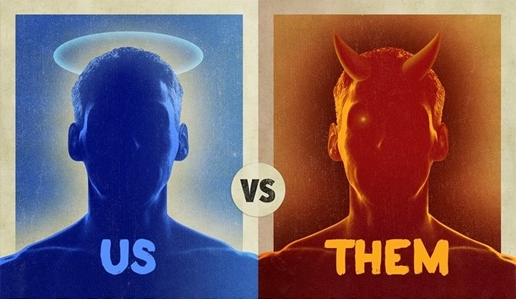
    In Australia it is that time of year again… summer. Where the weather gets nicer, and in Adelaide the Tour Down Under arrives in town. Now unsurprisingly this annual event sees the  seasonal rise of visible cyclists, and of course accompanying it the usual diatribes and vitriol flashing about in all directions over the topic. There are many directions that these ‘conversations’ inevitably go in, be it down the path of licensing, or psychopathic motorists, or apparent flagrant disregard for the law… from both sides. However, none of these are what I want to address in this post. Rather, I think it is helpful to look at some of the underlying factors within the cyclist/motorist interaction, specifically that of group biases and Social Identity Theory (SIT). It is especially helpful in this case because the interaction is relatively arbitrary and crosses many other more complex social bounds in a relatively equal fashion. This helps as it acts as a type of microcosm or case study that can inform much more complex interactions.

    ingroup-outgroupFirstly, an exceedingly brief overview of SIT and some of the biases at play. SIT was formulated by Henri Tajfel and John Turner in the late 70s and early 80s as a means of exploring intergroup relations. [Ref]Tajfel, Henri, and John C. Turner. “The Social Identity Theory of Intergroup Behaviour.” In Psychology of Intergroup Relations, edited by William G. Austin and Stephen Worchel. Chicago, Ill: Nelson-Hall, 1986.[ref] Primarily SIT seeks to define groups and their relations such that there is a form of predictive capability of the interactions between the groups. At a secondary level it allows for a structured methodology for analysis of intergroup relations and conflict, the primary use for it in this situation. Since SIT’s proposal has been augmented by a series of papers that have investigated how SIT may be used to elucidate further aspects of intergroup interaction. Of particular relevance here is the work by Struch and Schwartz. [ref]Struch, N., and S. H. Schwartz. “Intergroup Aggression: Its Predictors and Distinctness from in-Group Bias.” Journal of Personality and Social Psychology 56, no. 3 (March 1989): 364–73.[/ref] There they note some of the factors that impact upon intergroup aggression; quoting from their abstract:

    Perceived intergroup conflict of interests, the postulated motivator of aggression, predicted it strongly. The effects of conflict on aggression were partially mediated by 2 indexes of dehumanizing the out-group (perceived value dissimilarity and trait inhumanity) and by 1 index of probable empathy with it (perceived in-group–out-group boundary permeability).

    In effect they name ‘intergroup conflict of interest’ as the primary motivator, and impacted by the dehumanisation of the out-group and the permeability of the boundaries. Finally in another study by Mackie et. al. they found significant application of the fundamental attribution error within groups, novelly naming this ‘group attribution error.’ [ref]Mackie, Diane M., Scott T. Allison, and David M. Messick. “Outcome Biases in Social Perception: Implications for Dispositional Inference, Attitude Change, Stereotyping, and Social Behavior.” Advances in Experimental Social Psychology – ADVAN EXP SOC PSYCHOL 28 (1996): 53–93. doi:10.1016/S0065-2601(08)60236-1.[/ref] In lieu of the longer post on FAE to come the simplified understanding is such that in-group members characterise out-group members by individual actions (and usually those that serve the in-group confirmation bias).

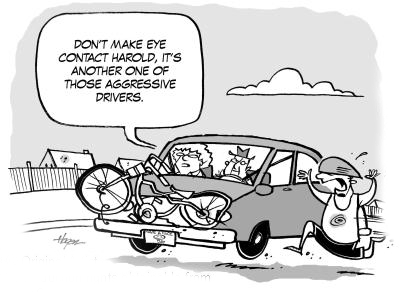
    Aggressive Motorist CartoonSo how does this impact upon our little case study? Well if the motorist/cyclist dynamic is dichotomised between cyclists and motorists, as the debates ensue, then SIT can be utilised in looking at the intergroup interactions. Addressing the first of the sub factors from Struch and Schwartz, even though the permeability between groups is incredibly high, with many bicycle riders owning cars, and obviously vice-versa, the perceived permeability is exceedingly low. I would suggest that this is due to the mutual exclusivity of the means of transport, its impossible to operate both at the same time, and only a marginal percentage of cars are seen with bike racks. Furthermore the proliferation of the ‘ownership’ of the roads, as highlighted by the large number of aggressive claims to ‘our’ roads from both sides serves to further delineate the groups.

    The second of the Struch and Schwartz characteristics is that of dehumanisation of the out-group, and this is extremely easy to see in the language used in the debates. Via that erudite medium of Facebook I have seen a plethora of invectives such as ‘death cage operators’, ‘lycra scum’, etc with many more that aren’t worth repeating. All of these serve to remove the person from the out-group, and replace them with a dehumanised label. For an even more prevalent example of this, see the American propaganda during the Vietnam war dehumanising the Vietnamese as monkeys (c.f. the work of Albert Bandura on the same). The last of Struch and Schwartz’ characteristics is that of conflict of interests, which in this case is the usual and predictable conflict over space on the roads.

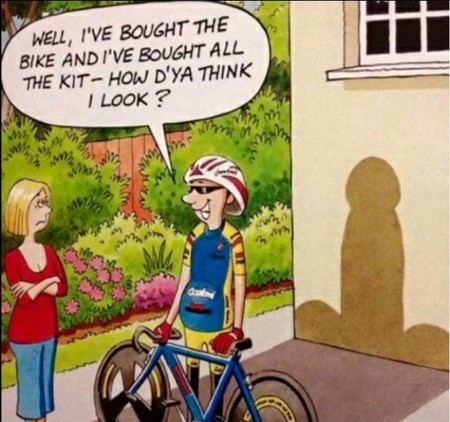
    Mackie’s applications of group attribution error can be relatively easily seen as well with the anecdotal evidence base significantly outweighing any statistical or Bayesian measures. The usual argument appears: ‘I saw a cyclist breaking the law, therefore all cyclists break the law’ or ‘I was harassed by a road Cyclist Denigrated Cartoonraging driver once, therefore all motorists are out to kill me.’ As with most, if not all, attribution biases there is an element of truth there, but little to no statistical significance or repeatability. So these anecdotal ‘evidences’ serve only to strengthen the out-group discrimination bias, and reinforce the in-group bias. Furthermore the inverse is true, motorists don’t self-characterise by those ‘hoons’ or criminals who kill people in accidents, and neither do cyclists self characterise by those who run red lights and knock down pedestrians. The confirmation and attribution bias flows in both directions.


    Finally it is worth acknowledging that there are a plethora of other factors at work, from confirmation biases to clustering illusions, empathy gaps and many more. However, the majority of these serve to reinforce existing group boundaries, rather than dissolve them, so while they contribute to the bigger picture it is in terms of detail rather than applicability.

    So what can be done with this situation? It is all well and good to use SIT to describe an intergroup interaction, but as with many aspects of academia it is hollow if left there. One of the advantages of describing the interaction in this way is that participants in the groups get to see how their biases shape the interaction as a whole. This is where education comes into play. While educating cyclists that not all motorists are homicidal psychopaths, and educating motorists that not all cyclists are flagrantly law-flaunting dilettantes will not remove those who are genuinely homicidal psychopaths and flagrant law-flaunters, it does break down the boundaries somewhat.

    This breaking down of the boundaries is important on two levels, firstly as it dismantles some of the conflict, and secondly as it removes places for those who genuinely are psychopathic or law flaunters to hide within their respective in-groups. I note that the Motorcycling Victoria is doing significantly more on the education front than I have seen the cycling and motoring groups do in recent times. See this video here: https://www.youtube.com/watch?v=u3mWQJ9UOm8 There are many more applications of SIT in identifying biases and breaking down the stereotypes, such as serving to re-humanise the participants in each in-group and many more that I don’t have the time to explore here now. Suffice to say that proper analysis of the intergroup bias and interactions helps to inform efforts to resolve issues. But I would also suggest that without a good understanding of the group dynamics at hand there will be little traction in the plethora of discussions to be had.

    Lastly, its worth noting that while the cyclist/motorist example is a salient one for many, myself included as I span both groups (disclaimer: motoring AND cycling enthusiast), it can readily be extrapolated to other intergroup conflict. The other swirling debates over ‘Islam vs the West’, various racial disputes, Republican v Democrat, Liberal vs Labor, liberal vs conservative, religious vs atheist, and many more all find application within the realm of SIT. Furthermore they all can be assisted in better conversation and possible resolutions [ref]Many resolutions are likely impossible, but at least not debating over useless topics[/ref] to various degrees by identifying the intergroup conflicts and seeing the origins and reinforcement of the biases present.

    What do you think? Weigh in on the comments below.

  • Charlie Hebdo, terrorism and identity

    Charlie Hebdo, terrorism and identity

    Some will probably know that I have been interested in issues of identity formation, adoption and social identity for quite some time now. While this is not the time or place to engage in a long discussion of the factors of Tajfelian Social Identity Theory, I think that the issues we are facing now interact strongly.

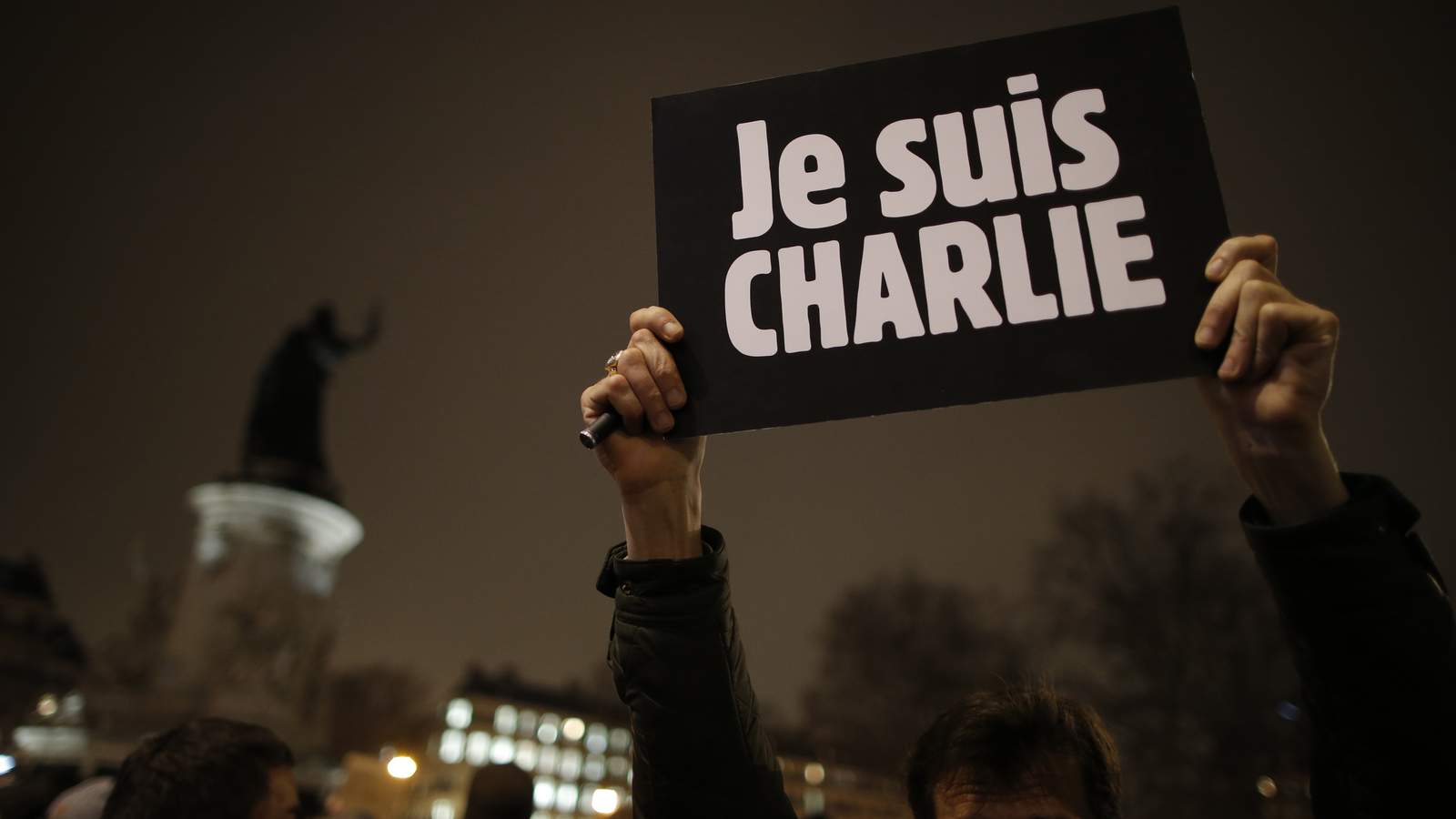
    Many of the statements and  rhetoric surrounding the Charlie Hebdo and subsequent incidents have focused strongly on a type of positive-negative asymmetry, where pejoratively denouncing the other while reinforcing ingroup bias comes as a priority for group identification. The problem is that these reinforcing mechanisms tend to make constructive discourse harder to engage in, as it is driving at the heart of the group identification. The rhetorics of #jesuischarlie, #jesuisahmed and the ‘We don’t condone such actions’   foster such identity dichotomies.

    However, I am somewhat heartened by articles such as this one from the Telegraph: http://www.telegraph.co.uk/news/worldnews/europe/france/11332535/We-think-the-Paris-terrorists-were-offended-by-Charlie-Hebdos-satire.-What-if-were-wrong.html

    Instead, they [extremists] merely pretend to be offended by cartoons, in order to give themselves a pretext to commit murder. Murder so horrifying, on a pretext so unWestern, that non-Muslims – blinded by grief and rage – turn on Muslims. Blame them. Persecute them. Burn their book, attack their mosques, threaten them in the street, demand their expulsion from Western societies. Actions that, in turn, scare Western Muslims, isolate them, alienate them. And thus drive some of them to support – and even become – terrorists.

    While I think that the strong reaction to ignore religious and social differences in many of these articles (this one trends in that direction) is unhelpful. I do think that considering and engaging with some of the underlying social and identity motivating factors, especially in a diachronic fashion, is required. Perhaps this is a good place to start…
  • Enclave Theology and Social Identity

    Enclave Theology and Social Identity

    Mike Bird has a brief piece over here on the prevalence of Enclave Theology: http://www.patheos.com/blogs/euangelion/2014/10/enclave-theology/ which relates back to the previous post on how labels are used in scholarship. He quotes from George Hunsinger

    By ‘enclave’ theology, I mean a theology based narrowly in a single tradition that seeks not to learn from other traditions and to enrich them, but instead to topple and defeat them, or at least to withstand them.

    Broadly speaking this can be seen as a polemical form of legitimation of social identity in the wider social sphere. Similarly to how labels are used as well.

    However, ultimately the monsters outside the door become the monsters inside. As Pierre Bourdieu wrote

    social identity lies in difference, and difference is asserted against what is closest, which represents the greatest threat

  • Don’t have a stock photo? Just rip off a famous YouTube presenter and defame them instead!

    stock-footage-young-man-photographer-taking-photographs-with-digital-slr-cameraThis article from PerthNow http://www.perthnow.com.au/news/western-australia/bizarrre-man-assaults-woman-photographs-her/story-fnhocxo3-1226656772796 gives the caption ‘Bizarre: A man gropes a woman’s thigh and then takes a photograph of her at a Perth shopping centre.’ to their photo.

    Problem is that the man with the camera in the photo isn’t the groper, and neither does he have anything to do with it (we presume). Rather the person is Kai Wong from DigitalRev, and the screencapture is from this review he did here: http://www.youtube.com/watch?v=3RVh2HC0KSw at 1m38s.
    One can only presume that this isnt the person involved, given that the footage is shot in Hong Kong rather than Perth.

    However, for a portion of the PerthNow readers the groper and creepy photographer has been inextricably linked with Kai Wong, a camera reviewer about 6,000km away.

    Plus photographers who use SLRs everywhere have been further sullied as perverts, just to add to the perception that anyone wandering public streets with a camera is instantly dodgy. Seriously, if a creep wanted to take lewd or creepy photos then the last thing they will want to do is to raise a 2kg camera and lens to their eye, especially one that draws instant attention like an SLR.

    Thanks PerthNow for your impeccable journalistic ethics. 

    Screenshot of the article stored here for posterity:

    Screen Shot 2013-06-04 at 4_23_34 PM

  • Pope Francis a Universalist? Perhaps….

    4577728-3x2-700x467In the midst of other worldwide theological furores, and local stuff with heretical bishops and the like, it seems that even Pope Francis is taking his share of the limelight. According to the Huff this week Pope Francis strongly implied a universalist position with his statement:
    “The Lord has redeemed all of us, all of us, with the Blood of Christ: all of us, not just Catholics. Everyone! ‘Father, the atheists?’ Even the atheists. Everyone!”
    The Huff has reported on it here: http://www.huffingtonpost.com/2013/05/23/atheists-like-what-they-see-in-pope-francis-new-openness_n_3329548.html and the Irish here: http://www.irishcentral.com/news/Atheists-big-fans-of–Pope-Francis-openness-and-good-works-among-those-in-need-209048751.html

    Now that does sound very universalist, with all people being redeemed by the cross, not just the Catholics, and it appears that Francis’ handlers think so too. A couple of days later they issued a correction to Francis’ homily, clearly stating that all who are apostate from the Catholic church are condemned:
    “Although they are otherwise good, moral people they are still doomed to burn in a lake of fire for having the temerity to have been born outside of Catholicism or having chosen to remain so.”
    http://www.irishcentral.com/story/ent/manhattan_diary/vatican-corrects-infallible-pope-atheists-will-still-burn-in-hell-208987111.html

    This has raised some eyebrows around the world, with the “moral atheists” obviously being rather unhappy about it, as too are many Protestants who thought that there might have been some form of reconciliation on the table. However, to me it sounds like a whole bunch of semantics over three words: ‘redeemed’, ‘salvation’ and ‘infallible’.

    Firstly, when Francis talks about ‘redeemed’ does he merely mean that Christ’s sacrifice on the cross was sufficient for all humanity, but will only be effective for those who believe (whether you take an election or free will argument)? I would suggest that this is probably the easiest orthodox reading of Francis’ statement, but it does end up slightly semantically skewed. All of humanity redeemed, but not all of humanity justified… its hard to see how those two can be separated. Indeed, this seems to be the place that his handlers have ended up when they issue the correction.

    Secondly, along with the redemption question, and tightly linked, is the issue of what does Francis think it means to have ‘salvation.’ Is it for him simply a position of being able to do good works? Or is it to stand justified before the throne in Christ? Without further homilies or statements to rely on its a bit hard to tell at the moment, but from this homily it does seem to trend towards the ability to do good works. Now I don’t want to be heard saying that doing good works is outside of the realm of anyone who is not in Christ, and I want to affirm that it does come back to the view of the image of God in humanity. But to equate good works with justification and salvation is stretching it….. a lot.

    Finally, infallibility. The doctrine has been swirling around for quite a few years now, with various Popes taking differing stances on it. Pope John XXIII is recorded as saying: “I am only infallible if I speak infallibly but I shall never do that, so I am not infallible.” But it seems that the principal place for the Pope to be infallible is when they are ex cathedra. Is a homily ex cathedra? Perhaps, but Francis’ handlers certainly don’t think so.

    It will be interesting to see how this one plays out, and I wonder whether Francis has been reading Rob Bell?