Category: College

  • Presenting at St Andrews Symposium 2016 – Son of God: Divine Sonship in Jewish and Christian Antiquity

    Presenting at St Andrews Symposium 2016 – Son of God: Divine Sonship in Jewish and Christian Antiquity

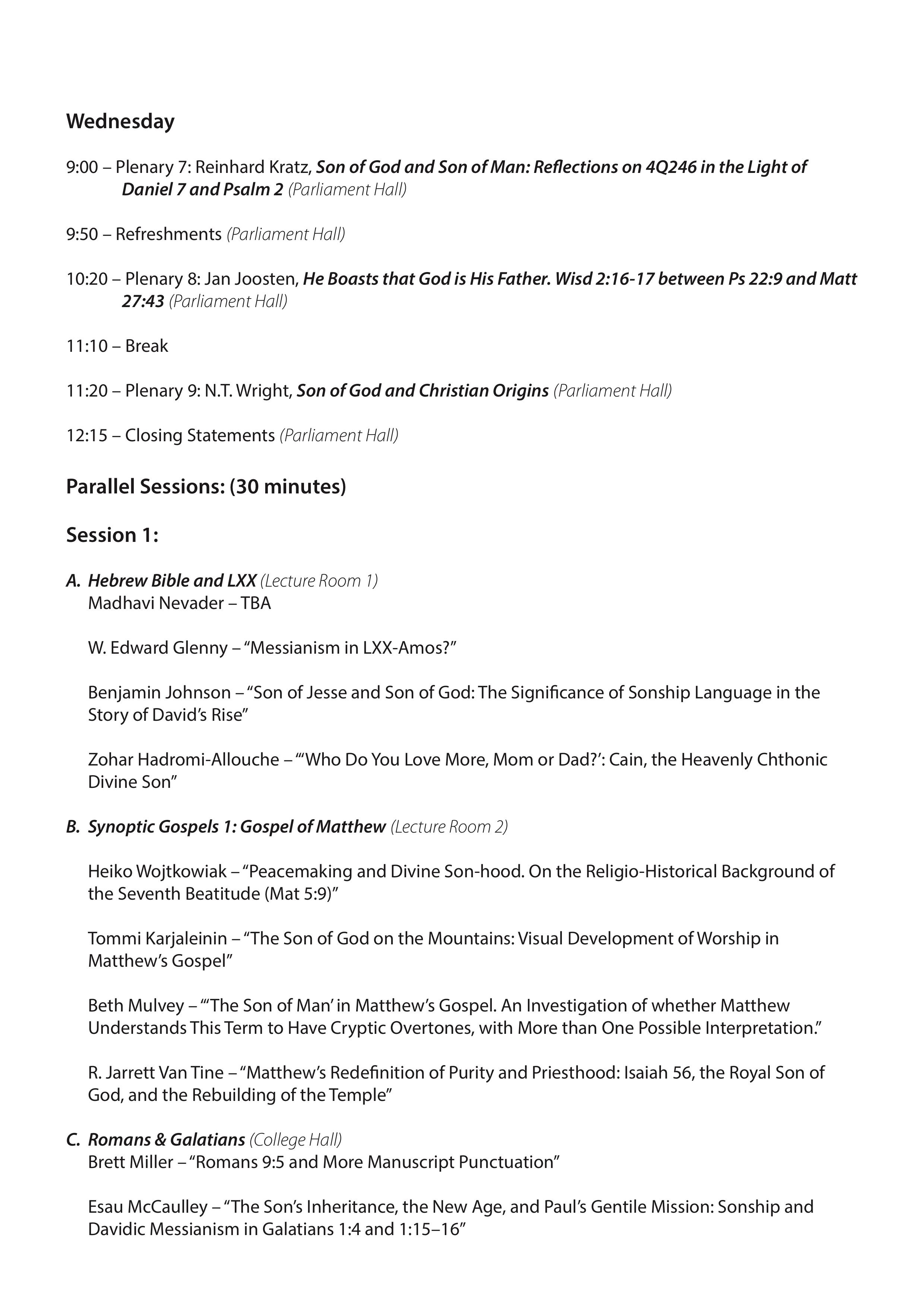
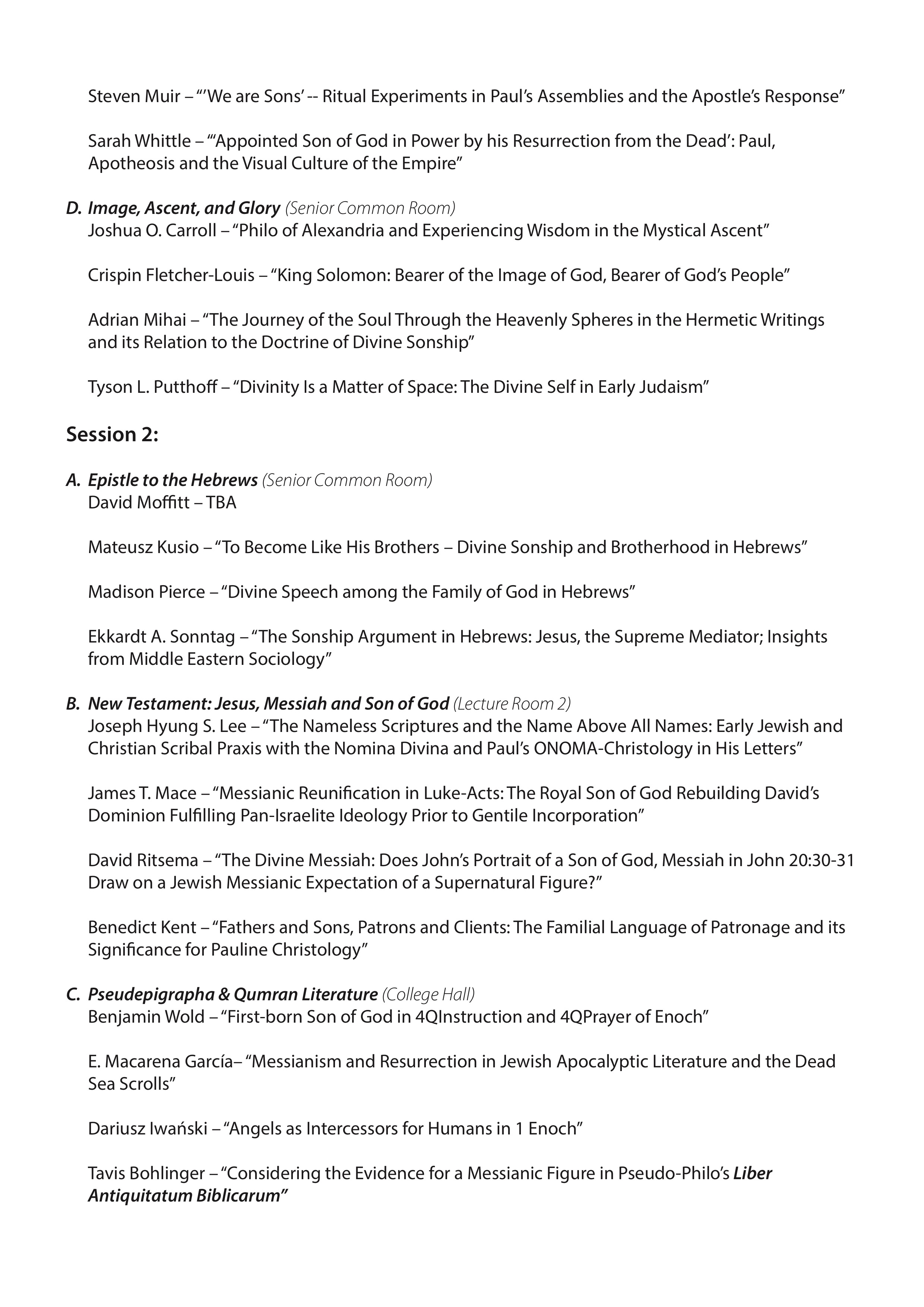
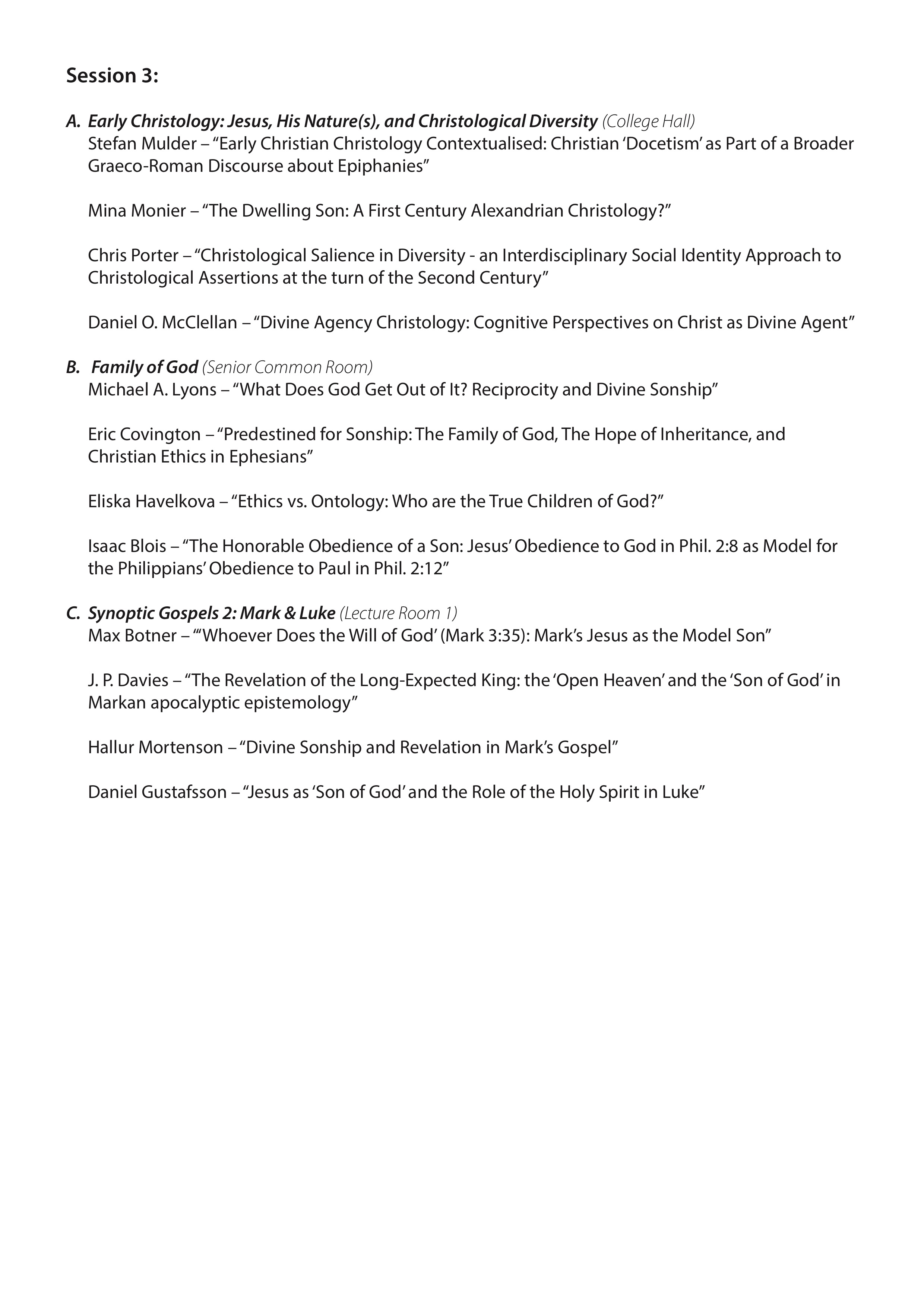
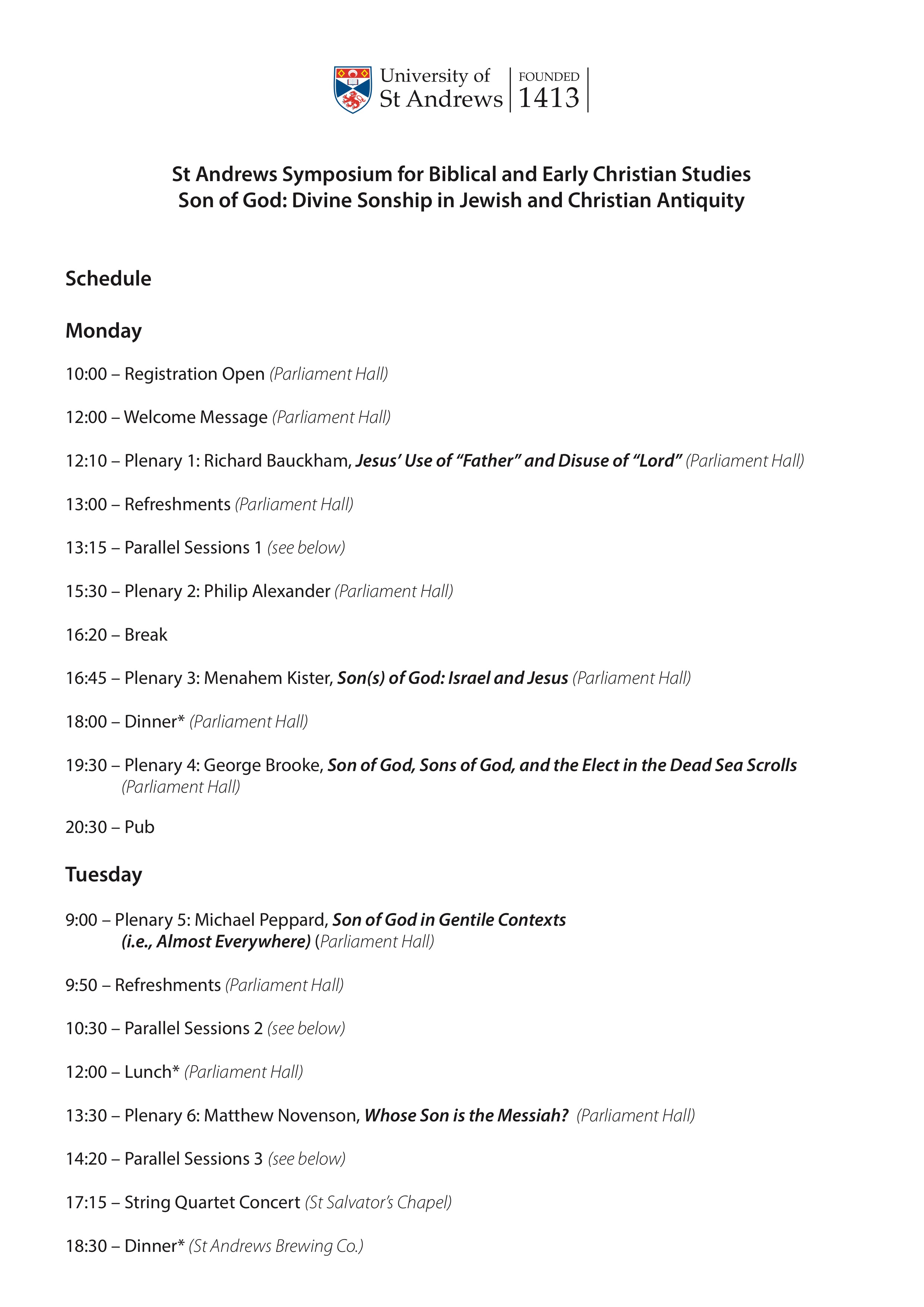
    This morning Qantas had the temerity (ok it was automated) to remind me that its only a little over a month before I will be heading to the UK for a pair of conferences, one at St Andrews in Scotland and the other at St Mary’s Twickenham down in London. Co-incidentally the draft schedule for the St Andrews symposium was released this week. Ill be presenting in the third parallel session on the Tuesday afternoon.
    Divine Sonship 2016 ScheduleDivine Sonship 2016 Schedule 2Divine Sonship 2016 Schedule 3Divine Sonship 2016 Schedule 4If you will be around Edinburgh/St Andrews or London/Oxford during the first two weeks of June and want to catch up I’m sure we can work something out 🙂

    Now, back to work on finishing this chapter of the thesis and getting all my cards in order again.

  • Academic Catchphrase – Help Sourcing a Calvin Quote on ‘Muzzling Dogs.’

    Academic Catchphrase – Help Sourcing a Calvin Quote on ‘Muzzling Dogs.’

    UPDATE: See end of blog post.

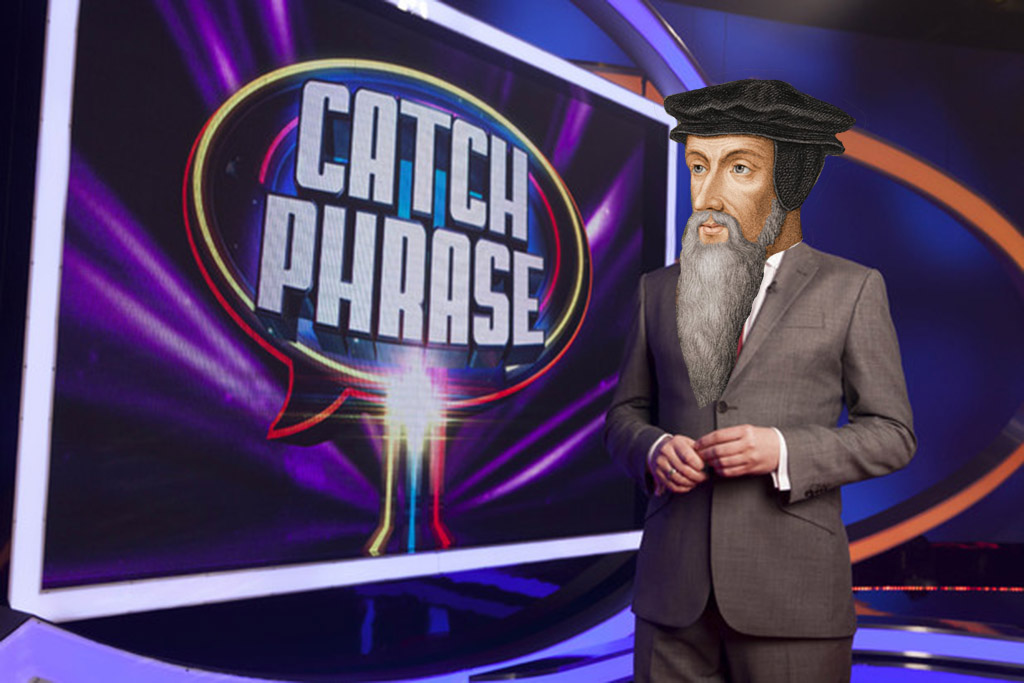
    At times finding quotes and references in student essays, and even in academic works, can be a bit like the old gameshow Catchphrase. Although on the whole quotations should be clearly referenced, and therefore relatively easily found, there are occasionally those which send you deep down the rabbit hole and turn up only loose ends. One of these quotes that keeps raising its head is this quote attributed to Calvin:

    ‘But we muzzle dogs, and shall we leave men free to open their mouths as they please.’

    Over the last couple of decades it has been popularised in a wide variety of sources, and generally attributed to Calvin’s works on Deuteronomy. It is understandable why it has become popular: it is polemical, expresses a censorious sentiment that is abhorrent to modern ears, and does it with a degree of vitriolic rhetoric that grabs the attention. On that basis it gets trotted out regularly to support issues of religious censorship such as this piece from the ABC on the Zaky Mallah/QandA affair: http://www.theage.com.au/comment/the-abc-wasnt-wrong-to-have-zaky-mallah-on-qa-20150623-ghvaow.[ref]Thanks to a friend for pointing this one out[/ref] However, the majority of these secondary works, if they cite anything at all, refer not to any work by Calvin, but to other secondary literature.

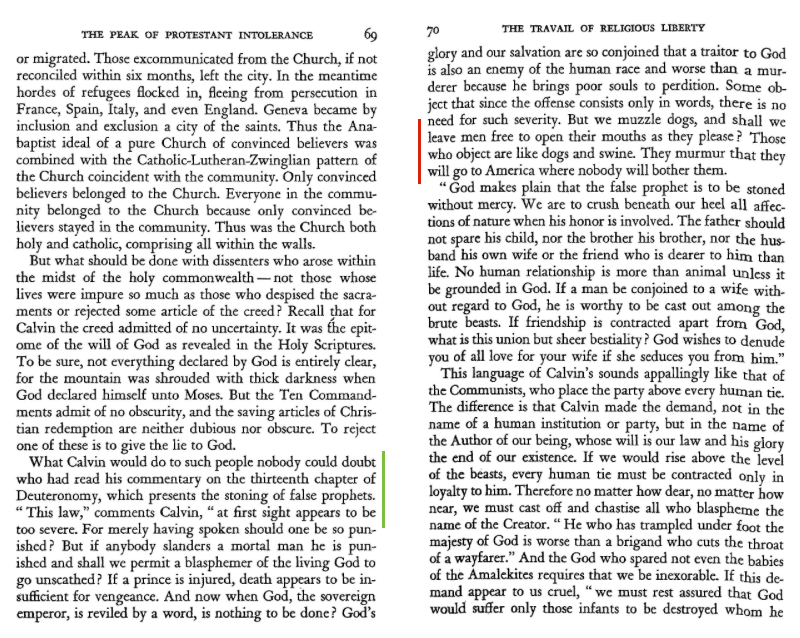
    When these references are chased through the rabbit warren eventually lead back to The Travail of Religious Liberty by Roland Bainton (1951).[ref]The full text of this is out of copyright and archived on Archive.org here: https://archive.org/details/travailofreligio012230mbp[/ref] The quote itself is found on page 70 of the book, but has no citation for the quote itself (update: citations were in an end-note that was missing from my copy). For context, here is the two page spread extracted from the archive.org edition with the pertinent pieces highlighted:
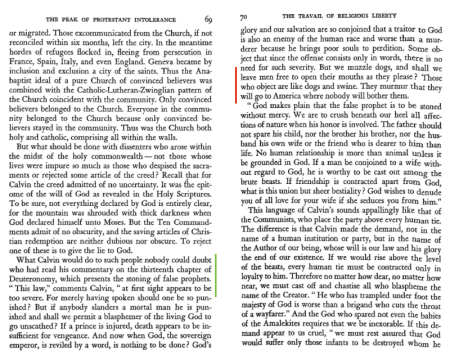
    Screen Shot 2015-09-03 at 10.25.50 am

    The full quote reads:

    ‘But we muzzle dogs, and shall we leave men free to open their mouths as they please? Those who object are like dogs and swine. They murmur that they will go to America where nobody will bother them.’ [ref]Bainton, Roland H. The Travail of Religious Liberty – Nine Biographical Studies. Philadelphia, PA: Westminster Press, 1951.,70.[/ref]

    In the text this quote has no ending quotemark, although the next paragraph starts with a further quotemark, and so one may presume that these words are intended to be cited as a quote from Calvin, especially as the opening quotemark on page 69 reads ‘“This law,” comments Calvin “at first sight…’ It is relatively safe to take the understanding that Bainton is intending to quote Calvin at this point.

    Indeed in the opening sentence of this paragraph he writes:

    ‘What Calvin would do to such people nobody could doubt who had read his commentary on the thirteenth chapter of Deuteronomy’[ref]Roland H. Bainton, The Travail of Religious Liberty – Nine Biographical Studies (Philadelphia, PA: Westminster Press, 1951)., 69[/ref]

    From this the natural reference for Bainton is that of Calvin’s words on Deuteronomy 13. However, here lies the multi-faceted problem.

    Firstly, in the reference editions of Calvin’s commentaries, there is no distinct commentary on Deuteronomy. Rather there is a commentary on the Harmony of the Law, which contains many of his words on Deuteronomy. It would be a reasonable expectation to find this quote in the Harmony of the Law when Calvin deals with Deuteronomy 13, and it was my first port of call, but there is nothing there. I can find no references to dogs, canis, and muzzling can be found in any of the versions of the work I have looked at (the work from the Calvin Translation Society is the primary reference here).

    The second location to search was that of the Institutes, as Calvin occasionally draws upon various passages and provides a mini-commentary to support his points. Again no references to muzzling dogs may be found in any of the four editions of the Institutes that I referred to.

    The third place to search was Calvin’s sermons on Deuteronomy that he preached in October of 1555. At first this source seems to yield some parallels, with Calvin preaching regarding ‘dogs’:

    ‘At a word, men would have either dogs or swine in the pulpit. This is the thing that they seek for; and this is mens desires in most places; who instead of good and faithful servants to God, do choose dogs and swine’[ref]Calvin, John. Sermons on Deuteronomy. Translated by Arthur Golding. Facsimile edition edition. Edinburgh; Carlisle, Pa.: Banner of Truth, 1987., 538[/ref]

    In this sermon, and the sermon preached in the following week, Calvin does talk about dogs and swine (dogges and ſwine) in a few places. However, all but one are paired as ‘dogs and swine,’ while the final reference is to the Papists and Cardinals as being dogs. Throughout his sermons on Deuteronomy I can find no reference to muzzling at all.

    These three locations form the core of the material that Calvin wrote or preached on Deuteronomy. But in case I was missing something I also ran searches for ‘muzzling’ and ‘dogs’ throughout all of the resources I could find electronically (the Calvini Opera, Archive.org, CCEL, StudyLight etc provided ample resourcing). Logos, DevonThink, were used for basic searches and a custom LSA[ref]Latent Semantic Analysis is a natural language computational linguistics tool[/ref] corpus was used to see if any inferences and alternately translated words could be detected. None of these searches returned any significant results, with the majority of hits being those found in Calvin’s sermons on Deuteronomy 13. All in all I cannot find any reference to the core of the original quote regarding muzzling dogs anywhere in Calvin’s works.

    However, I have another reservation about the full quote from Bainton’s book. The quote continues on to indicate that ‘they murmur that they will go to America where nobody will bother them.’ Given that Bainton is talking about Protestant religious persecution in this chapter, this indication seems somewhat anachronistic. Presuming the quote is genuine, at latest it would have been written in c.1559 when the last of the material on Deuteronomy (Commentary on the Harmony of the Law) was written, as from this quote in Vie de Calvin

    Towards the end of that year [1559] they began in the Friday meetings the exposition of the four last books of Moses in the form of a Harmony, just as Calvin assembled the material in his commentary which he had published afterwards. [ref]CO 21:90. See DeBoer Origin And Originality Of John Calvin’s ‘Harmony Of The Law’, The Expository Project On Exodus-Deuteronomy (Acta Theologica Supplementum 10, 2008) for more details[/ref]

    At this time the prime settlements in America were Catholic in nature. The only reference to a Protestant site that I can find is that of Charlesfort-Santa Elena in South Carolina, the site of a Hugenot settlement. However, apart from this failed settlement where may this American settlement refer to. Indeed if, as Bainton is arguing, this quote is referring to Protestants fleeing Europe over persecution (Bainton later links the Michael Servetus incident here), then it would make no sense to flee to a location that was experiencing significant religious persecution if they want to go somewhere where ‘nobody will bother them.’ This sentiment fits far better in the early-17th century, rather than the mid-16th century.

    This historical tangent aside, what do we make of this quote? Certainly if one wants to convey the sentiment of religious persecution and debate, a case may be mounted from Calvin’s works. But I would argue that this quote is not a reliable source for it. I still cannot find any reference to the quote, nor any significant material on fleeing to America, in any of Calvin’s works. I have enquired with some Calvin scholars to no avail—or with some no reply.

    Therefore I am turning to the broader internet, if anyone can supply the location of the quote I would be very interested.

    UPDATE:

    It appears that in my prejudice for trusting the validity of physical books over archive.org scans I had missed that Travails has its sourcing in end notes after the final chapter. Unfortunately the copy that I had sourced from a local library was rebound and missing the sources and index at the end of the book. Thanks to Richard Walker for highlighting this to me, see his Disqus comment for more details (unless Disqus isn’t loading again).

    However, I’m still not convinced by the translation that Bainton has supplied and will blog on that later.
  • The OODA loop and Cognitive Biases

    The OODA loop and Cognitive Biases

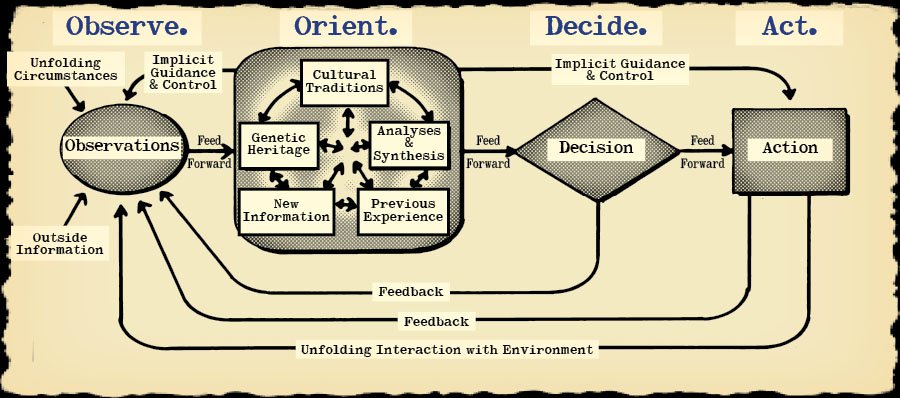
    This morning I gave a brief talk on several of the cognitive biases that have featured on here over the last few months, and their often stormy relationship with our rapid decision making/heuristic processes. During that talk I mentioned the OODA (Observe-Orient-Decide-Act) loop briefly, and a couple of people asked questions over morning tea on the loop. If you aren’t up to speed on the OODA loop then read this good article on it on the Art of Manliness blog here: http://www.artofmanliness.com/2014/09/15/ooda-loop/.  On the drive home I was considering at which levels our intrinsic cognitive biases affect the OODA loop. Using this diagram the Art of Manliness blog,t he majority of our cognitive biases unsurprisingly impact the Orient stage of the process.

    OODA-Loop-2-1

    However, even within this larger model (many other models just have the four stages  in linear or cyclic fashion) there isn’t any neat place for the biases. I would suggest that they act within the Orient stage as a sixth box, affecting the others, and also within the ‘Implicit Guidance & Control’ and Feed Forward stages of the O-O section of the loop. 

    Perhaps we need to do further thinking on where our biases affect our rapid decision making processes. Anyone have a version of the OODA model that incorporates biases tightly?

  • Work, Research and Organisational Tools Overview

    Work, Research and Organisational Tools Overview

    When working, or studying, or for that matter going about daily life there are a multitude of skills and disciplines that will help us be better at whatever we are doing. Some of those skills and disciplines I will look at in the Wednesday and Friday sessions. But in addition to these skills and disciplines there are a whole host of software tools that can make the tasks at hand easier, more productive, less painful, and assist us overall. However, there are two caveats with any toolset.

    Firstly, they are only tools, they do not replace the tasks that are at hand, or the skills and discipline needed to complete the task at hand. One common trap I have seen many students and colleagues fall into is assuming that because they are using the right tools that the task will become self-completing, or that they can use less effort for the same results. Using the right tools will make your life easier, but they wont do your work for you. Just because you have a Phillips screwdriver rather than a hammer to undo the screw, doesn’t mean that the screw will automatically undo.

    Secondly, there are a lot of tools out there. In putting together this series I have experimented with some tools outside of my normal toolkit, or tried to find free, cheaper or better alternatives. But commonly this can lead to tool paralysis, where we wonder whether Tool A is right for the job, or whether we would be better served with Tool X, Y, Z and the rest of the alphabet. The truth be told there is no one perfect tool for any job, each has their own quirks and idiosyncrasies, and it is up to the user to decide whether the tool at hand fulfils their requirements accurately. On the flip side there is something to be said for maintaining a relatively stable toolkit, as chopping and changing regularly tends to waste time with the learning curve of the new tool. The toolkit I work with, that I will showcase in this series, has has several tweaks and minor changes, but hasn’t had any major upheavals for several years now. It is stable, and the oddities I have either embraced or learned to work around.

    This Monday series will document my toolkit that I use for my research, synthesis and output in my academic life. In various incarnations this toolkit has served me well through the last ten years of academic research after I finished my undergrads. Some of the software has changed, and certainly the proportion of digital work has increased with new technology, but the overall process has remained relatively stable. While ten years ago I worked mostly in paper, I have transitioned to being predominantly digital in workflow over the last five years. This certainly helps with being able to search and access data easily, and assists in the synthesis and output process.

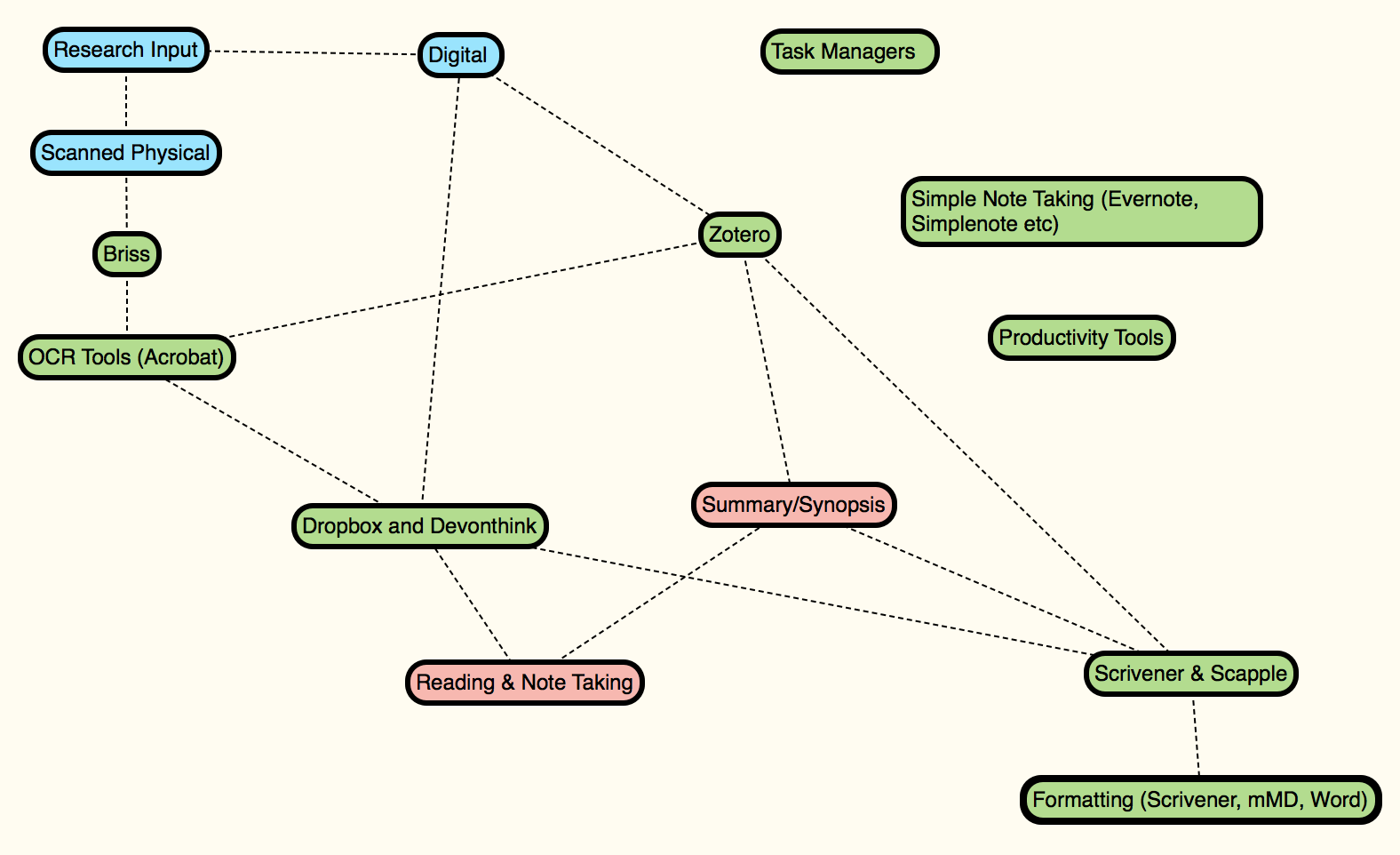
    Overall my workflow looks something like this:
    ďżźOrganisational Tools
    (Click for a bigger view)

    Roughly speaking I take input either already digital or physical, digitise the physical media, manipulate it so that it is consistent with Briss and OCR (Acrobat) tools, and then add it to my library (Zotero and Devonthink). From there I maintain my library and process the material through reading, note taking and writing synthesised summaries. On the output side I use a mindmapping tool (Scapple) and a word processor (Scrivener) to synthesise my ideas into their final forms.

    Alongside this process sits a bunch of task management tools, note taking apps, and productivity tools that assist me in getting my work done. I will come to each of those in turn.

    The next six blog posts will cover this entire process in more detail, and will roughly follow the workflow. The six posts will be on:

    • Task Managers & Focusing (Tools for Getting Things Done)
    • Briss & Acrobat (Wrangling Digital Files)
    • Zotero (Citation and Library Management)
    • Dropbox and Devonthink (Storing and Accessing Digital Media)
    • Note Taking Tools
    • Synthesis Tools (Scrivener and Scapple)

    I’m looking forward to this series, partly because I’m keen to help others be able to organise their research and writing better, but also because it helps me review my own toolkit and see whether anything needs further tweaking. I would love to hear your thoughts on the process I have outlined, and what tools you use. Comment here or on Facebook.

  • New Study Series beginning in February

    New Study Series beginning in February

    With the start of the new academic year it is worth considering some methods, skills and tools for study in the year ahead. This year I have decided to put together a short seven week blog series covering many of the questions I am regularly asked when it comes to studying. I will divide it up into three separate sub categories: Study Tools, Study Skills and an assorted series of Biases and Fallacies that commonly arise. On Mondays the Study Tools part of the series will focus on organisational tools that can make the process of gathering, sorting, absorbing and synthesising information easier.
    On Fridays the Study Skills section will look primarily at holistic skills for getting the most out of the time that is spent studying and writing.
    Finally, on Wednesdays the Biases and Fallacies section will look at a series of common cognitive biases and fallacies that crop up in academia of all levels, and this section will finally culminate in an attempted Grand Theory of (Almost) Everything.

    However, even though I have been studying and working in academia for quite a while now, I certainly have not come across everything that there is to be said in each section. Many of the posts will deal with questions I am asked commonly, and have proven helpful to others at Ridley and elsewhere. So I will mostly be sharing what works for me, and hoping that you, the readers, will be able to use and adapt my methodologies for your purposes.

    I am really interested though in hearing what you would like to see covered. Are there any specific situations or problems that you find yourself regularly encountering? Also I will be welcoming comments and sharing of personal tweaks and methods on each of the sections when I get to the specifics. I am keen to learn from others, and hope that we can make the learning process as a whole better and more enjoyable. So please comment below, or on Facebook with what you would like to see me cover and what would be useful.

  • What is the Point?

    What is the Point?

    Recently I was at the ETS and then SBL/AAR conferences in the US, with about 15,000 people descending on San Diego for the SBL/AAR conference alone. While one of the Ridley lecturers, Andrew Malone, and I were heading out for dinner we encountered a lady who challenged us on what is the point in studying the bible if for so many it doesn’t change our actions. He has eloquently blogged about it over on the Ridley site here:
    http://www.ridley.edu.au/college-life/so-what/

    Let me briefly quote from his blog:

    All too many Christians known to us and to Amy are simply lazy or selfish when it comes to putting theory into practice … It’s our job to ensure that the members of God’s church for whom we’re responsible (and we ourselves) are adept and conscientious at asking ‘so what?’ and putting the theory into practice. Yes, we need to know how to distinguish Greek genitives and to rightly interpret Genesis and Hebrews. And we also need to know why and how to share Jesus’ compassion with a sin-laden society that’s made in God’s image, a compassion that quells physical hunger as readily as it strives to furnish spiritual nourishment. And we need to get on with it.

  • Another Chapter Done

    Another Chapter Done

    10801715_10152769425980944_997747774922569711_n
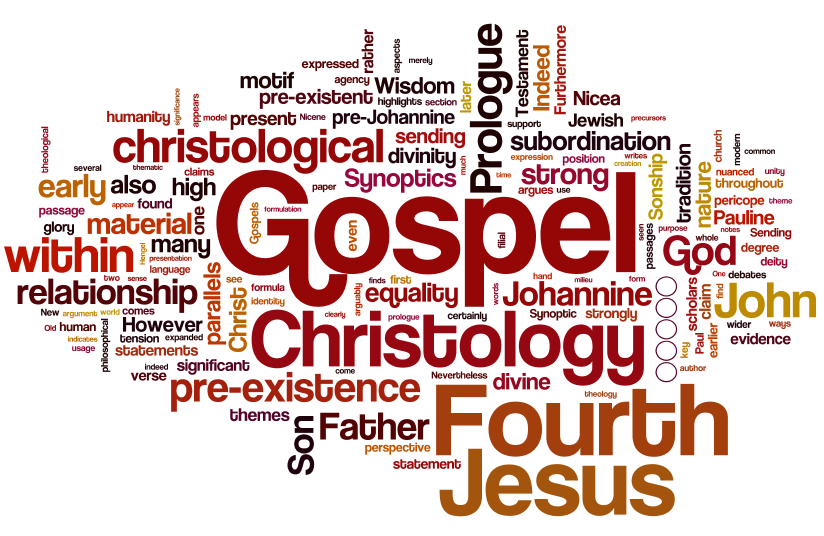
    I know I haven’t posted a Wordle for a while, but today I thought I would resurrect the practice. I submitted my major project/thesis for my M.Div/G.D.Theol today (in triplicate).

    In many ways this feels like the stepping stone that my ‘honours’ thesis was so many years ago (in quotes because it wasnt awarded for credit), and hopefully I will be admitted to the PhD program next year. More on that later. But in celebration here is the Wordle of my 16,262 words on the topic of Johannine Christology:

    Wordle

  • Writing, Jazz, Plagiarism and Improv – Jazz as a metaphor for academic writing.

    Writing, Jazz, Plagiarism and Improv – Jazz as a metaphor for academic writing.

    Copyright: Unattributed Creative CommonsAcademic writing, Jazz, Plagiarism and Improv. You might be wondering at what these concepts have in common, and why they should be written about in a single article. Well last week I had the opportunity to attend a network meeting-come-book launch-come-philosophy lecture by Bruce Ellis Benson talking about his new-ish book Liturgy as a Way of Life. “Ugh, are you serious” – I can hear the groans already. What does Liturgy have to do with anything? Well i wont be directly addressing the liturgy part of the lecture tonight, except to say that it’s not quite as you may think.

    Instead one of the parts that piqued my interest was Benson’s extensive use of musica as a philosophical framework for the explanation of life, amongst many other things. From this framework he posits a veritable bevy of comparisons between Jazz and life, of which I will only look at one in this post: Improv. Benson argues that while God is the originator and creator of the world, we are instead re-creators, taking what has been already created and reimagining it and recreating it into something new. While Marx and Hegel may have argued that everything has been done already, in the same vein as Ecclesiastes 1:9; Benson instead argues that we take the original strains of musica and reinterpret them as a form of Jazz-like improvisation i.e. Improv. In such a way we stand on the shoulders of giants and play the tune that has come before but in a slightly different way.

    Now for this metaphor to work it is worth noting a few things about Jazz music. Firstly, despite the seemingly cacaphonic nature of an improv within the piece it inevitably picks up on the theme laid out earlier in the piece, and ‘riffs’ off it. In this way the improv soloist (or band) are taking what has already happened and turning it into something a little bit new. Secondly, it is not the wholesale replacement of the original piece. Despite how different the improv may seem there is acknowledgement of what has come before, and cues for what is to come afterward. In this way an improv cannot simply stand on its own as a whole piece, it is shallow and thin; and the piece is somewhat hollow without that corresponding improv.

    But what does this have to do with academic writing? – I hear you ask; well I offer this corollary. One of the aspects of academic essay writing that the students who come and see me for first year tutoring commonly wrestle with is how to present ‘novel’ thoughts within their essays. They rebel at the concept that an essay could be simply the regurgitation of someone else’s ideas, organised into a pithy 2000 words; and I would say rightly so. Nevertheless the balance between acknowledging the supports for your argument and simply depositing it onto the page with a citation is a fine balance at times. [ref]I know that the comparison between classical music and regurgitation can be made here. However, even in classical music I think there is some scope for individual interpretations.[/ref] Here is where I think the metaphor of Jazz plays into the equation: writing an academic essay is somewhat like performing a Jazz improv. When you are writing an academic piece you are constantly acknowledging the shoulders on which you stand, those who have run the race beforehand and set benchmarks, the explorers who have charted their little bit of new territory and laid out some of the markers. Rare is it that a paper stands on its own, and in the vein of Star Trek: boldly goes ‘where no man has gone before.’

    However, a good academic essay should not be simply regurgitating the previous information, but should be teasing out the implications, the differences in individual perspective  that make previous arguments sing more brightly, or lend weight to a specific train of thought over another. This is the improv part, the offering of a different interpretation, nuances here and there, extending the bounds of the sphere of research wider. It is not simply slavish wholesale copying which is realistically plagiarism, even if it is cited. But rather seeing the intricacies of the arguments that have come before hand, watching the notes bounce off each other, and recognising the gaps that can be filled, or the silences that can be left, and working with those. Sure at an introductory level the author is bound to find that someone else has thought of their lightbulb before, or shares the same interpretation of a text as them. But even there the nuance is different. In the indomitable words of Monty Python ‘you are all individuals’, and as such the individual differences of our perspectives can be brought to bear in an essay, of any level.

    Perhaps the best way to sum it up is by using Bruce Ellis Benson’s own words:

    Just like in Jazz improv, one may borrow an idea but one must return it with interest.


  • First essay for 2013….

    wordle

    So the year has started again, and is rapidly accelerating. Infact my first essay has already been written and submitted, although technically it was really a book review… of six books… and two jouranls…. in 1100 words. Eeep.

    Anwyay in that tradition of posting a wordle for each one, here is the one for this essay.

  • Another essay…. authoritatively!

    Another essay…. authoritatively!

    Tomorrow I will be handing up this paper, which ends the essay phase of the semester. Throughout i have written well over 20,000 words (and handed up 13,000 or so) in four papers across about 6 weeks. There is a significant part of me that thoroughly enjoyed the whole process.

    However, there is also a part of me which is glad the process is over… if only because exams are looming close on the horizon.

    For now though enjoy the Wordle from this paper.