Category: Book Review

  • Reading Project: Intentional Community, New Monasticism, Spiritual Friendship and Rhythms and Rules of Life

    Reading Project: Intentional Community, New Monasticism, Spiritual Friendship and Rhythms and Rules of Life

    One of the practices I keep is to always have a long term reading project on the go, that is less directly related to my active research. I find this keeps me reading broadly and more agile in the way that I process and link concepts together. Over the winter break (in Australia) I completed my last reading project of N.T. Wright’s Christian Origins series, and have been debating what to start next. Some discussions in the last week have pushed me towards revisiting some thinking I have been doing for several years now on intentional community, the Benedict option, and various rules of life. Plus it seems that from the responses on Facebook others are interested in this as well, so this is where I will be doing my extra-curricular reading for the next few months.

    In discussions with people on Facebook and in the communities I’m a part of, I thought it may be useful to start compiling a list of resources and reviewing them, along with attempting to foster discussion on them. Some of these discussions will happen in person, as I am investigating setting up a reading group or two to discuss ideas. But I also want these to be more broadly reaching.

    This then is the start of the online side of the discussion, a reading list. Here is a bibliography of suggested works from a plethora of different sources, that I am hoping to read. Im also hoping to review, or have someone else review, most of the works too and make those reviews available publicly. If you have more suggested works, then please contribute them in the comments or send them to me via another method.

    Do let me know if you want to be part of this reading project, either online or in person. Reading is always more fun in community… and reading on community should be even more so again!

    For now though here is the bibliography:

    Bibliography

    Arpin-Ricci, Jamie, and Jonathan Wilson-Hartgrove. The Cost of Community: Jesus, St. Francis and Life in the Kingdom. Downers Grove, Ill: IVP Books, 2011.
    Barker, Ashley. Surrender All: A Call to Sub-Merge with Christ. Melbourne: CreateSpace Independent Publishing Platform, 2005.
    Barton, Ruth Haley. Life Together in Christ: Experiencing Transformation in Community. Downers Grove: IVP Books, 2014.
    Bonhoeffer, Dietrich. Discipleship. Unknown edition. Minneapolis: FORTRESS PRESS, 2003.
    ———. Life Together: The Classic Exploration of Christian in Community. 1St Edition edition edition. New York: HarperOne, 2009.
    Chester, Tim, and Steve Timmis. Everyday Church: Gospel Communities on Mission. 1 edition. Wheaton, Ill: Crossway, 2012.
    ———. Total Church: A Radical Reshaping around Gospel and Community. Wheaton, Ill: Crossway, 2008.
    Claiborne, Shane, and Jim Wallis. The Irresistible Revolution: Living as an Ordinary Radical. 1st edition. Grand Rapids, Mich: Zondervan, 2006.
    Claiborne, Shane, and Jonathan Wilson-Hartgrove. Common Prayer Pocket Edition: A Liturgy for Ordinary Radicals. Poc Rep edition. Grand Rapids, Mich: Zondervan, 2012.
    Duckworth, Jenny, and Justin Duckworth. Against the Tide, Towards the Kingdom: Eugene, Or: Wipf & Stock Pub, 2011.
    Edgar, Brian. God Is Friendship: A Theology of Spirituality, Community, and Society. Seedbed Publishing, 2013.
    Ford, Leighton. The Attentive Life: Discerning God’s Presence in All Things. Place of publication not identified: IVP Books, 2014.
    Hauerwas, Stanley, and William H. Willimon. Resident Aliens: Life in the Christian Colony. Anniversary ed. edition. Nashville: Abingdon Press, 2014.

    Heath, Elaine A. Missional. Monastic. Mainline.: A Guide to Starting Missional Micro-Communities in Historically Mainline Traditions. Eugene, Oregon: Cascade Books, 2014.

    ———. The Mystic Way of Evangelism: A Contemplative Vision for Christian Outreach. Grand Rapids, MI: Baker Academic, 2008.
    Heath, Elaine A., and Scott T. Kisker. Longing for Spring: A New Vision for Wesleyan Community. Eugene, Or: Wipf & Stock Pub, 2010.
    Hill, Wesley. Spiritual Friendship: Finding Love in the Church as a Celibate Gay Christian. Grand Rapids, Michigan: Brazos Press, 2015.
    Holmes, Jonathan, and Ed Welch. The Company We Keep: In Search of Biblical Friendship. Place of publication not identified: Cruciform Press, 2014.
    Janzen, David, Shane Claiborne, and Jonathan Wilson-Hartgrove. The Intentional Christian Community Handbook: For Idealists, Hypocrites, and Wannabe Disciples of Jesus. Brewster, Mass: Paraclete Press, 2012.
    Macchia, Stephen A., and Mark Buchanan. Crafting a Rule of Life: An Invitation to the Well-Ordered Way. Downers Grove, Ill: IVP Books, 2012.
    McKnight, Scot. A Fellowship of Differents: Showing the World God’s Design for Life Together. Grand Rapids, Michigan: Zondervan, 2015.
    Nouwen, Henri J. M. Reaching Out: The Three Movements of the Spiritual Life. Reissue edition. Garden City, N.Y: Image, 1986.
    Palmer, Parker J. To Know as We Are Known: Education as a Spiritual Journey. Reprint edition. San Francisco: HarperOne, 1993.
    Smith, William P. Loving Well. Greensboro, NC: New Growth Press, 2012.
    Sparks, Paul, Tim Soerens, and Dwight J. Friesen. The New Parish: How Neighborhood Churches Are Transforming Mission, Discipleship and Community. Downers Grove, Illinois: IVP Books, 2014.
    Vanderstelt, Jeff. Saturate: Being Disciples of Jesus in the Everyday Stuff of Life. Wheaton: Crossway, 2015.
    Vanier, Jean. Community and Growth. 2nd Revised edition. New York: Paulist Press, 1989.

  • Book Review: Understanding Gender Dysphoria – Mark Yarhouse

    Book Review: Understanding Gender Dysphoria – Mark Yarhouse

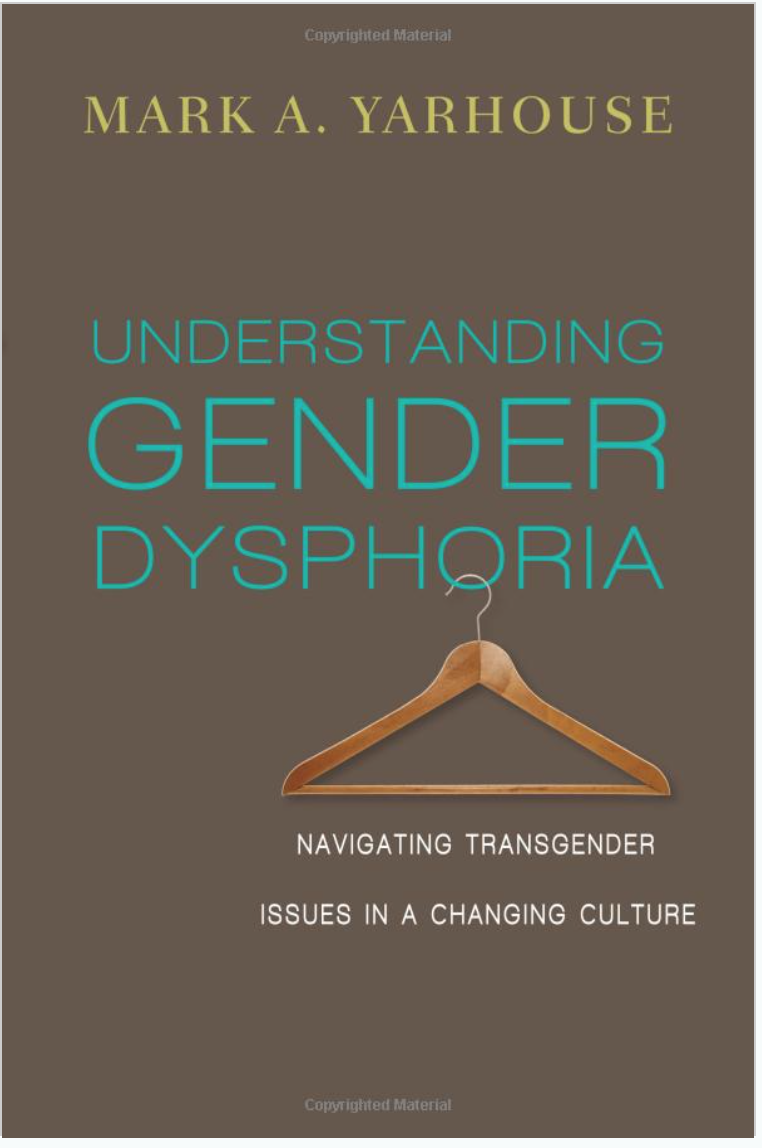
    Understanding Gender Dysphoria
    Mark Yarhouse; 2015. | IVP Academic | 191 pages
    978-0-8308-2859-3

    Gender dysphoria (GD) and transgender issues are currently a hot topic in the media and everyday discourse, thanks in no small part to the topic being thrust into the limelight by celebrity events. However, the current media focus on the topic doesn’t do justice to the complexity of the issue. Especially given the superficial gloss awarded to the psychological and medical aspects. From a psychological perspective, Gender Dysphoria [302.85]—or Gender Identity Disorder (GID) as it was known—has been described in the Diagnostics and Statistics Manual (DSM)—the psychological disagnostic handbook—since version III (1980) under different categories. My own interest in the topic originated with two friends announcing their identification as ‘trans’ and ‘gender identity dissonant’ (yeah, he was a Psych friend) around fourteen years ago. In particular, there has been a lack of helpful, well thought through analysis from a Christian perspective.

    A few books have been released recently, intent on speaking to this modern interest in gender dysphoria, and the first for review is the aptly titled Understanding Gender Dysphoria by Mark Yarhouse. This is a relatively slim book from Yarhouse, given his previous work on Modern Psychopathologies and books on therapy. As with his previous work he writes from a distinctly Christian perspective, although firmly embedded within the psychological discipline as a well-rounded practitioner. As such this book walks the fine line between disciplinary specificity and appealing to a broader audience. The introduction describes this tension well:

    ‘This book invites Christians to reflect on several issues related to these findings [sexual identity research], a broader research literature…and other anecdotal accounts. …I note that as we wade into this particular pool, we are going to quickly be in the deep end, as the topic is complex.’ (p11)

    However it is this tension that makes this book both appealing and somewhat unsatisfying. From my own background I will be reviewing it from both a psychological and a theological perspective, with all the conflict and overlap that this presents.

    Given Yarhouse’s aim of engaging with a broad Christian audience, he starts from a point that is relatively accessible to his audience. However, this accessible starting point is not without its costs, as the first few pages present a steep learning curve. By the second page of the first content chapter Yarhouse is deep within identity theory, chromosomal difference, and introducing a spectrum of gender identification. Although this book may be written for a lay audience it expects a strong degree of education, reflection and analysis. Drawing from his psychological background Yarhouse helpfully differentiates between biological/chromosomal sex, gender identity, and gender role/acts. It is this degree of nuance that is useful in defining aspects of the discussion up front.

    From the first chapter that seeks to appreciate the complexity surrounding gender dysphoria, the second chapter attempts to assemble a useful Christian perspective on the topic. The opening anecdote sets the tone for the chapter by highlighting a limited and closed-minded approach. Throughout this model building Yarhouse draws upon a biblical theology of humanity. From this he proposes three preliminary models for engaging with gender dysphoria: the integrity framework, the disability framework and the diversity framework. While these three frameworks represent usable approaches it is worth noting that of them none will please everyone. Conservative Christians will likely follow after the integrity framework, while abhorring the diversity framework. Similarly staunch supporters of Gender Dysphoria (in the DSM-5 sense) will likely support the diversity model while decrying the integrity framework. Nevertheless these three frameworks are a useful heuristic for approaching the issue. Yarhouse attempts to blend these three frameworks in presenting an integrated model that acknowledges ‘integrity of sex differences,’ drives for ‘compassionate management of gender dysphoria,’ and validates ‘meaning making, identity and community.’ From a theological perspective the anthropology feels quite shallow and I wish it wrestled further with the imago dei and Christian identity. Still this section is a good introduction to the topic, and will be useful even to those with no faith convictions whatsoever, due to the paucity of helpful literature on the topic. [ref]The majority of literature at a lay-level provides brief glosses at best, while more in-depth literature tends towards ‘clinicalisation’ and diagnostic issues.[/ref]

    From this chapter, the book moves onto an investigation of the Phenomenology and Prevalence (Ch4) and Prevention and Treatment (Ch5) of Gender Dysphoria. These chapters are presented from the perspective of the DSM-5 with some minor comparisons with the previous DSM-IV. Here Yarhouse’s clinical practice is set centre stage, with regular anecdotal excurses supporting and highlighting facets of the clinical definitions. Personally from my background in Socio-cognitive psychology, I would wish for more in these chapters on the DSM-5 update to the DSM-IV given the change from Gender Identity Disorder to Gender Dysphoria. This change in the DSM-5 acknowledges the increasing ‘medicalisation’ of the diagnostic criteria, but seemingly sidelines many of the identity issues in favour of focusing on the ‘distress’ involved in the diagnosis. (Koh, 2012) This aspect of identity and gender is the primary area that my inner socio-cognitive psych wants to see addressed and engaged with further from a Christian perspective, especially concerning issues of cognitive dissonance in this sphere.

    The final section of the book envisages a Christian response from both individuals and the broader community (or institution). These chapters seek to cement the theory and specialist praxis within the sphere of Christian community. Ultimately these chapters are likely to be the most useful to the intended audience and have the most impact; my psychological and theological wishes aside. These chapters paint a picture of a church that seeks to love and engage with those who have gender identity concerns. Furthermore, the picture that Yarhouse paints is certainly not the whitewashing of the issue that is commonly presented, nor is it the seemingly random spatters of paint that resemble a church that has not wrestled with these issues. The practical application here will greatly benefit churches and individuals alike.

    Ultimately this book provides an invaluable foray into the issues surrounding Gender Dysphoria/Gender Identity Disorder. It seeks to present a strong case for understanding gender dysphoria from a biblical, theological, pastoral and psychological standpoint. The argument presented will certainly not please everyone, with many conservatives seeing it as capitulating and many progressives seeing it as not radical enough. Personally there are times I wish that certain issues were investigated further, or extricated from the holistic model to be examined individually. However, despite these issues the book makes an important contribution to a sorely neglected issue within the church, and our society, today. All readers, even those who have no faith affiliation, are likely to find this book useful in addressing the basis of their exploration in understanding gender dysphoria.

    I hope that Gill can also review this book from a medical perspective in the near future.

    This book review was originally published on Euangelion and archived here. 

  • Book Review: ‘Jonathan Edwards and the Church’ by Rhys Bezzant

    Book Review: ‘Jonathan Edwards and the Church’ by Rhys Bezzant

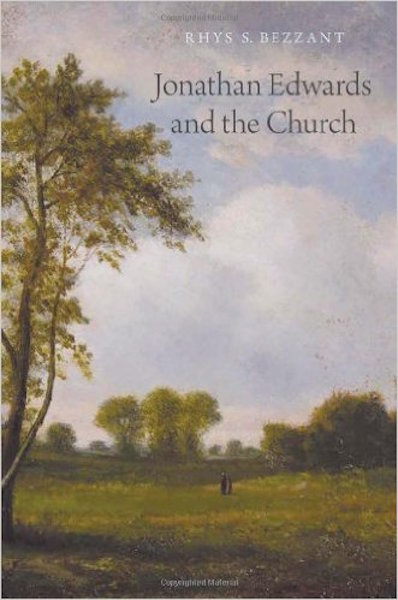
    Jonathan Edwards and the Church
    Rhys S. Bezzant; 2014. | OUP USA | 328 pages
    978-0-19-989030-9


    Although Jonathan Edwards wrote and preached on an exceedingly wide variety of theological subjects, many scholars declare that he did not have any independent ecclesiology. Rather that his ecclesiological impulses were driven by social and broader theological focuses. In Jonathan Edwards and the Church Rhys Bezzant demonstrates that Edwards actually held a robust ecclesiology that took into account both social and theological drivers. Bezzant sets out to expound Edwardsean on his oft-repeated model of the church as a ‘focused domain where God’s promises, presence and purpose are to be discovered.’ (ix) In doing so he opines that Edwards’s ecclesiology was ultimately ‘a revivalist ecclesiology within a traditional ecclesiology of nurture and institutional order.’ (xi)

    In order to investigate Edwards’s ecclesiology Bezzant follows a diachronic model, describing the various aspects of Edwards’s ministry, writings and church engagement throughout his life. In chapter one Bezzant paints a rich picture of the church world of the New England colonies before Edwards’s ministry, highlighting a vast array of ecclesiological and social pressures upon the Puritan endeavour. Chapters two, three, and four trace Edwards’s ecclesiological development through the three primary stages of his life—delineated by two works A Faithful Narrative in 1735 and A Humble Attempt in 1747. Bezzant traces Edwards’s reflections from his less-conventional conversion narrative through his early life, developing theology and burgeoning ministry—the period heavily influenced by the Great Awakening—and then into his mature ecclesial ministry and global focus. These chapters mine the depths of Edwards’s own writings—recently published as a letterpress edition by Yale University Press—as well as the copious secondary literature on the variety of topics. Within the investigation of Edwards’s writings these chapters are shaped by the contours of the New England history and are firmly set within their broader context.

    Throughout Bezzant helpfully shows how wider theological and social concerns impacted upon the fledgling colonies and does not seek to divorce Edwards from his historical milieu. This dual focus assists in understanding Edwards’s ecclesiology as well as how it has shaped evangelical patterns in the following generations. Although there is little room for sustained modern theological reflection and application—likely a product of this forming a doctoral dissertation for the Australian College of Theology—the passion for the church of Bezzant and Edwards shines through and any astute reader will be able to draw concrete links and applications with ease. Observations such as Edwards’s description of the church functioning as a tree are ripe for reflection and harvest by the reader. (101) However, when the space permits, brief observations gleam from the text such as when Bezzant observes ‘the church is an expression not just of pastoral or apocalyptic functions but of prophetic aspirations too.’ (198)

    In the final chapters Bezzant draws the themes of the book—and Edwards’s ecclesiology—together and highlights the weekly ecclesiological routine of Northampton and the broader New England church. This summary in chapter five focuses upon worship, discipline and polity and assists the reader in seeing how Edwards’s ecclesiological vision played out at a broader scale—even if imperfectly. Finally Bezzant reflects upon the ecclesiological tensions and pressures present within Edwards’s ministry and concludes that his ecclesiology ‘highlights the orderly processes but not the ordinary origins of the church’s life.’ (260) This organising theme of ‘orderly but not ordinary’ plays out throughout the book and helps to strike a balance between the extremes of each theme.

    While Jonathan Edwards and the Church is aimed at an academic audience, the book will appeal to academics, clergy and intent readers of all stripes. It reads easily and engagingly covering a wide variety of theological and social topics with ease. From start to finish Bezzant is comfortable with Edwards as his primary interlocutor and with the host of secondary voices in the galleries. If there is one minor quibble it is that the diachronic path can make tracing certain theological themes hard at times, but not insurmountable. Although he provides little modern theological application, this is likely of benefit as the observations in Jonathan Edwards and the Church are at their best when properly digested and contextualised. Ultimately it is fitting to end with the words that Bezzant chose to end his book with:

    ‘His [Edwards’] insights, scattered amongst his works, can be for us today a modest lamp for our path, even when we struggle to fulfill our own calling to be a city on a hill.’ (260)


    This review originally commissioned for Sparklit and EFAC Vic-Tas.

  • Book Review: Esther and Her Elusive God

    Book Review: Esther and Her Elusive God

    One of the many joys of having children is getting to experience different aspects of your childhood all over again, albeit in a different form. I have alluded to some of these via the various reinterpretations of children’s stories and nursery rhymes on this blog. However, given my current training in biblical studies one of these aspects that interests me is how various bible stories are presented for kids. These stories come in a variety of forms, from the simple board picture books through to cartoons.

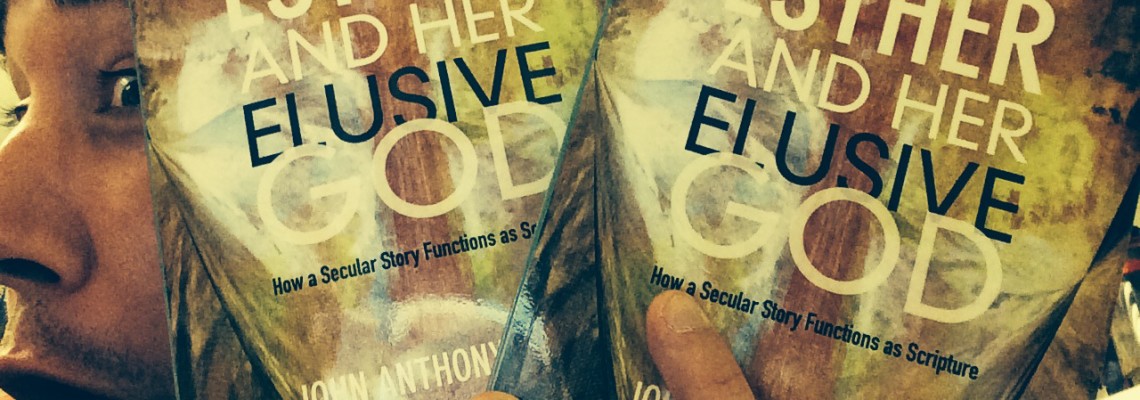
    hqdefaultBut out of the whole host of stories there are a few that irk me with their retelling: Daniel, David, Jonah etc. Notable amongst these is the book of Esther, which usually gets transformed into a Disney/Cinderella type redemption narrative. Therefore it was with interest that I saw that a friend of mine published his thoughts on the book of Esther last year in Esther and Her Elusive God.

    This book from John Anthony Dunne squarely addresses the elephant in Esther’s room: the lack of God in the story. Dunne begins by proposing that the point of Esther isn’t that God is merely the subtext behind the action that is going on. But rather that the book functions to highlight ‘that the elusive God of Esther was steadfast and faithful, preserving his people though they did not deserve it.’ (5) In order to address this point he considers the secular nature of the story through three aspects: the Compromise of the Israelites in the narrative, the relationship of the narrative to the Covenant, and the reception history of the book of Esther and its subsequent modifications in the Septuagint (LXX) and Alpha Text (AT). Throughout the book Dunne provides convenient comparisons with modern retellings of the story, and their emphases on the changed narrative in order to reintroduce and highlight God in the story.

    The analysis portion of the book is carefully, slowly and cumulatively argued and builds a strong picture of the secular nature of the book. In this section the primary weakness and likely stumbling block for many readers lies in the treatment of Esther 4:13-14 which many scholars point to as the recognition of the implied deus ex machina at work. However, even here the argument makes cumulative sense if taken as a whole and this should not cause a careful reader too many issues. The final chapter of this the first part of the book addresses the redaction and additions present within the LXX and AT. This chapter presents some of the changes to the Masoretic throughout the lifespan of the book, although it would have been useful for the associated appendix to be integrated into the chapter as a whole.

    If the first part of the book advocated for a negative reading of the lack of God in the book of Esther, the second part asks the question of why the book is in the bible at all. In these last thirty odd pages Dunne drives home his argument that the secularity of Esther and its presence and context within the canon actually highlights the providence of God in the story. Here he argues that like Job, the book of Esther is another exception that proves the rule, that ‘Esther [is] a tale of how good things happen to undeserving people.’ (125) These two chapters as the crux of the book are arguably the highlight of the careful argument that has gone before, and I wish that he had the time and space to expand on this application further.

    Overall I believe Dunne provides a convincing argument, and one that resolves many of the aspects of the book that have irked me in the past without simply being a hagiographic retelling. However, in getting his argument across occasionally the book comes across as somewhat vindictive and vilifying in its highlighting the moral, cultic and covenantal failings of the characters. This slight polemical tone jars with Dunne’s otherwise laid-back style and will hamper the absorption by some audiences. This aside I found it an enjoyable and convincing read, and look forward to thinking about how it will impact on my preaching and retelling of the story for children.

    In addition I quite like the dedication:

    10570005_953244694698823_1468668219_n


    John Anthony Dunne, Esther and Her Elusive God:How a Secular Story Functions as Scripture, Eugene: Wipf & Stock, 2014.

    Available: Amazon

  • RE:Baptism – reviewing Baptism in the Baptist church

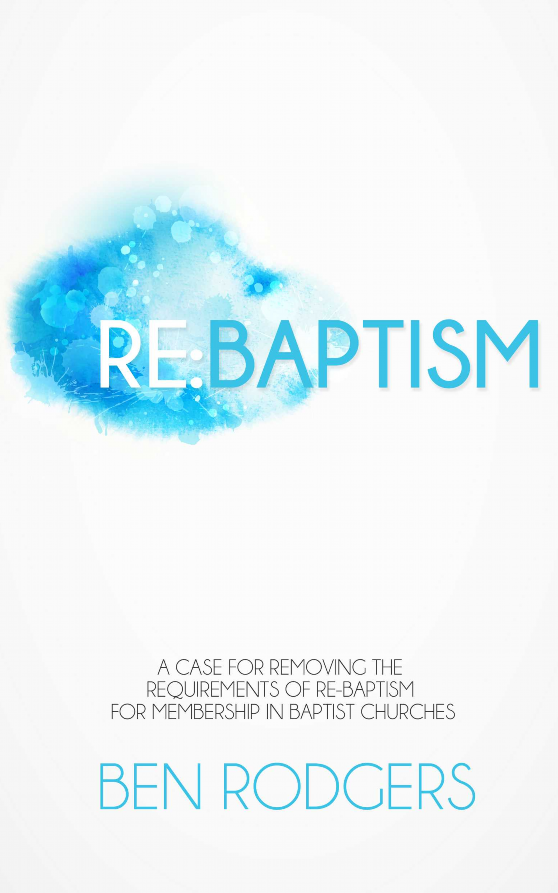
    rebaptismToday I had the pleasure of being able to read a friend’s freshly published book on the practice of baptism within the Baptist church, and specifically the question of rebaptising people to conform with a membership requirement in the church. Ben first provides a historically grounded review of the situation surrounding baptismal practice within the wider Baptist ecclesiastical structures, before narrowing focus upon Australia, and then to the Baptist Union of NSW. Following this is a pastorally sensitive review of the pastoral, theological, hermeneutical and practical concerns around the practice of rebaptising Christians in order to enable church membership. Ben finally concludes by looking at different models of ecclesial membership available to the Baptist church, options which both protect the regenerate nature of the church, while opening the doors for the increasingly porous ecclesial boundaries found in a modern and post-modern world.

    I think Ben makes good points throughout the book, but it is also helpful to address each section separately and highlight some questions and perhaps add to his argument in some places.

    Firstly, in addressing the historical situation regarding baptism, Ben does a great job at highlighting the origins of the requirement for believers baptism in Puritan England as a sign that the church is set apart as a regenerate body. However, I believe that this section could be strengthened by addressing other methods of ensuring a regenerate church throughout the period. For example John Wesley’s system of ticketed membership, renewed every three months, had the same aim of ensuring the new communities remained regenerate in their very nature. The consideration of these other methods of determining membership would strengthen the final argument for a different membership system within the Baptist Union. Also some historical considerations regarding the Baptist predecessors, the European Anabaptists, would have strengthened the case for the maintenance of the Baptist Union as a separate regenerate body, rather than a superset layered on the State church, a-la early Wesleyanism. Nevertheless this historical background provides a good basis for the later arguments.

    Secondly, the section on theological considerations wisely avoids most of the debate surrounding the intricate hermeneutics of Paedo- vs Creedo-baptism, and helpfully highlights some of the hermeneutical assumptions of the Baptist church that are more opaque to an outside audience. However, I think this section could be strengthened with a further consideration of the nature of the ecclesial community, and especially the covenantal overtones present within the sacrament of Baptism. I think this would strengthen Ben’s argument concerning re-baptism implying ‘a sort of second-class citizenship in the church'[ref]253/451[/ref]. In addition some more support for de-identifying with full immersion could have been found within several works including the Institutes (IV.15.19).

    Finally, in the pastoral section Ben’s pastoral heart shines through, and here the great impetus of the book lies. Within this carefully structured argument Ben charts a course acknowledging the pastoral difficulties of church membership based on a specific implementation of the sacrament of Baptism, while also trying to remain faithful to the regenerate nature of the church. This course can be hard to chart, but I believe Ben does this with sensitivity to both concerns, without renouncing any incisiveness to effect change. This final chapter is full of astute recognitions of the visible and invisible church divide (to paraphrase Calvin), concretely applied to the issue of rebaptism; such as:

    immersion does not equate to a regenerate church member. Immersion doesn’t prevent nominal members it just requires that members who are nominal be baptised.[ref]289/451[/ref]

    and

    Closed membership does not protect a regenerate membership as we have no means or rite by which one can judge the human heart, only God can know, beyond doubt, who belongs in the true church[ref]289/451[/ref]

    Overall I think Ben has done a good job at stimulating what will hopefully be a respectful and fruitful conversation within the Baptist Union of NSW, and the Baptist church as a whole. However, in that vein the book is slightly parochial; focusing predominantly upon NSW and the local situation. Nevertheless it is a useful and stimulating book, especially for me as I continue to  consider baptismal issues for our forthcoming child, from a similar perspective of a doubly baptised (infant and adult) and confirmed person.

    I award Ben’s short and insightful book Four out of Five Wet Regenerate Believers.

    Ben’s book is available here on Amazon: http://www.amazon.com/dp/B00FG2IEEQ

  • Book Review – C.S. Lewis: A Life

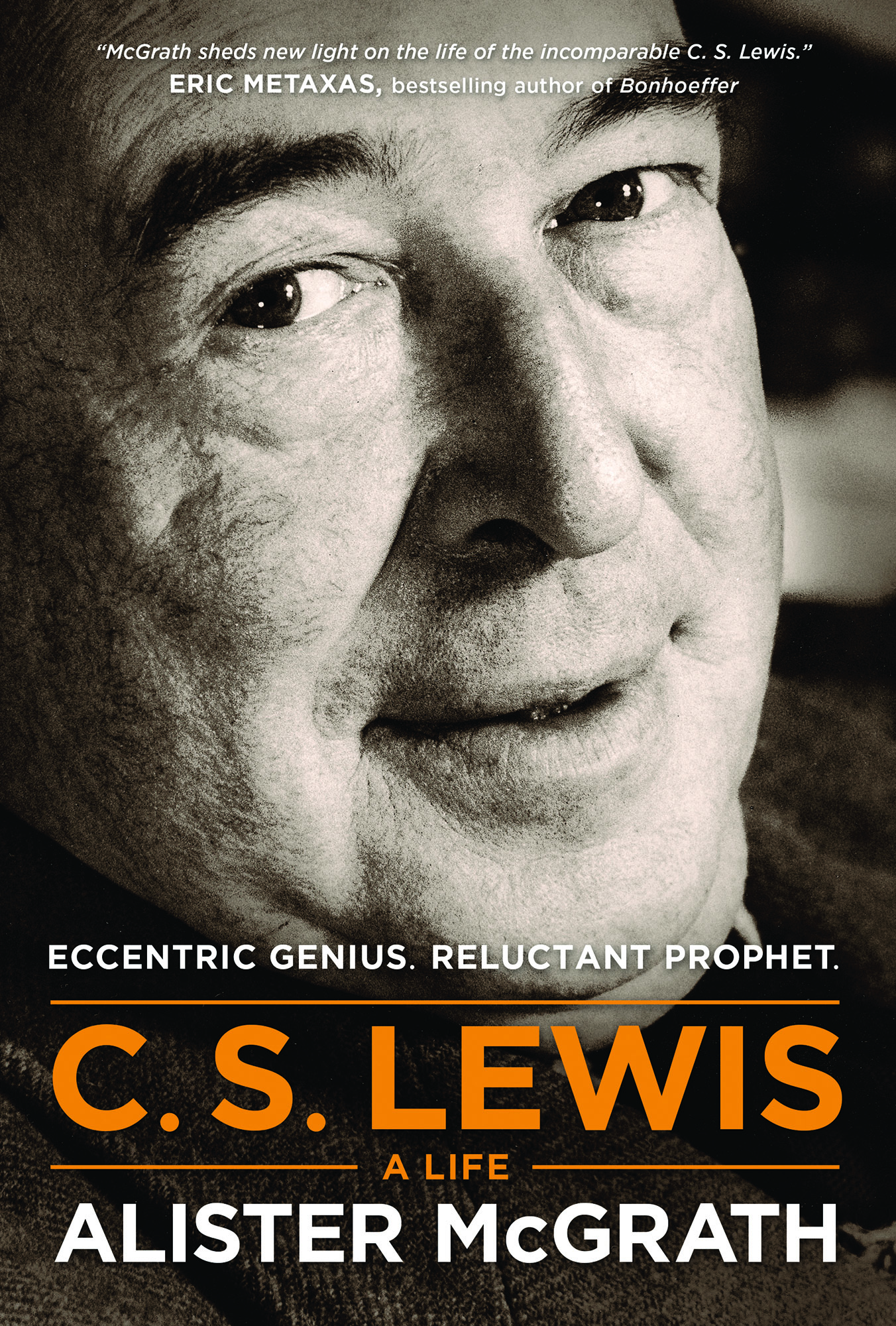
    CSLewisBookCover_smClive Staples Lewis is arguably a household name for most of the Western world, despite his own predictions of obscurity within five years of his death. The almost larger than life person that is C.S. Lewis is now the topic of scholarly research, literature tours of Oxford and Cambridge, and even the topic of the Desiring God national conference in September. But what is it that makes this man from Ireland so appealing to such a wide range of audiences, both Christian and non-Christian alike? This new biography by Alister McGrath, perhaps better known for his writings on systematic theology, seeks to provide a non-hagiographic account of the life and work of Lewis.

    McGrath provides a fresh approach to Lewis, as one who did not know him personally, but rather came to know the C.S. Lewis of his writings. This approach is combined with the recent publication by Walter Hooper of Lewis’ combined letters. Upon this new material McGrath brings his academic investigative mind to bear, and challenges some of the long held dates and orders of accounts of Lewis’ life. However, more fruitful than some of the seemingly pedantic quibbles over dating is the rich portrait of Lewis that emerges from McGrath’s analysis of both the man, and his writings. McGrath delves deeply into the letters between Lewis and his childhood friend Arthur Greeves, and uses these to shed light on other happenings in Lewis’ life. Through this the book helpfully fills out many gaps that have been left by prior biographies, including aspects of Lewis’ life that may appear to be idiosyncratic to a modern evangelical audience; such as his relationship with Mrs. Moore. McGrath does not attempt to hide some of the more eccentric aspects of Lewis’ character, although nor does he dwell on them any more than is needed.

    In addition to the illumination that McGrath sheds upon Lewis’ life, he also equally illuminates the world of Lewis’ writings and storytelling in equal measure. From Lewis’ early attempts at poetry, through to his academic works on Milton’s Paradise Lost,  to the wartime writing of the scripts that would become Mere Christianity, on to the science-fiction such as Perelandra (the Space Trilogy), and his best known series: Narnia; McGrath helpfully sheds light on the background to each work and comments on the links that are sometimes tantalisingly below the surface. For example when describing the Space Trilogy the parallels with the anti-vivisection movement of the day are picked out, or when investigating the death of Aslan in Narnia, Lewis’ own views on the atonement are compared and highlighted. These links drawn from Lewis’ own written material are invaluable for anyone approaching Lewis from his literature.

    Overall McGrath tracks Lewis’ life from his early years in Ireland, through his period of military service and then studies at Oxford, his eventual fellowship there, his writings, involvement with the Inklings, to his later life in Cambridge and finally his passing. The picture that is painted of Lewis is rich and detailed, not passing over the blemishes and imperfections, but also not dwelling upon them. It does not seek to deify the man that is C.S. Lewis, but instead is appropriately critical when needed. This biography provides a great apologia for C.S. Lewis in some areas, and suggests improvements for scholarship in others. McGrath writes engagingly and attractively, painting his picture of Lewis adeptly. C.S. Lewis: A Life is a great biography of the man, and one that is a brilliant read; one that perhaps can only be improved by reading it in the back room of the Eagle and Child.

    I give it 4.5/5 stars

  • The Borgias – a sordid tale of the Papacy

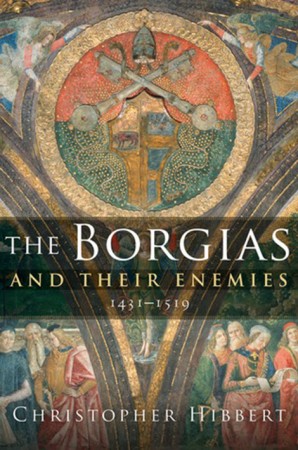
    The Borgias Cover

    Over the summer I have had the great opportunity to get some reading done on topics that I don’t have enough time to read about during the rest of the busy year. One of my favourite reading topics tends to be history of various kinds, and in this case I have indulged myself by reading about one of the most controversial and sordid periods of the the Papacy: the rule of the Borgias.

    In this narrative history of the period, Christopher Hibbert writes concerning the rise and ultimate fall of the family, stretching from the machinations of Rodrigo Borgia as a Cardinal in the 1450s, including the siring of his four children, to his assumed bribed election into the papacy, throughout his rule as Pope Alexander VI; including the legitimatising of his children and the various political and personal relationships therein. Then finally to his downfall in later life, and the eventual crumbling of his empire; with the book finishing after the death of Lucrezia in 1519.

    This history of the period reads easily and flows well, guiding the reader through all the twists and turns of the debased state of the church and Rome in the 15th century; and the twists and turns are many. The multitude of strange deaths and stabbed bodies floating through the Tiber, various illegitimate offspring, and the infamous Ballet of the Chestnuts, all serve to illuminate the details surrounding the Borgia family. However, at the same time the intrigue in these twists and turns are ultimately the history’s downfall, with many historical details and contemporary events being glossed over as they did not appear to have as much relevance to the direct family story.

    Events such as the trial of Jan Hus, the conflict with Girolamo Savonrola, and the associated papal denunciations and calls for reform of the papacy are summarily dealt with in a matter of pages, despite these events contributing to the initiation of the reformation and having a much interaction with the papacy than the author appears to give credit for. In contrast entire chapters are dedicated to the political machinations of the family, with extravagant detail concerning various parades and procession consuming many pages. This contrast of the level of detail paints an awkwardly lopsided picture of the Borgia family, one which rarely deals with any events outside of France, Italy and Spain; despite the high degree of historical interaction with Germany and the rest of Europe at the time.

    Despite these limitations it is still an enjoyable read, and the picture which is painted is detailed and vibrant, even if incomplete. With some extra ancillary reading, and a bit of cross referencing of dates and major events this history of the papacy in the 15th century still provides a valuable background to the tumultuous events surrounding the church in the 16th century with the Reformation and Catholic Counter-Reformation.

    Rating: Three and a half freshly stabbed bodies floating down the Tiber.3_half_bodies