Author: Chris

  • Children’s Songs interpreted through a Modernist Philosophical Lens – Row, Row, Row Your Boat

    Children’s Songs interpreted through a Modernist Philosophical Lens – Row, Row, Row Your Boat

    In amongst the many joys of having a baby is the strange re-learning of a whole bunch of nursery rhymes and kids songs that have been floating around somewhere at the back of your consciousness since your own childhood, and then are able to be re-deployed to pacify or entertain a new generation. However, and perhaps this is odd, I frequently find myself applying Barthes essay on the Death of the Author and amuse myself by imbuing these songs with new meaning, usually ones far removed from the simplistic intentions of the rhyme itself. While dual meanings are present in many nursery rhymes, Ring a Ring a Rosey as a commentary on the Plague comes to mind, I generally find it far more amusing to imbue them with meanings that are clearly not the intention of the song.

    As such this may be the start of a new series of Philosophical Whimsy, where I will post a range of philosophically odd interpretations of children’s rhymes and stories. Today we will start with one of Caleb’s favourites: Row, Row, Row Your Boat. The base form of this song goes roughly as follows:

     Row, row, row your boat,
    Gently down the stream.
    Merrily, merrily, merrily, merrily,
    Life is but a dream.

    Row, row, row your boat
    Gently down the stream
    If you see a crocodile
    Don’t forget to scream!

    Rock, rock, rock your boat
    Gently from side to side
    If you see a crocodile
    Throw him off the side!

    While this simple little ditty has been previously used to ask questions about the existential nature of reality, and the perception of the universe, a la Lewis Carroll at the end of Through the Looking Glass, Star Trek V: The Final Frontier, or Eternal Sunshine of the Spotless Mind; I think that another fitting philosophical framework is provided for us by Karl Marx.

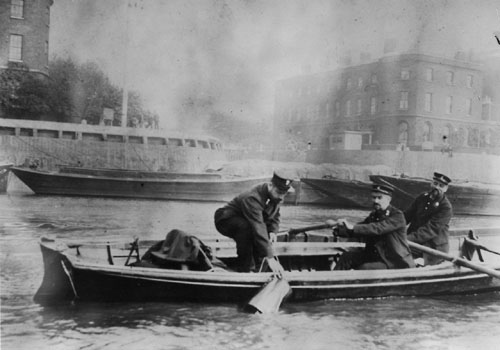
    You see this simple children’s ditty is actually propagating a form of cultural hegemony, where the rower in the boat is a member of the bourgeoisie ‘rowing’ upon the stream of the proletariat flowing beneath him. It teaches that life is a dream when supported from below by those who are there to do the work, and that the picture of peacefully bobbing and floating down a river on a summer’s day is a metaphor for ruling over the masses, and bending them to your will. Furthermore, when the hapless proletariat rise up, as represented by the terror of the crocodile rising out of the status quo of the waters, the reality of the oppressive rule and attempts at the proletariat revolt, as evidenced by the screaming of the bourgeoisie at the revolting crocodile. However, this terror is short lived as the revolt is quickly repressed in the third verse. The bourgeoisie rapidly reestablish the dominant class organisation by repressing the proletariat that are seeking to rise up out of the class based status quo, and throw them back into the milieu of ‘the river.’

    Thus by the end the short song has gone through the three stages of narrative structure: setup, conflict and resolution. Firstly it sets up the societal expectations of bourgeoisie and proletariat, secondly it introduces the conflict of a proletariat revolt, and finally draws together the repressive resolution of the revolt being quickly quashed.

    Thus I present the first in the series: Row, Row, Row Your Boat from a Neo-Marxist Framework.

    What do you think? Which song/story/poem should I investigate next?
  • Mid-Year Update and Some Changes

    Mid-Year Update and Some Changes

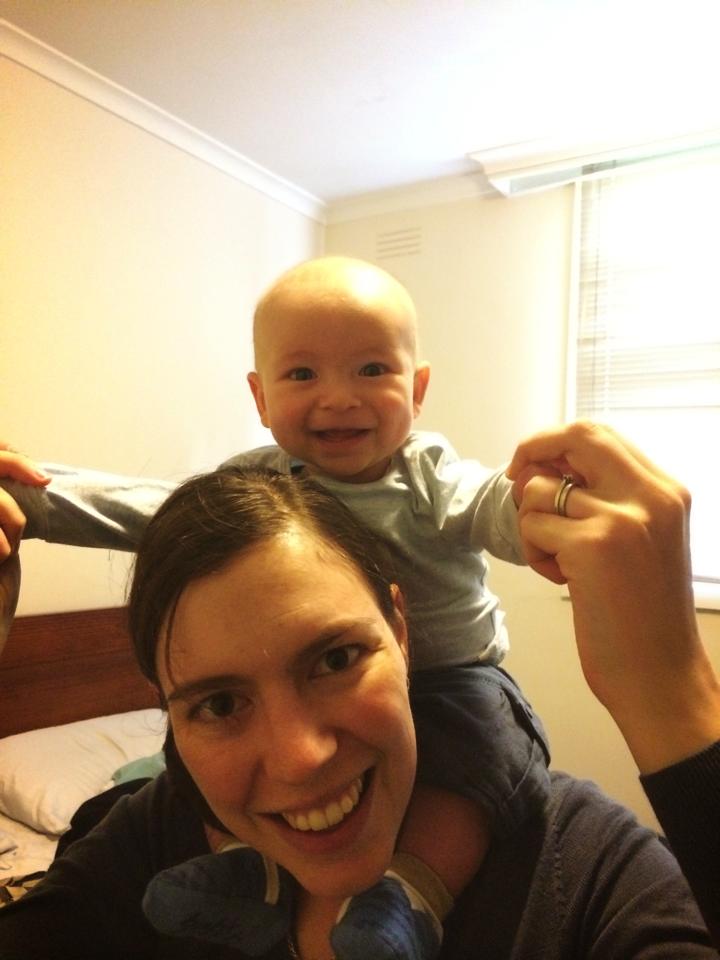
    10415719_10152436496975944_2208083270736219867_nOk firstly a quick mid-year update, Caleb is now just past 4 months old and growing well, his cheeky and gregarious personality is coming to the fore and its great to be able to spend more time with him as he grows up. On a study front last week I finished my last coursework component of my now triplicate of degrees, and am moving firmly into the research phase of the Masters and starting to consider options for PhD candidature. One component of this will be going part time for the next 6 months as I finish off my thesis and look after Caleb while Gill starts back in GP land to finish off the term she began last year. Hopefully this will give me more time to do some writing and thinking, along side the thesis, other research, tutoring and a bit of teaching I’m doing at Ridley with the ESL students there.

    Which brings me to the second point of this post. Those eagle eyed readers (ha) and anyone else who looks at dates, will have noticed that this blog has been pretty silent since the end of last year. A lot of this from my end has been because ive been doing my ‘writing-thinking’ in different forums and on other media. However, in an attempt to revitalise my writing and thinking process I will be reshuffling this blog slightly to include more content that traditionally hasnt been found on here. For example many readers who have come for the theology and study stuff probably have no idea that I am also involved in this:

    IMG_6200

    That’s my 1983 Toyota Sprinter Improved Production car, which I have dragged around half of the country for the past 10 years as it has transitioned from a road car to a race car. Or perhaps these few little hobbies:

    20140619-002005-iPhone20140619-125636-iPhone10371940_10152498439687049_7142483413079573002_n

    That is mountain biking, 3D printing (and generally making stuff) and beer brewing respectively. I have generally kept all of these ‘garage’ hobbies separate from this blog, but in the interests of providing a rounder picture (and more content) on this blog, I figure that they may as well make their home here too.

    “But what if I don’t know anything about these things?” I hear you cry, well maybe you might learn something, but if you don’t want to see them then we will be fairly fastidious with using the category feature a bit better so that you can subscribe to just one sub-feed of the main blog if you want.

    Expect some of these changes to come in the next little while, and there to be a redesign at some point during that period too. 🙂


  • A new addition

    MG-8585,largeFor the last few months we have been more than a little slack with updating this blog, for various reasons like moving house, work, busyness etc etc. None are excuses, but all are reasons. However, perhaps one of the biggest changes has been the addition of this little guy to our family.

    Caleb Joseph Porter was born on the 12th of February 2014, weighing 3.57kg. Given the delay to this post he is now over a month old and much larger again.


    But he is our little boy, and he has certainly made his mark on our lives.

    Also hopefully this blog will also return to its usual programming eventually. 🙂

  • RE:Baptism – reviewing Baptism in the Baptist church

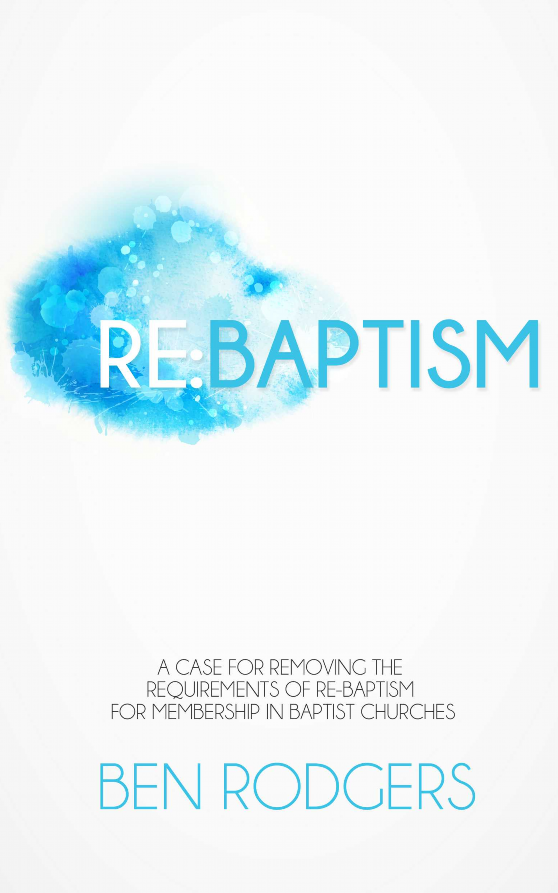
    rebaptismToday I had the pleasure of being able to read a friend’s freshly published book on the practice of baptism within the Baptist church, and specifically the question of rebaptising people to conform with a membership requirement in the church. Ben first provides a historically grounded review of the situation surrounding baptismal practice within the wider Baptist ecclesiastical structures, before narrowing focus upon Australia, and then to the Baptist Union of NSW. Following this is a pastorally sensitive review of the pastoral, theological, hermeneutical and practical concerns around the practice of rebaptising Christians in order to enable church membership. Ben finally concludes by looking at different models of ecclesial membership available to the Baptist church, options which both protect the regenerate nature of the church, while opening the doors for the increasingly porous ecclesial boundaries found in a modern and post-modern world.

    I think Ben makes good points throughout the book, but it is also helpful to address each section separately and highlight some questions and perhaps add to his argument in some places.

    Firstly, in addressing the historical situation regarding baptism, Ben does a great job at highlighting the origins of the requirement for believers baptism in Puritan England as a sign that the church is set apart as a regenerate body. However, I believe that this section could be strengthened by addressing other methods of ensuring a regenerate church throughout the period. For example John Wesley’s system of ticketed membership, renewed every three months, had the same aim of ensuring the new communities remained regenerate in their very nature. The consideration of these other methods of determining membership would strengthen the final argument for a different membership system within the Baptist Union. Also some historical considerations regarding the Baptist predecessors, the European Anabaptists, would have strengthened the case for the maintenance of the Baptist Union as a separate regenerate body, rather than a superset layered on the State church, a-la early Wesleyanism. Nevertheless this historical background provides a good basis for the later arguments.

    Secondly, the section on theological considerations wisely avoids most of the debate surrounding the intricate hermeneutics of Paedo- vs Creedo-baptism, and helpfully highlights some of the hermeneutical assumptions of the Baptist church that are more opaque to an outside audience. However, I think this section could be strengthened with a further consideration of the nature of the ecclesial community, and especially the covenantal overtones present within the sacrament of Baptism. I think this would strengthen Ben’s argument concerning re-baptism implying ‘a sort of second-class citizenship in the church'[ref]253/451[/ref]. In addition some more support for de-identifying with full immersion could have been found within several works including the Institutes (IV.15.19).

    Finally, in the pastoral section Ben’s pastoral heart shines through, and here the great impetus of the book lies. Within this carefully structured argument Ben charts a course acknowledging the pastoral difficulties of church membership based on a specific implementation of the sacrament of Baptism, while also trying to remain faithful to the regenerate nature of the church. This course can be hard to chart, but I believe Ben does this with sensitivity to both concerns, without renouncing any incisiveness to effect change. This final chapter is full of astute recognitions of the visible and invisible church divide (to paraphrase Calvin), concretely applied to the issue of rebaptism; such as:

    immersion does not equate to a regenerate church member. Immersion doesn’t prevent nominal members it just requires that members who are nominal be baptised.[ref]289/451[/ref]

    and

    Closed membership does not protect a regenerate membership as we have no means or rite by which one can judge the human heart, only God can know, beyond doubt, who belongs in the true church[ref]289/451[/ref]

    Overall I think Ben has done a good job at stimulating what will hopefully be a respectful and fruitful conversation within the Baptist Union of NSW, and the Baptist church as a whole. However, in that vein the book is slightly parochial; focusing predominantly upon NSW and the local situation. Nevertheless it is a useful and stimulating book, especially for me as I continue to  consider baptismal issues for our forthcoming child, from a similar perspective of a doubly baptised (infant and adult) and confirmed person.

    I award Ben’s short and insightful book Four out of Five Wet Regenerate Believers.

    Ben’s book is available here on Amazon: http://www.amazon.com/dp/B00FG2IEEQ

  • Book Review – C.S. Lewis: A Life

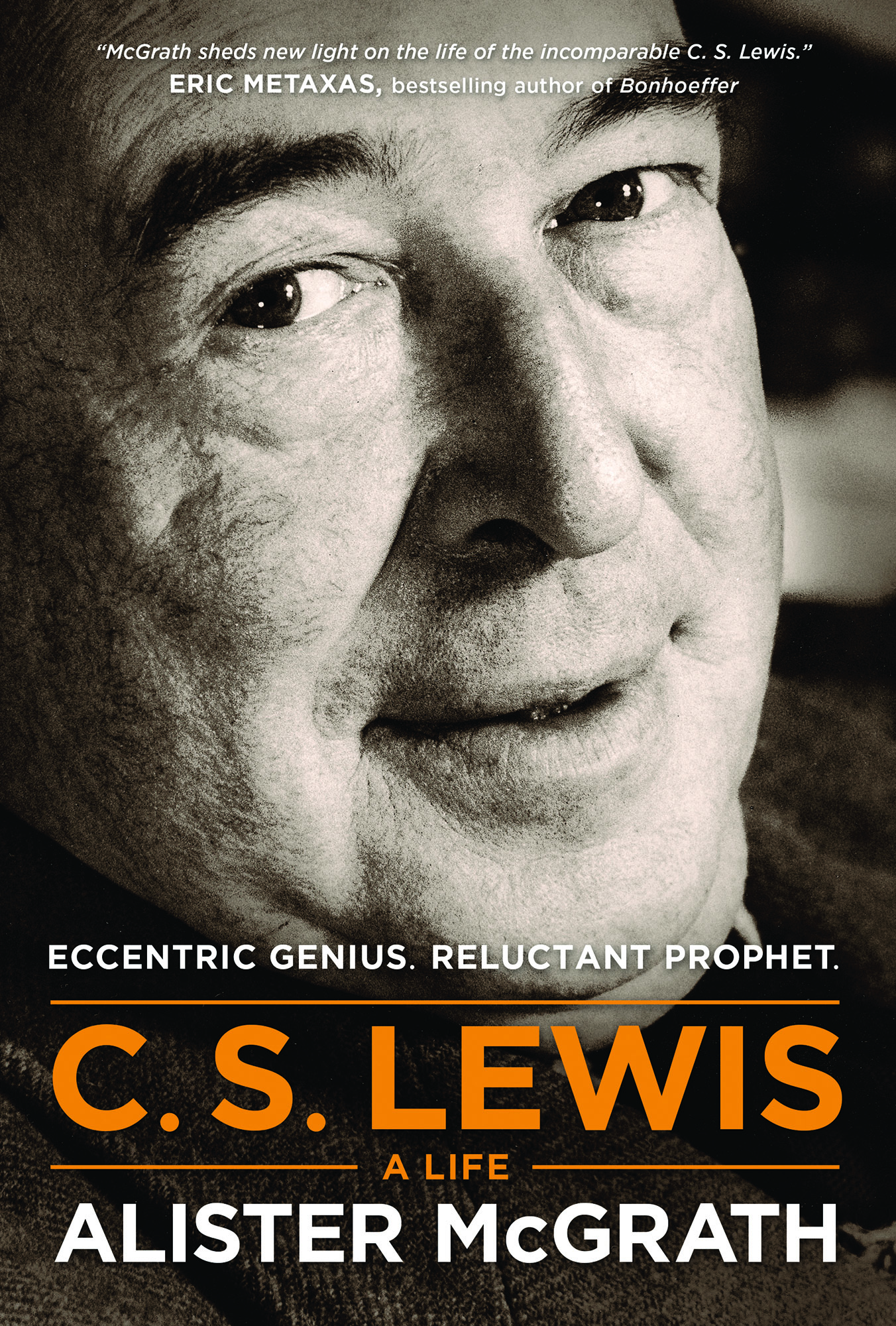
    CSLewisBookCover_smClive Staples Lewis is arguably a household name for most of the Western world, despite his own predictions of obscurity within five years of his death. The almost larger than life person that is C.S. Lewis is now the topic of scholarly research, literature tours of Oxford and Cambridge, and even the topic of the Desiring God national conference in September. But what is it that makes this man from Ireland so appealing to such a wide range of audiences, both Christian and non-Christian alike? This new biography by Alister McGrath, perhaps better known for his writings on systematic theology, seeks to provide a non-hagiographic account of the life and work of Lewis.

    McGrath provides a fresh approach to Lewis, as one who did not know him personally, but rather came to know the C.S. Lewis of his writings. This approach is combined with the recent publication by Walter Hooper of Lewis’ combined letters. Upon this new material McGrath brings his academic investigative mind to bear, and challenges some of the long held dates and orders of accounts of Lewis’ life. However, more fruitful than some of the seemingly pedantic quibbles over dating is the rich portrait of Lewis that emerges from McGrath’s analysis of both the man, and his writings. McGrath delves deeply into the letters between Lewis and his childhood friend Arthur Greeves, and uses these to shed light on other happenings in Lewis’ life. Through this the book helpfully fills out many gaps that have been left by prior biographies, including aspects of Lewis’ life that may appear to be idiosyncratic to a modern evangelical audience; such as his relationship with Mrs. Moore. McGrath does not attempt to hide some of the more eccentric aspects of Lewis’ character, although nor does he dwell on them any more than is needed.

    In addition to the illumination that McGrath sheds upon Lewis’ life, he also equally illuminates the world of Lewis’ writings and storytelling in equal measure. From Lewis’ early attempts at poetry, through to his academic works on Milton’s Paradise Lost,  to the wartime writing of the scripts that would become Mere Christianity, on to the science-fiction such as Perelandra (the Space Trilogy), and his best known series: Narnia; McGrath helpfully sheds light on the background to each work and comments on the links that are sometimes tantalisingly below the surface. For example when describing the Space Trilogy the parallels with the anti-vivisection movement of the day are picked out, or when investigating the death of Aslan in Narnia, Lewis’ own views on the atonement are compared and highlighted. These links drawn from Lewis’ own written material are invaluable for anyone approaching Lewis from his literature.

    Overall McGrath tracks Lewis’ life from his early years in Ireland, through his period of military service and then studies at Oxford, his eventual fellowship there, his writings, involvement with the Inklings, to his later life in Cambridge and finally his passing. The picture that is painted of Lewis is rich and detailed, not passing over the blemishes and imperfections, but also not dwelling upon them. It does not seek to deify the man that is C.S. Lewis, but instead is appropriately critical when needed. This biography provides a great apologia for C.S. Lewis in some areas, and suggests improvements for scholarship in others. McGrath writes engagingly and attractively, painting his picture of Lewis adeptly. C.S. Lewis: A Life is a great biography of the man, and one that is a brilliant read; one that perhaps can only be improved by reading it in the back room of the Eagle and Child.

    I give it 4.5/5 stars

  • Winter Holidays

    Winter Holidays

    Over the winter holidays I had a couple of days to get away and take some photos. Recently though I’ve been experimenting with the use of timelapses as a way of being able to tell a larger story than just a photo.

    In that vein I shot a few time lapses during my time away and here they are put together:

    In addition, I took some still frames at the same time. Here are a couple:

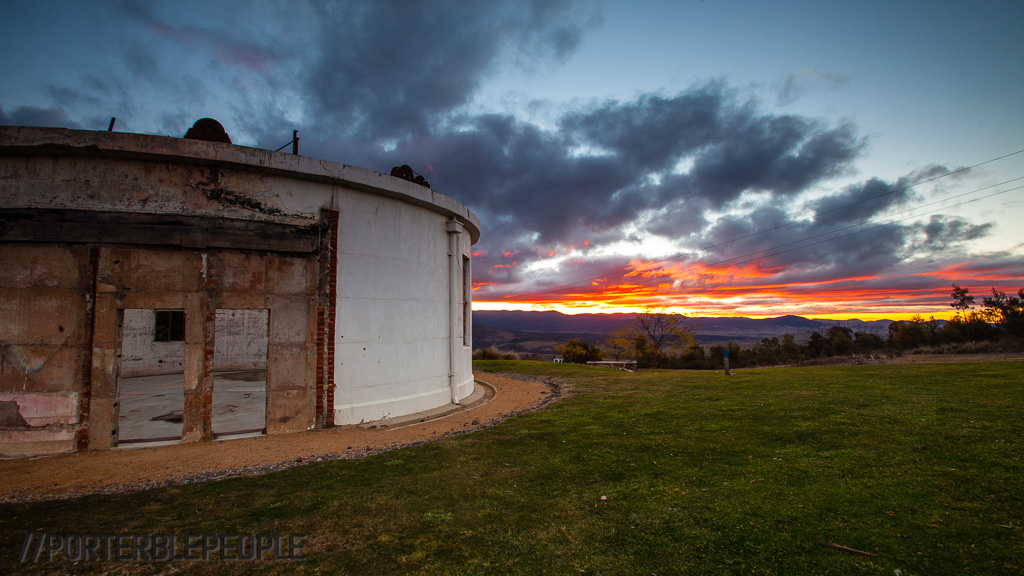
    Mt Stromlo Observatory - Yale-Columbia Telescope remains.

    Mt Stromlo Observatory

    Sunset over the Mt Stromlo Observatory, with the Yale-Columbia in the foreground.

    Tidbinbilla DSS Early Evening

    Tidbinbilla DSS Sunset

    Click on the thumbnails for the larger photos on Flickr.

    This will be the start of a larger series of posts where I will be putting up some of the photography that I do. Hope you enjoy it.

  • Second Semester – an Update

    DSCF0065

    Well after a few weeks break from updating the blog over the winter holidays, its time to start semester 2 now. So I thought it would be appropriate to give a small update as to where we are at now.

    For my studies its simply the start of Semester 2, which means another swathe of subjects (Luke, Isaiah, Church Ministry and Sacraments, and Ethics), as well as continuing on with preaching, leading at church and the other bits and pieces of life.

    For Gill though things are changing. As she hinted about in an earlier blog post (http://www.porterblepeople.com/2013/05/its-been-a-bit-quiet-around-here/) the plans we had made for 2014 have been up in the air and have changed fairly significantly. Originally we were planning on heading back to Adelaide in 2014 for Gill to continue her GP training, but in God’s providence she has been able to secure a transfer to the Melbourne training provider and in fact starts her first GP term this week, at the start of August. This has opened the door for us to stay in Melbourne for 2014, and for Gill to continue her GP training at the same time. She will still be heading over to India in September and October for 5 weeks, which will fit well with her GP training.

    We aren’t precisely sure what 2014 will look like at this stage, as I’m still intending on pursuing some form of a post-graduate research degree, although what that looks like we don’t quite know yet. But the big news is that we wont be back in Adelaide in 2014, but will rather be staying in Melbourne.

    We hope that we can still keep up with all our friends in Adelaide though, even if we aren’t around physically.

  • Don’t have a stock photo? Just rip off a famous YouTube presenter and defame them instead!

    stock-footage-young-man-photographer-taking-photographs-with-digital-slr-cameraThis article from PerthNow http://www.perthnow.com.au/news/western-australia/bizarrre-man-assaults-woman-photographs-her/story-fnhocxo3-1226656772796 gives the caption ‘Bizarre: A man gropes a woman’s thigh and then takes a photograph of her at a Perth shopping centre.’ to their photo.

    Problem is that the man with the camera in the photo isn’t the groper, and neither does he have anything to do with it (we presume). Rather the person is Kai Wong from DigitalRev, and the screencapture is from this review he did here: http://www.youtube.com/watch?v=3RVh2HC0KSw at 1m38s.
    One can only presume that this isnt the person involved, given that the footage is shot in Hong Kong rather than Perth.

    However, for a portion of the PerthNow readers the groper and creepy photographer has been inextricably linked with Kai Wong, a camera reviewer about 6,000km away.

    Plus photographers who use SLRs everywhere have been further sullied as perverts, just to add to the perception that anyone wandering public streets with a camera is instantly dodgy. Seriously, if a creep wanted to take lewd or creepy photos then the last thing they will want to do is to raise a 2kg camera and lens to their eye, especially one that draws instant attention like an SLR.

    Thanks PerthNow for your impeccable journalistic ethics. 

    Screenshot of the article stored here for posterity:

    Screen Shot 2013-06-04 at 4_23_34 PM

  • Pope Francis a Universalist? Perhaps….

    4577728-3x2-700x467In the midst of other worldwide theological furores, and local stuff with heretical bishops and the like, it seems that even Pope Francis is taking his share of the limelight. According to the Huff this week Pope Francis strongly implied a universalist position with his statement:
    “The Lord has redeemed all of us, all of us, with the Blood of Christ: all of us, not just Catholics. Everyone! ‘Father, the atheists?’ Even the atheists. Everyone!”
    The Huff has reported on it here: http://www.huffingtonpost.com/2013/05/23/atheists-like-what-they-see-in-pope-francis-new-openness_n_3329548.html and the Irish here: http://www.irishcentral.com/news/Atheists-big-fans-of–Pope-Francis-openness-and-good-works-among-those-in-need-209048751.html

    Now that does sound very universalist, with all people being redeemed by the cross, not just the Catholics, and it appears that Francis’ handlers think so too. A couple of days later they issued a correction to Francis’ homily, clearly stating that all who are apostate from the Catholic church are condemned:
    “Although they are otherwise good, moral people they are still doomed to burn in a lake of fire for having the temerity to have been born outside of Catholicism or having chosen to remain so.”
    http://www.irishcentral.com/story/ent/manhattan_diary/vatican-corrects-infallible-pope-atheists-will-still-burn-in-hell-208987111.html

    This has raised some eyebrows around the world, with the “moral atheists” obviously being rather unhappy about it, as too are many Protestants who thought that there might have been some form of reconciliation on the table. However, to me it sounds like a whole bunch of semantics over three words: ‘redeemed’, ‘salvation’ and ‘infallible’.

    Firstly, when Francis talks about ‘redeemed’ does he merely mean that Christ’s sacrifice on the cross was sufficient for all humanity, but will only be effective for those who believe (whether you take an election or free will argument)? I would suggest that this is probably the easiest orthodox reading of Francis’ statement, but it does end up slightly semantically skewed. All of humanity redeemed, but not all of humanity justified… its hard to see how those two can be separated. Indeed, this seems to be the place that his handlers have ended up when they issue the correction.

    Secondly, along with the redemption question, and tightly linked, is the issue of what does Francis think it means to have ‘salvation.’ Is it for him simply a position of being able to do good works? Or is it to stand justified before the throne in Christ? Without further homilies or statements to rely on its a bit hard to tell at the moment, but from this homily it does seem to trend towards the ability to do good works. Now I don’t want to be heard saying that doing good works is outside of the realm of anyone who is not in Christ, and I want to affirm that it does come back to the view of the image of God in humanity. But to equate good works with justification and salvation is stretching it….. a lot.

    Finally, infallibility. The doctrine has been swirling around for quite a few years now, with various Popes taking differing stances on it. Pope John XXIII is recorded as saying: “I am only infallible if I speak infallibly but I shall never do that, so I am not infallible.” But it seems that the principal place for the Pope to be infallible is when they are ex cathedra. Is a homily ex cathedra? Perhaps, but Francis’ handlers certainly don’t think so.

    It will be interesting to see how this one plays out, and I wonder whether Francis has been reading Rob Bell?

  • Useful Study Tools: Zotero

    ZoteroThis post comes from over on http://theridleylog.com where I wrote it as part of a Digital Study Skills seminar that came from the last Structured Pro-crastination post i wrote on the topic last year. I figure its also useful for people who arn’t studying at Ridley and simply want better tools for academic research. So here it is for everyone else.

    Stemming from the short seminar on Digital Study Skills that was held on campus a few weeks ago, this is the first of a series of posts on a variety of useful study tools.

    First up we have Zotero, a full featured citation manager that will help you to keep your references in line, find your digital resources, collate your book or article summaries, and even make you midnight coffees. Ok well maybe not the last one, but its pretty good none the less.

    For those of you who may have used Endnote in the past, in theory Zotero is just like Endnote. But thankfully theory is where the similarities end. In the real world Zotero actually works, and doesnt crash regularly, which should be reason enough to use it over EndNote.

    The basic usage of Zotero works like this:

    1. Add reference into Zotero from ATLA (via RIS export), the Ridley Library or Amazon.com (via browser plugins), or enter by hand.
    2. Cite reference in Word, or other word processor while you write.
    3. Sit back and marvel at not having to manually format references.

    To get started with Zotero is pretty easy, but rather than me regurgitating what others have written it is better to check out the Zotero documentation here: http://www.zotero.org/support/

    However, there are a couple of tricks and neat features of Zotero which can come in handy for the intrepid student or researcher.

    1. ATLA/EBSCO doesn’t play well with proxies RISExport

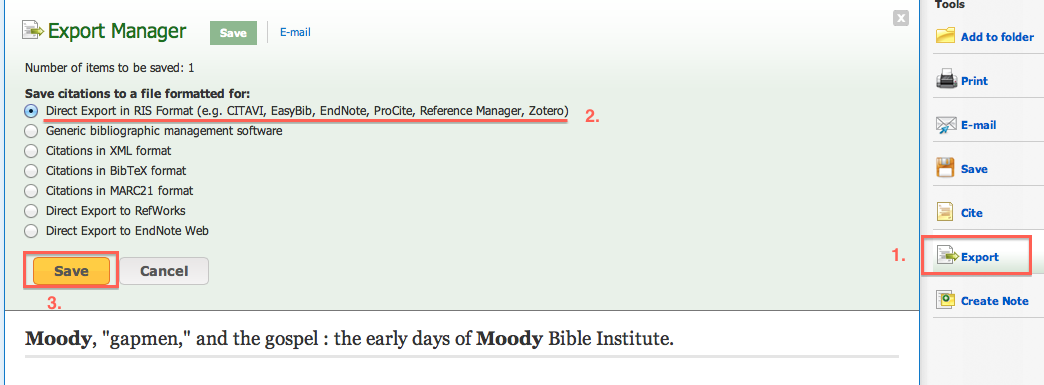
    For some bizarre reason you can’t use the Zotero browser plugin to grab your favourite references from ATLA. Instead the easy way to get around this is to use the Export feature in ATLA to export as an RIS format and then import this into Zotero. You can do this for

    each individual reference, or you can add them all to a single folder and do it all at once. Just look for the Export button on the site, as demonstrated in the following screenshot:

    It really is as easy as 1, 2, 3.

    2. Built in Rename FunctionRenameFile

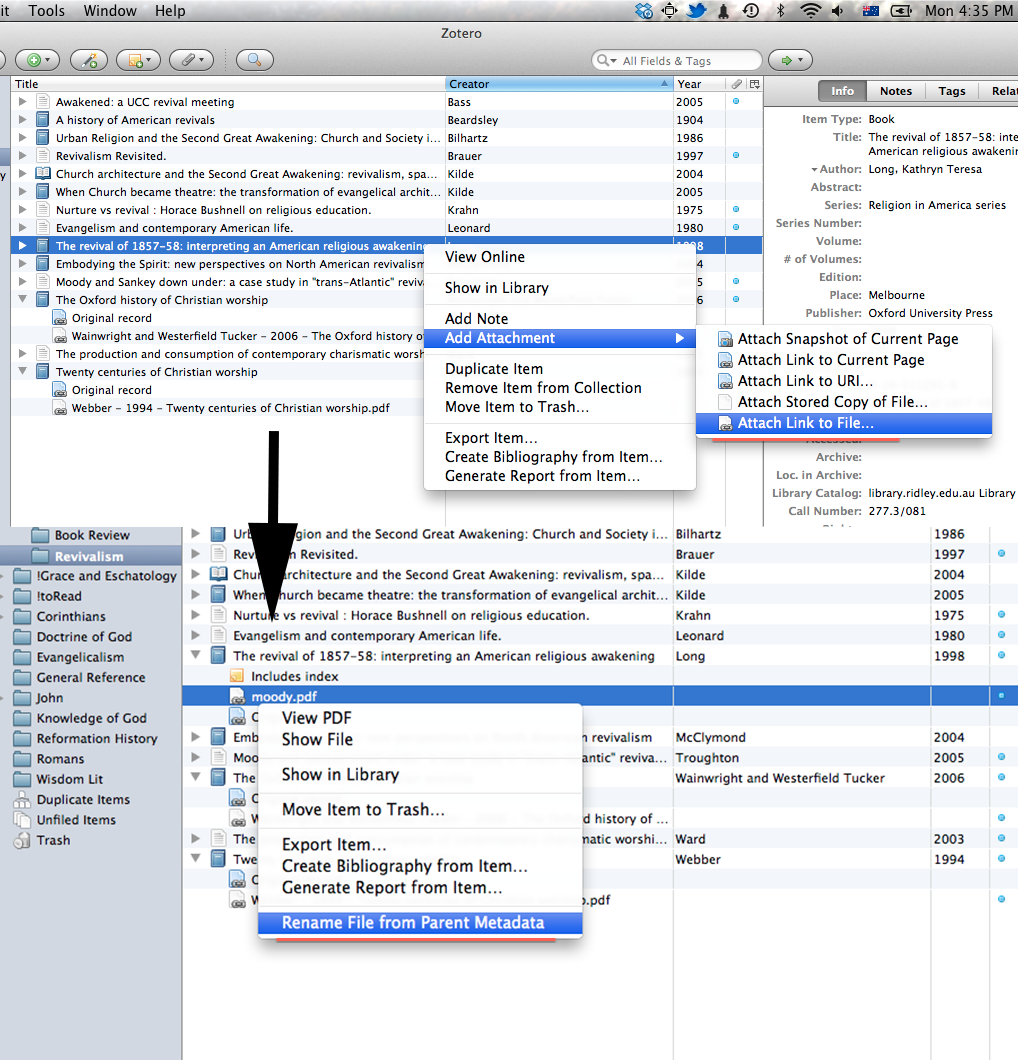
    When adding PDFs from ATLA or scanned documents, don’t stress about naming them manually when Zotero can do it for you. Simply right click on the reference > “Add Attachment” > “Add Link to File”. Once you have added the link, right click on the link and select “Rename File from Parent Metadata” and the file will be renamed as Author – Date – Title. Piece of cake.


    Also when exporting for your essays use the Ridley export which is based upon the SBL stylesheet, and modified by our past student Rob. The export formatting is available here: sbl-fullnote-bibliography-ridley8.csl

    Finally, no citation manager is perfect, and is only as good as the information that it is fed. So you still need to cast an eye over your references in Zotero when you add them, and run a final check over your essay after you have finished it to make sure they are all correct.

    Happy Essays!