Author: Chris

  • Attention or Distraction – More than just Getting Things Done

    Attention or Distraction – More than just Getting Things Done

    A few days ago I posted on Facebook an excerpt from a book highlighting that peak productivity usually occurs in periods of task isolation–where one may focus on a single task for longer stretches at a time. This excerpt concludes that

    To produce at your peak level you need to work for extended periods with full concentration on a single task free from distraction

    Much of this is due to the ‘attention residue’ that comes with switching tasks, we continue to think and process on the previous task for a while before really settling into the new task. So to increase productivity we should be focusing on single tasks for longer periods.

    6875893248_07146d1191_bThat is all well and good for periods of time, but what about when you are immersed in multiple tasks that need doing? Well I would suggest that we are often distracted by other things, that aren’t even task related. This second article popped up today and highlights the sort of digital Attention Deficit Disorder that we have created for ourselves. The attention residue that we are leaving behind when we switch from each micro-interaction to another is crippling–sometimes even physically. That article concludes with this poignant reflection:

    But this new epidemic of distraction is our civilization’s specific weakness. And its threat is not so much to our minds, even as they shape-shift under the pressure. The threat is to our souls. At this rate, if the noise does not relent, we might even forget we have any.

    What is it that you are being distracted by (perhaps even this), and what is it that you should be attentive to.

  • “The Buyearchy of Greeds?” – Why choosing your analogy is important.

    “The Buyearchy of Greeds?” – Why choosing your analogy is important.


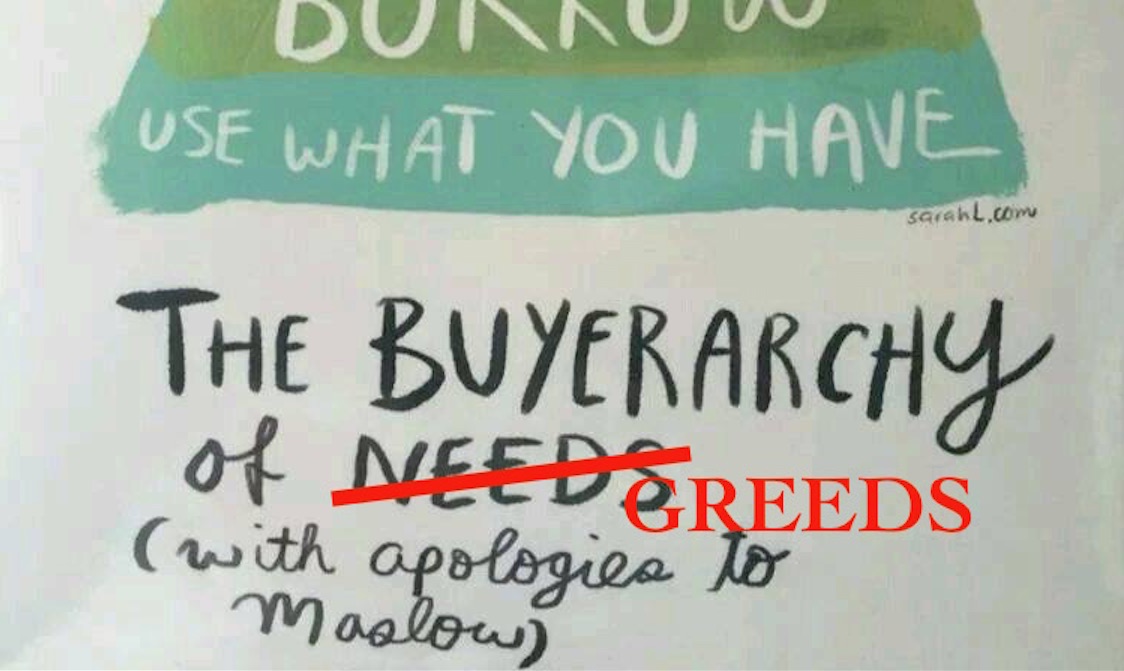
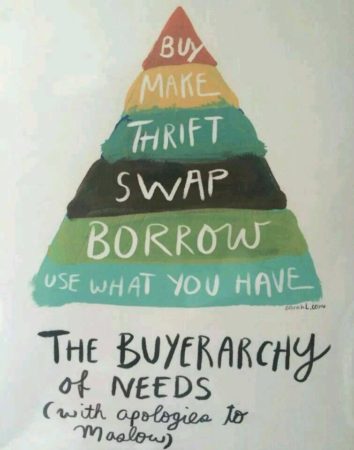
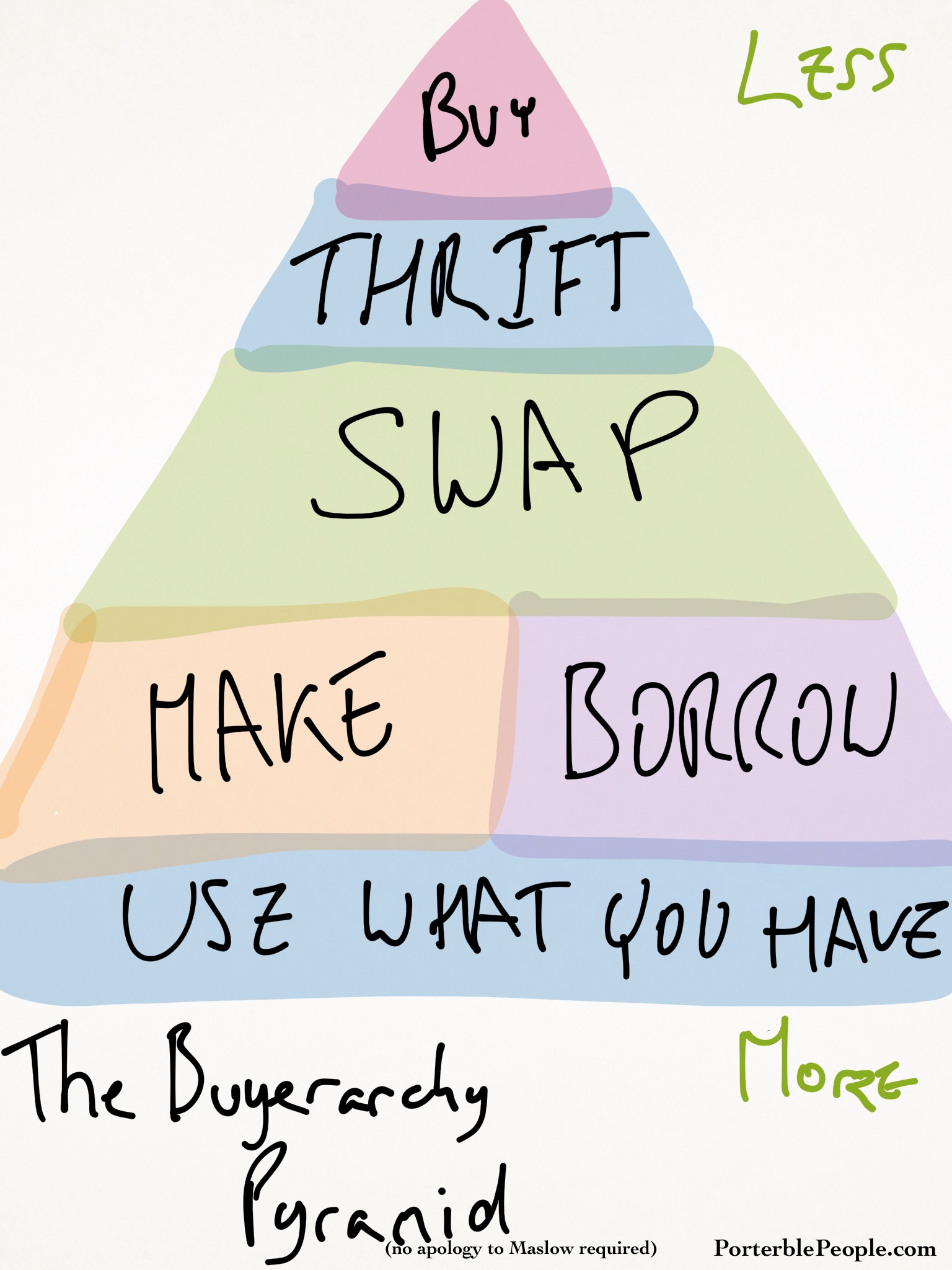
    thebuyerarchyofneedRecently a friend shared an image that tried to visually highlight an ethical hierarchy using the now familiar Maslow’s hierarchy of needs. This usual pyramid highlights the broad lower levels of ‘use what you have’ and ‘borrow,’ ascending to narrower upper levels culminating in ‘Buy’ and ostensibly imploring the viewer to buy less and ethically source more. However, there is a significant problem with this hierarchy as it stands, and it stems from the source material.

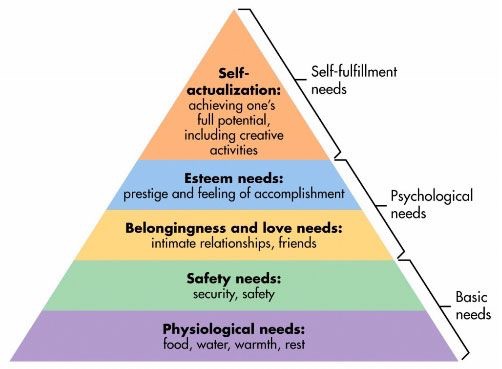
    Maslow’s hierarchy is used to designate the base level requirements—the ‘needs’—of an individual to find fulfilment, culminating in their personal ’self-actualisation.’ Each lower category in the hierarchy is a pre-requisite that needs to be fulfilled to achieve the next layer up.


    maslowshierarchy-copy
    From http://www.simplypsychology.org/maslow.html

    Which is why the plethora of modern interpretations that include ‘wifi’ as the base level (https://www.google.com.au/search?q=maslows+hierarchy+wifi) are so easily able to be understood as indicating that life cannot continue without these basic pre-requisites.

    The problem for this ‘Buyerarchy of Needs’ is that by basing their paradigm on that of Maslow hierarchy they are implying that the ‘Buy’ state represents the goal of human needs, and that borrowing and using what you have are only pre-requisite steps on the way to buying. Patently this is the inverse of what they are attempting to communicate, and they need to revise their metaphor. Because in this configuration it communicates far more of a ‘Buyerarchy of Greed’ than an ethical buying guide.

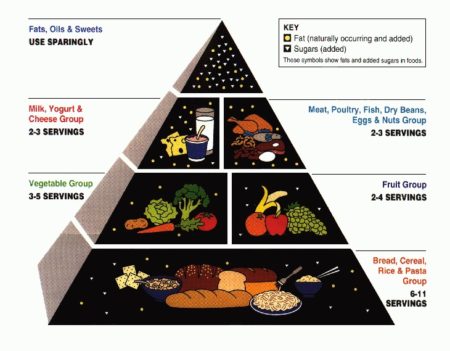
    I suspect that they have been confused with the other common hierarchy, that of the food pyramid, that is commonly represented in the same fashion.

    foodpyramid-copy
    Creative Commons (https://en.wikipedia.org/wiki/Food_pyramid_(nutrition)#/media/File:USDA_Food_Pyramid.gif)

    In this paradigm the upper levels are smaller to convey that one should consume less of these items, and this finds great parallels with the intentions of the ethical buying pyramid.

    Ultimately this points to the need of choosing our analogies carefully, as a significant amount of our message relies on our audience’s prior understanding of the analogical source. In this case the use of Maslow’s hierarchy (likely because the author didn’t have a good grasp on Maslow) conveys a message completely opposite to the intention of the image. Choosing the right analogy here is critical as the wrong analogy will detract from the message—or undermine it at worst. Ultimately if a point is so severely undermined by the analogical presentation then either choose another analogy or don’t make the point at all.

    To end this on a positive note, here is likely what they were intending, with no apology to Maslow required:

    buyerarchypyramid

  • Reading Project: Intentional Community, New Monasticism, Spiritual Friendship and Rhythms and Rules of Life

    Reading Project: Intentional Community, New Monasticism, Spiritual Friendship and Rhythms and Rules of Life

    One of the practices I keep is to always have a long term reading project on the go, that is less directly related to my active research. I find this keeps me reading broadly and more agile in the way that I process and link concepts together. Over the winter break (in Australia) I completed my last reading project of N.T. Wright’s Christian Origins series, and have been debating what to start next. Some discussions in the last week have pushed me towards revisiting some thinking I have been doing for several years now on intentional community, the Benedict option, and various rules of life. Plus it seems that from the responses on Facebook others are interested in this as well, so this is where I will be doing my extra-curricular reading for the next few months.

    In discussions with people on Facebook and in the communities I’m a part of, I thought it may be useful to start compiling a list of resources and reviewing them, along with attempting to foster discussion on them. Some of these discussions will happen in person, as I am investigating setting up a reading group or two to discuss ideas. But I also want these to be more broadly reaching.

    This then is the start of the online side of the discussion, a reading list. Here is a bibliography of suggested works from a plethora of different sources, that I am hoping to read. Im also hoping to review, or have someone else review, most of the works too and make those reviews available publicly. If you have more suggested works, then please contribute them in the comments or send them to me via another method.

    Do let me know if you want to be part of this reading project, either online or in person. Reading is always more fun in community… and reading on community should be even more so again!

    For now though here is the bibliography:

    Bibliography

    Arpin-Ricci, Jamie, and Jonathan Wilson-Hartgrove. The Cost of Community: Jesus, St. Francis and Life in the Kingdom. Downers Grove, Ill: IVP Books, 2011.
    Barker, Ashley. Surrender All: A Call to Sub-Merge with Christ. Melbourne: CreateSpace Independent Publishing Platform, 2005.
    Barton, Ruth Haley. Life Together in Christ: Experiencing Transformation in Community. Downers Grove: IVP Books, 2014.
    Bonhoeffer, Dietrich. Discipleship. Unknown edition. Minneapolis: FORTRESS PRESS, 2003.
    ———. Life Together: The Classic Exploration of Christian in Community. 1St Edition edition edition. New York: HarperOne, 2009.
    Chester, Tim, and Steve Timmis. Everyday Church: Gospel Communities on Mission. 1 edition. Wheaton, Ill: Crossway, 2012.
    ———. Total Church: A Radical Reshaping around Gospel and Community. Wheaton, Ill: Crossway, 2008.
    Claiborne, Shane, and Jim Wallis. The Irresistible Revolution: Living as an Ordinary Radical. 1st edition. Grand Rapids, Mich: Zondervan, 2006.
    Claiborne, Shane, and Jonathan Wilson-Hartgrove. Common Prayer Pocket Edition: A Liturgy for Ordinary Radicals. Poc Rep edition. Grand Rapids, Mich: Zondervan, 2012.
    Duckworth, Jenny, and Justin Duckworth. Against the Tide, Towards the Kingdom: Eugene, Or: Wipf & Stock Pub, 2011.
    Edgar, Brian. God Is Friendship: A Theology of Spirituality, Community, and Society. Seedbed Publishing, 2013.
    Ford, Leighton. The Attentive Life: Discerning God’s Presence in All Things. Place of publication not identified: IVP Books, 2014.
    Hauerwas, Stanley, and William H. Willimon. Resident Aliens: Life in the Christian Colony. Anniversary ed. edition. Nashville: Abingdon Press, 2014.

    Heath, Elaine A. Missional. Monastic. Mainline.: A Guide to Starting Missional Micro-Communities in Historically Mainline Traditions. Eugene, Oregon: Cascade Books, 2014.

    ———. The Mystic Way of Evangelism: A Contemplative Vision for Christian Outreach. Grand Rapids, MI: Baker Academic, 2008.
    Heath, Elaine A., and Scott T. Kisker. Longing for Spring: A New Vision for Wesleyan Community. Eugene, Or: Wipf & Stock Pub, 2010.
    Hill, Wesley. Spiritual Friendship: Finding Love in the Church as a Celibate Gay Christian. Grand Rapids, Michigan: Brazos Press, 2015.
    Holmes, Jonathan, and Ed Welch. The Company We Keep: In Search of Biblical Friendship. Place of publication not identified: Cruciform Press, 2014.
    Janzen, David, Shane Claiborne, and Jonathan Wilson-Hartgrove. The Intentional Christian Community Handbook: For Idealists, Hypocrites, and Wannabe Disciples of Jesus. Brewster, Mass: Paraclete Press, 2012.
    Macchia, Stephen A., and Mark Buchanan. Crafting a Rule of Life: An Invitation to the Well-Ordered Way. Downers Grove, Ill: IVP Books, 2012.
    McKnight, Scot. A Fellowship of Differents: Showing the World God’s Design for Life Together. Grand Rapids, Michigan: Zondervan, 2015.
    Nouwen, Henri J. M. Reaching Out: The Three Movements of the Spiritual Life. Reissue edition. Garden City, N.Y: Image, 1986.
    Palmer, Parker J. To Know as We Are Known: Education as a Spiritual Journey. Reprint edition. San Francisco: HarperOne, 1993.
    Smith, William P. Loving Well. Greensboro, NC: New Growth Press, 2012.
    Sparks, Paul, Tim Soerens, and Dwight J. Friesen. The New Parish: How Neighborhood Churches Are Transforming Mission, Discipleship and Community. Downers Grove, Illinois: IVP Books, 2014.
    Vanderstelt, Jeff. Saturate: Being Disciples of Jesus in the Everyday Stuff of Life. Wheaton: Crossway, 2015.
    Vanier, Jean. Community and Growth. 2nd Revised edition. New York: Paulist Press, 1989.

  • St Mary’s Twickenham Conference on Memory and the Reception of Jesus in Early Christianity

    St Mary’s Twickenham Conference on Memory and the Reception of Jesus in Early Christianity

    Rather than doing a summary for each day I am writing a single summary for the conference, as I travel up to Oxford. The past day and a half of this conference have been stimulating and engaging, with it revolving around paired longer plenary papers and longer breaks for discussion and networking. Unfortunately Chris Keith could not be at the conference, as his mother had passed away, and so the conference opened with his paper being read by Steve Walton, which gave a good lay of the land.

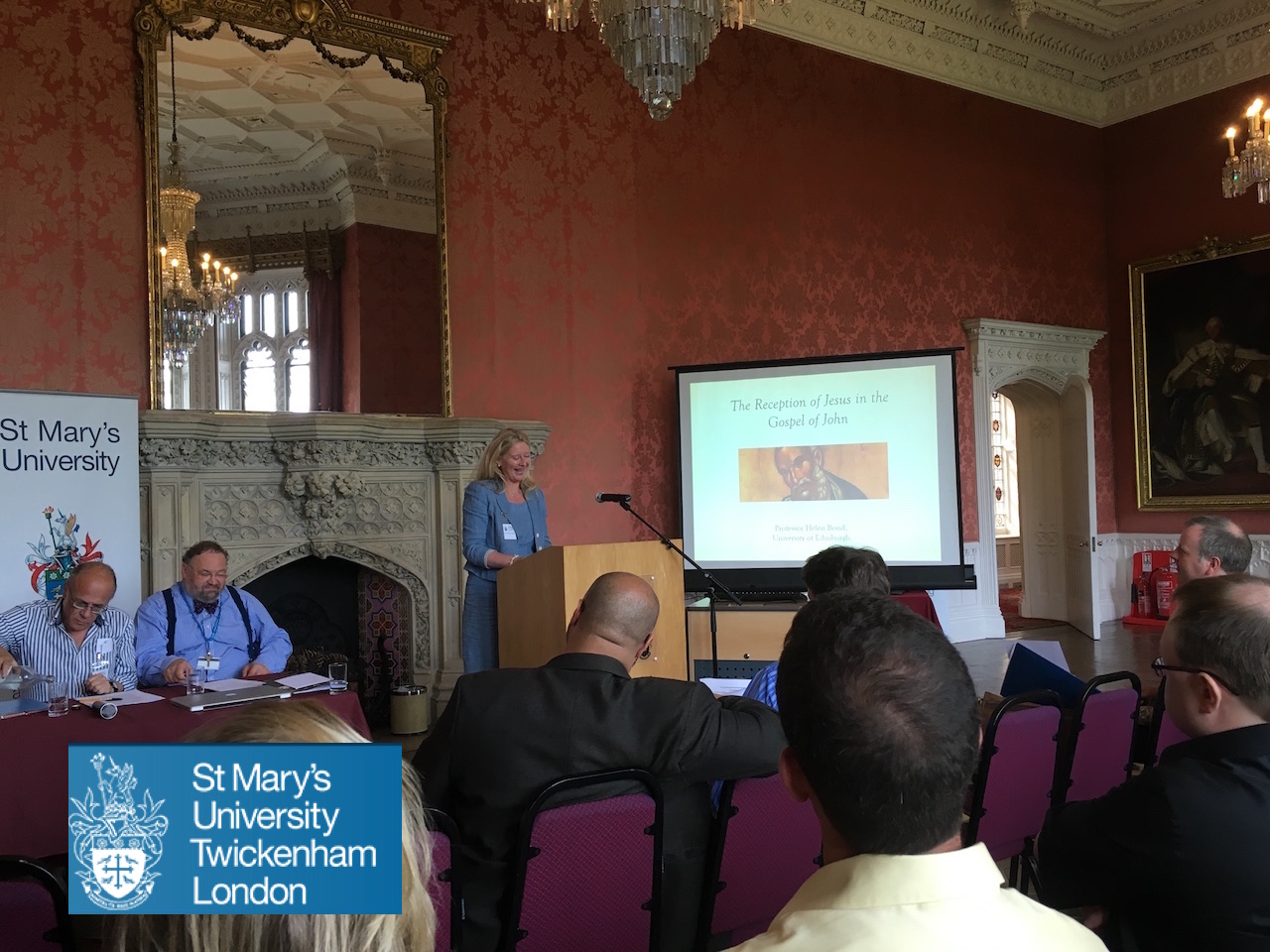
    Instead of commenting on each paper, I will highlight a few thematic aspects that I believe warrant further discussion. The first, and primary discussion point for the conference was the status of the ‘memory approach.’ Is it truly a method, or is it a way of confirming other methodological approaches. Across the range of presenters there was a similar range of interpretations and understandings of whether Memory Theories can be considered a methodological approach. This is certainly another area that deserves further investigation and debate.

    IMG_4149The second major theme was the place and category of memory and the interaction with the psychological research. While Richard Bauckham presented on personal eyewitness memory, his paper was perhaps the odd one out with other papers primarily considering social and corporate approaches to memory. Throughout all of the discussions I think there is significant room to build a more robust theory and engagement with the theory and interaction between personal, social and corporate memory at the cognitive and socio-cognitive level–as Anthony LeDonne highlighted in his summary paper.


    Finally, while some papers addressed the overlap between memory and identity, I feel this is another area that is somewhat undertheorised, and would benefit from further engagement.

    Overall this was an engaging conference, and the structure lent itself to robust discussion and debate. Quite enjoyable.

    Programme here: Memory Conference Programme FINAL

  • St Andrews Son of God Symposium – Summary Day 3

    St Andrews Son of God Symposium – Summary Day 3

    The third day of the symposium was only a half day, and revolved around three plenary sessions.

    Reinhard Kratz opened the morning with an in depth paper looking at the parallels between 4Q246 and the Old Testament backgrounds that it presumes and envelops. This paper expanded and explored aspects of metalepsis in the DSS that George Brooke set out the framework and groundwork for in the fourth plenary on the first day.

    Jan Joosten then continued with the New Testament side of the pivot, looking at how Wisdom 2:16-18 may be seen as a sort of mediator in parallels between Ps 22:9 and Matthew 27:43. These two papers together helpfully explored the Hellenisation of Jewish thought, and how scripture was used and engaged with in this context.

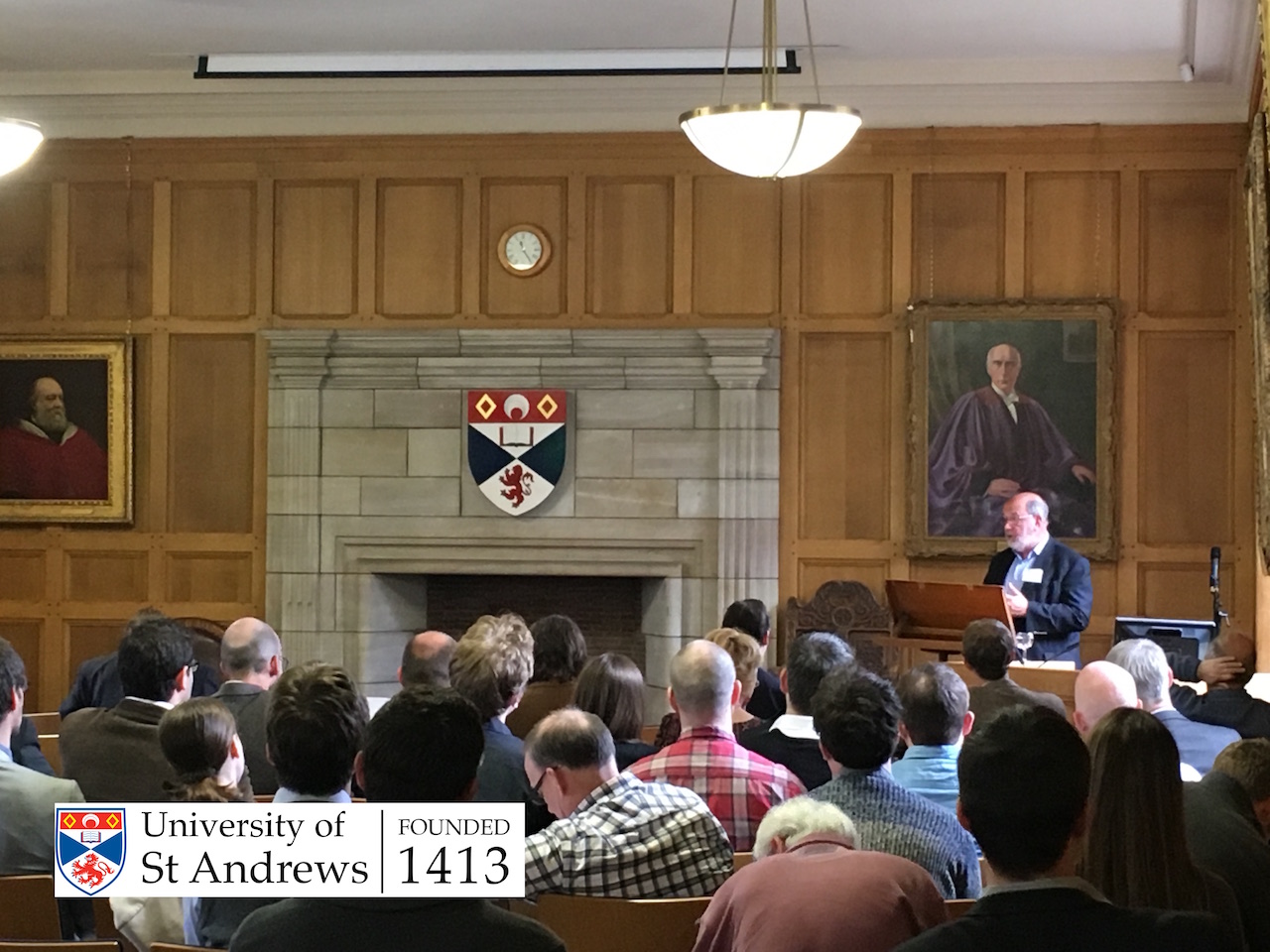
    The final paper for the conference was a sort of ‘State of the Union’ address from N.T. Wright that sought to place the conference topic within the broader history of research, and offer some suggestions of where research should continue. Notable points here include the note of challenge in observing that ‘Early Christology is Confrontation not Derivation’ and his continued emphasis on Temple shaped Christology (as is present in the Christian Origins works). In some ways this paper could have been split into book ends that introduced and closed out the conference, but coming at the end provided a good ‘where to from here’ engagement for the symposium.

    All in all a great conference, and very well organised by the research students at St Andrews. Well done.

    After the conference I had a bit of time to catch up with Ken Mavor (a previous tutor/teacher at ANU) and Stephen Reicher to talk Social Identity Theory for a while. One of the great things about St Andrews is that the Schools of Psychology and Divinity share the same quad, and so there is space to foster the overlap of disciplines. Here is a rare selfie (on this blog anyway) of the gate to that quad, Psychology on the left, Divinity on the right.

    13529058_10154106762285944_6110343906696283108_n

    Now onwards to London and the St Mary’s Conference.

  • Blog Backlog Repair

    Blog Backlog Repair

    For some reason the last two posts about the summer/winter conferences have been jammed in the post queue and needed some beating with a stick to work. Hence, consider this the beating with a stick…. Website Heal Thyself!

  • St Andrews Son of God Symposium – Summary Day 2

    St Andrews Son of God Symposium – Summary Day 2

    Day two of the St Andrews Symposium started with a bang, as Michael Peppard presented a strong argument for the need of Christological research to engage with the pervasive imperial cult, rather than merely focusing on the Jewish origins. To put Peppard’s perspective on the imperial cult in his own words it is “not looking under every rock for Imperial ideology but acknowledging that on thousands of rocks the imperial cult is already found….” [through inscriptions]

    This second day focused more on parallel sessions, rather than plenaries, with some interesting papers from David Moffitt on parallels to Sonship Christology in Hebrews 1-2 (leveraging Umberto Eco); Mateusz Kusio on divine fictive kinship in Hebrews; David Ritsema on Jewish Divine Messiah expectations and their parallels in John’s Gospel and finally Daniel McClellan on Cognitive theories of Divine Agency (taking an internalist cognitive approach from Cognitive Models of Religion)

    Matthew Novenson gave our second plenary for the day on the topic of Sonship and the Messiah, highlighting the breadth of Messiahs who are not the Son of God, and Sons of God who are not Messiahs (presumably some in the former category are merely very naughty boys). Novenson’s overview of the interaction of messianic expectation and patronymics is an area that should be engaged with further.

    The second parallel sessions engaged with aspects of Christology and Early Christian Origins. Stefan Mulder presented a heuristic model for describing Docetism in the ancient world (a very good descriptive model); Mina Monier presented on the Christology present within the Epistle of Barnabas; Tavis Bohlinger presented on Messianism in Pseudo-Philo, and I presented on Christological Salience in the First Century.

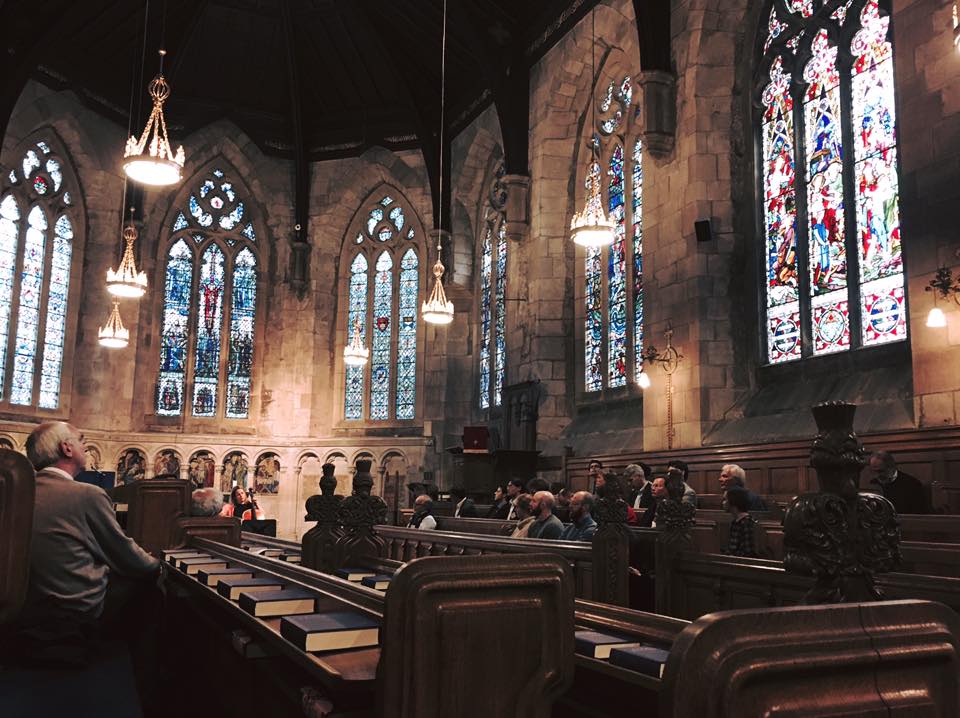
    The second day finished with a lovely string quartet concert headed by the multi-talented Madhavi Nevader, and then dinner at a local pub with plenty of stimulating and erudite conversation. Here is to another good day.

    13332878_10154064909870944_1863703367249967073_n

  • St Andrews Symposium on the Son of God – Day 1

    St Andrews Symposium on the Son of God – Day 1

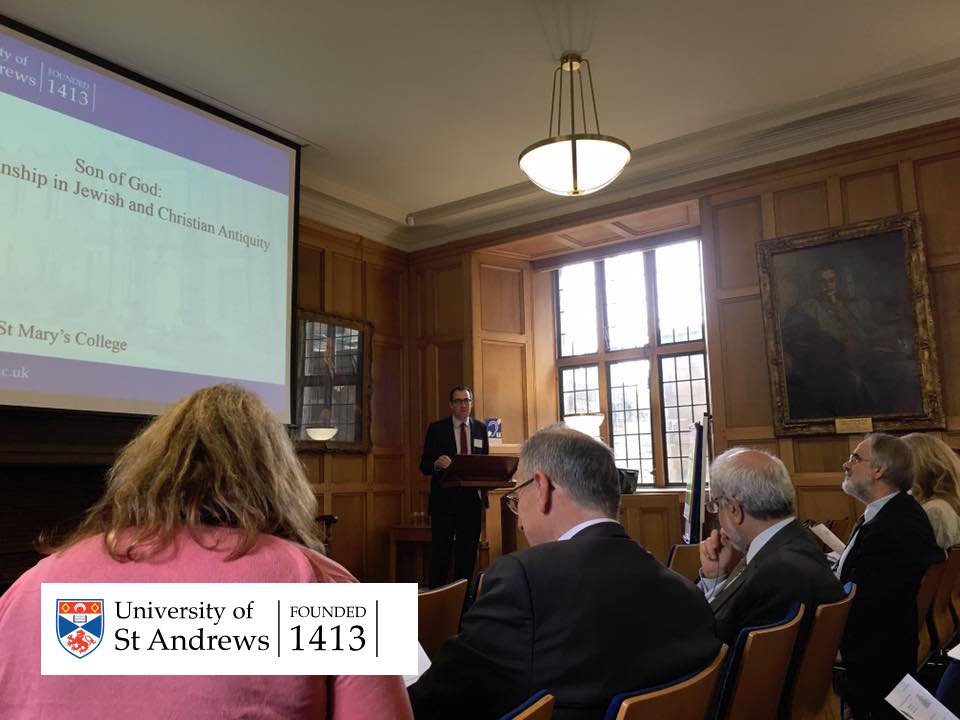
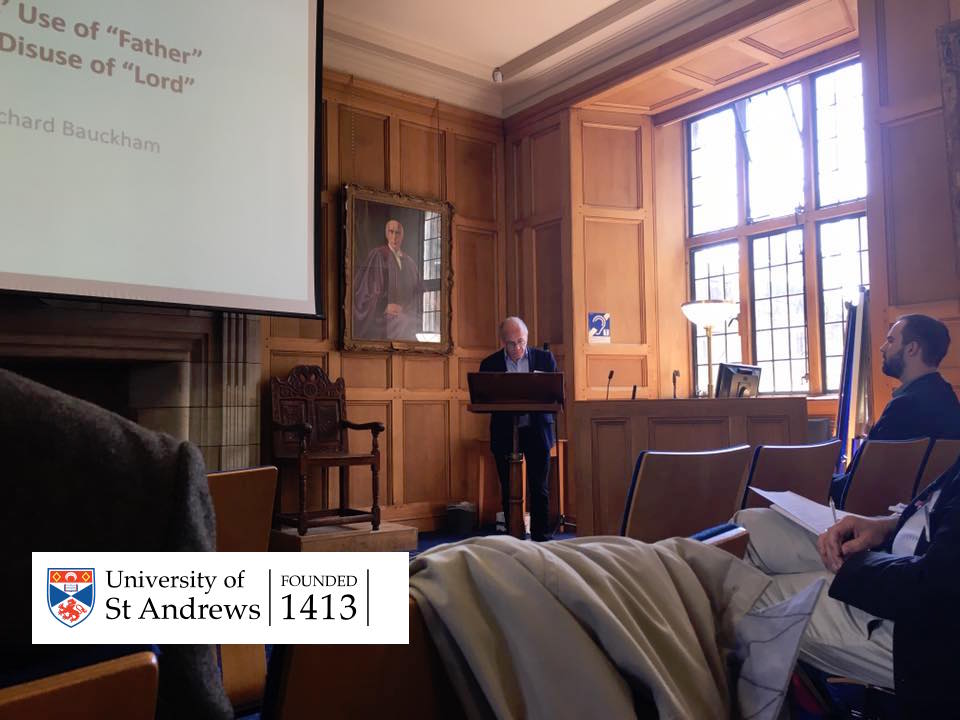
    The St Andrews symposium on ‘Son of God: Divine Sonship in Jewish and Christian Antiquity’ kicked off today with a busy afternoon including four plenary sessions and a parallel session with four papers.

    Richard Bauckham started the day with a paper on the use of Lord  (κυριος) as a replacement for the divine name/tetragrammaton within the extant second temple literature and late Hebrew Bible. In contrast the Gospels portray Jesus as never using the titular κυριος for addressing God, but rather uses Father (abba) instead—except in Old Testament quotes and twice in Mark.

    There were a bevy of interesting papers in the parallel sessions including Crispin Fletcher-Louis advancing the thesis that Solomon’s presentation in 1 Kings 3-4 provides a partial typological fulfilment of the Adamic intentions, and therefore a resource for the paradigm of earliest Christology. Steven Muir highlighted the abba cry in Romans 8 and linked it to the ὐιοσθεσια metaphor therein; and Jarrett Van Tine provided an interesting reading of the celibacy narrative in Matthew 19 and related it to the fulfilment of the promises to eunuchs in Isaiah 56.

    Finally we rounded out the day with three plenaries on cultural and textual backgrounds to the Son of God theme. Menahem Kister looked at Son(s) of God in the Hebrew Bible, Madhavi Nevader investigated the Ancient Near Eastern context and George Brooke presented the evidence in the Dead Sea Scrolls drawing upon 4Q246.

    The day drew to a close with a few hours of conversation over a couple of pints and a dram in the local pub. Great day.

  • Presenting at St Andrews Symposium 2016 – Son of God: Divine Sonship in Jewish and Christian Antiquity

    Presenting at St Andrews Symposium 2016 – Son of God: Divine Sonship in Jewish and Christian Antiquity

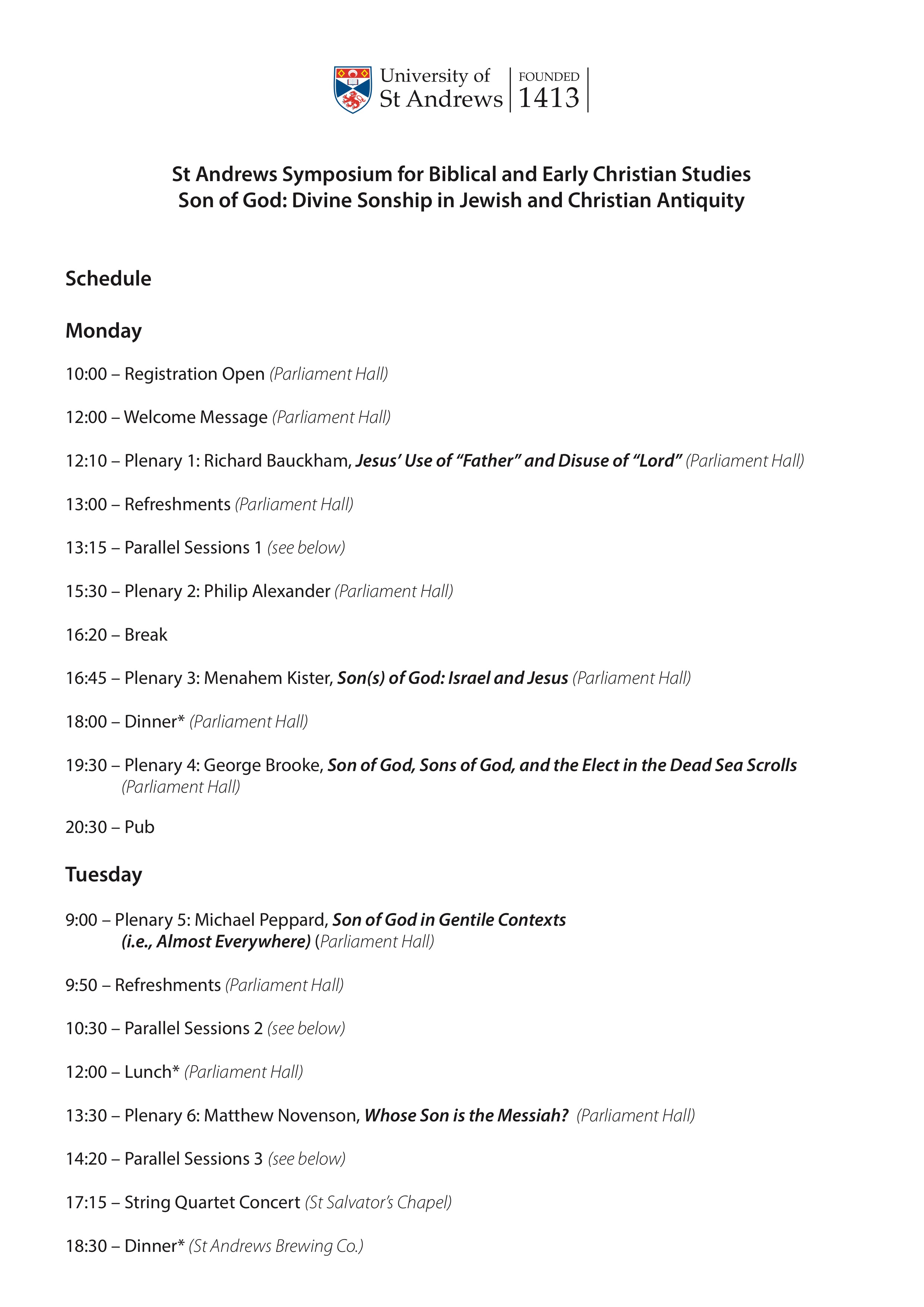
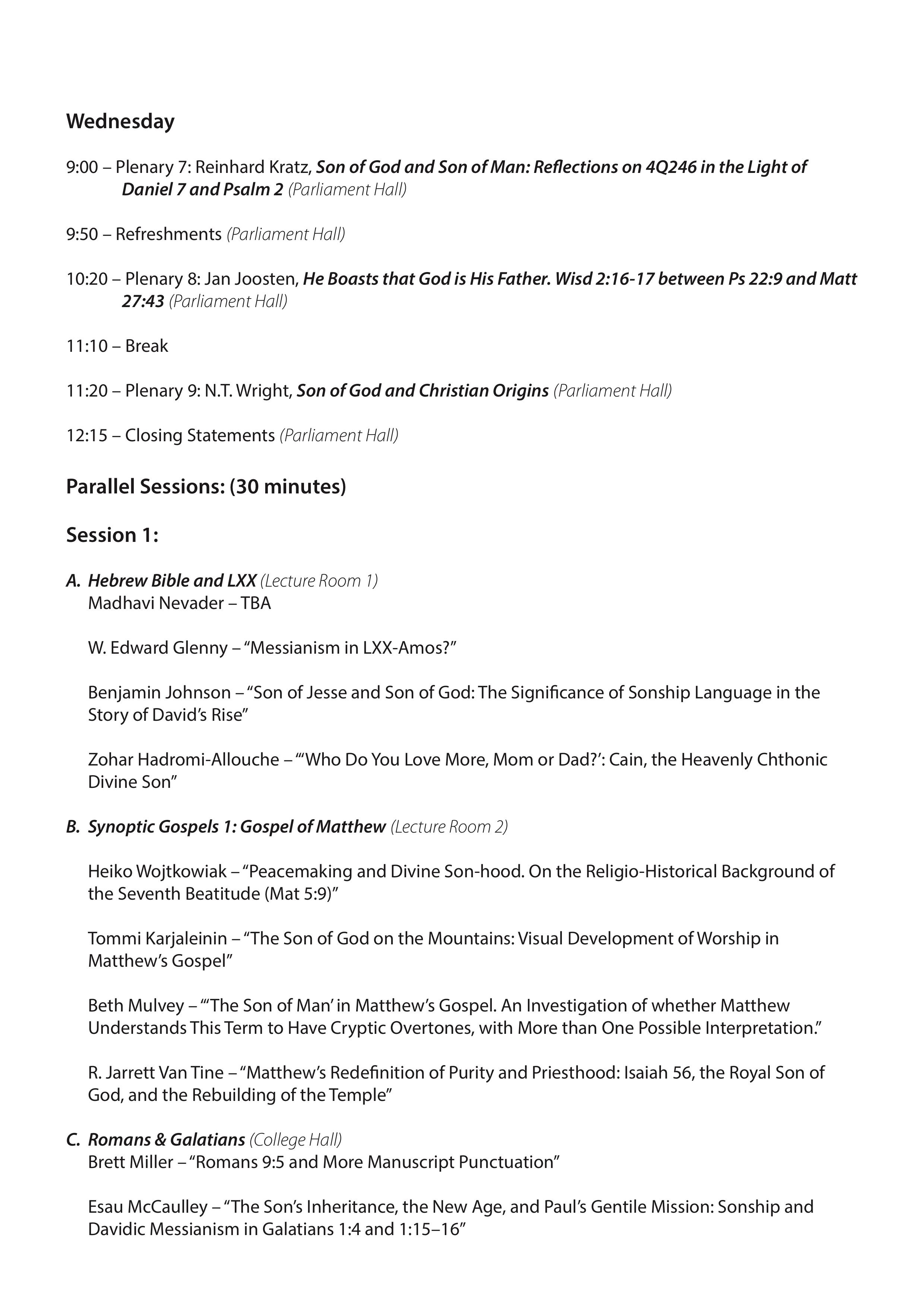
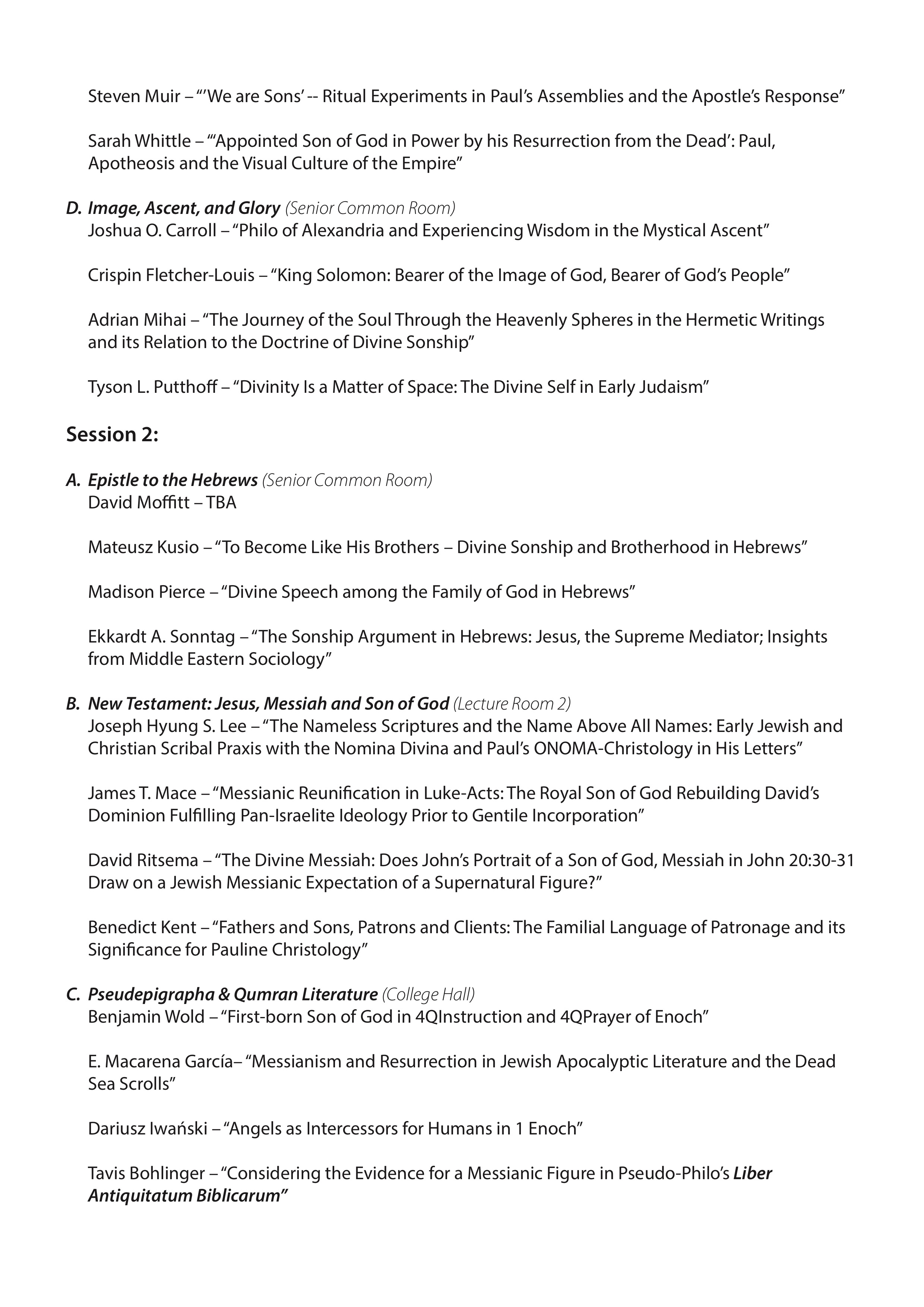
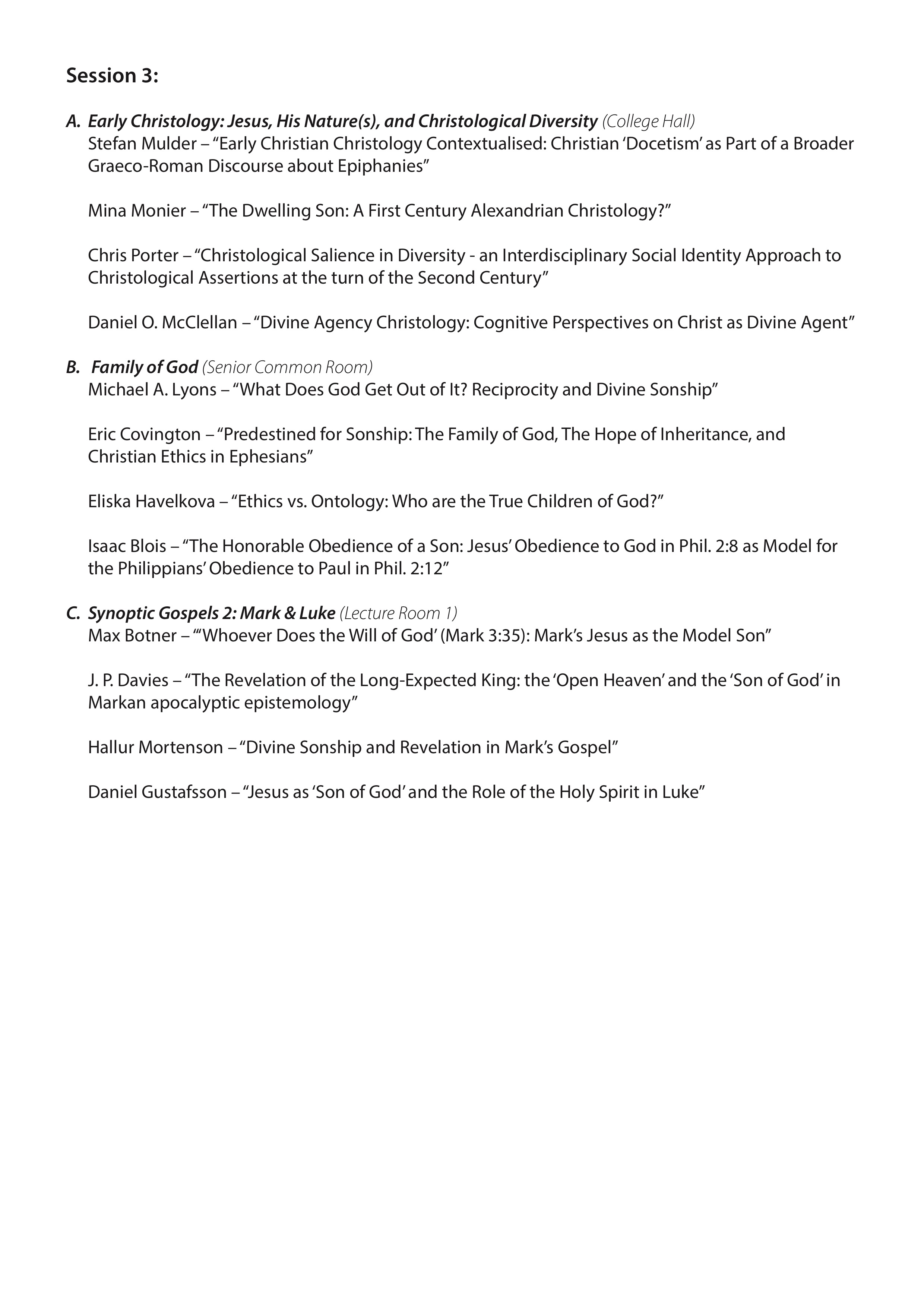
    This morning Qantas had the temerity (ok it was automated) to remind me that its only a little over a month before I will be heading to the UK for a pair of conferences, one at St Andrews in Scotland and the other at St Mary’s Twickenham down in London. Co-incidentally the draft schedule for the St Andrews symposium was released this week. Ill be presenting in the third parallel session on the Tuesday afternoon.
    Divine Sonship 2016 ScheduleDivine Sonship 2016 Schedule 2Divine Sonship 2016 Schedule 3Divine Sonship 2016 Schedule 4If you will be around Edinburgh/St Andrews or London/Oxford during the first two weeks of June and want to catch up I’m sure we can work something out 🙂

    Now, back to work on finishing this chapter of the thesis and getting all my cards in order again.

  • A Brilliant Cultural Analysis based on Classical Music

    A Brilliant Cultural Analysis based on Classical Music

    This article, although focused on classical music, at its core is a brilliant exposition and exegesis of the current state of affairs in our society.
    From the transience of experience and rampant individualism, through to a constantly thwarted search for Australian identity, the observations in the middle section are rich and incisive.

    “Last year, at my son’s primary school Christmas concert, the children did not sing a single Christmas carol. I thought this might have been because the word “Jesus” was verboten, but the principal later reassured me that it was not. …
    I had recently returned from Germany, where a woman had asked me whether Christmas in the Australian summer could possibly be gemütlich. I sang one of the confected Australian carols I had learned as a child…
    “Oh wow,” she marvelled. “That sounds really awkward.”

    This awkwardness was writ large at my son’s concert. It was a Christmas concert in search of identity; never mind Christ, there were not even any references to Christmases past. It spoke to me of a larger Australian malaise: because we dare not confront the realities of our own past, we prefer to imagine there was no past. Instead, we busy ourselves with our home renovations and hero ingredients, and forget the Western humanistic tradition. We celebrate culture if you can eat it. (If we do acknowledge a heritage, it is frequently one of failure: Gallipoli, the Eureka Stockade, a suicidal swagman. This might look like the championing of the underdog, but nothing in today’s national actions suggests that we champion the underdog.)”

    Its a long read, but worthwhile. Read it now: https://www.themonthly.com.au/issue/2015/october/1443621600/anna-goldsworthy/lost-art-listening