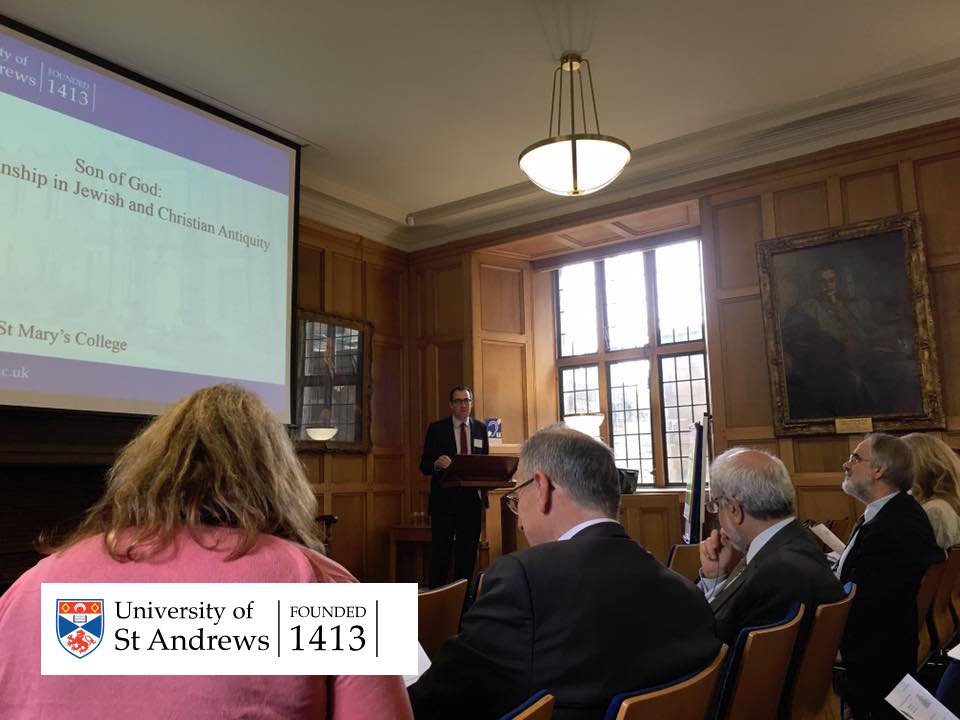
Day two of the St Andrews Symposium started with a bang, as Michael Peppard presented a strong argument for the need of Christological research to engage with the pervasive imperial cult, rather than merely focusing on the Jewish origins. To put Peppard’s perspective on the imperial cult in his own words it is “not looking under every rock for Imperial ideology but acknowledging that on thousands of rocks the imperial cult is already found….” [through inscriptions]
This second day focused more on parallel sessions, rather than plenaries, with some interesting papers from David Moffitt on parallels to Sonship Christology in Hebrews 1-2 (leveraging Umberto Eco); Mateusz Kusio on divine fictive kinship in Hebrews; David Ritsema on Jewish Divine Messiah expectations and their parallels in John’s Gospel and finally Daniel McClellan on Cognitive theories of Divine Agency (taking an internalist cognitive approach from Cognitive Models of Religion)
Matthew Novenson gave our second plenary for the day on the topic of Sonship and the Messiah, highlighting the breadth of Messiahs who are not the Son of God, and Sons of God who are not Messiahs (presumably some in the former category are merely very naughty boys). Novenson’s overview of the interaction of messianic expectation and patronymics is an area that should be engaged with further.
The second parallel sessions engaged with aspects of Christology and Early Christian Origins. Stefan Mulder presented a heuristic model for describing Docetism in the ancient world (a very good descriptive model); Mina Monier presented on the Christology present within the Epistle of Barnabas; Tavis Bohlinger presented on Messianism in Pseudo-Philo, and I presented on Christological Salience in the First Century.
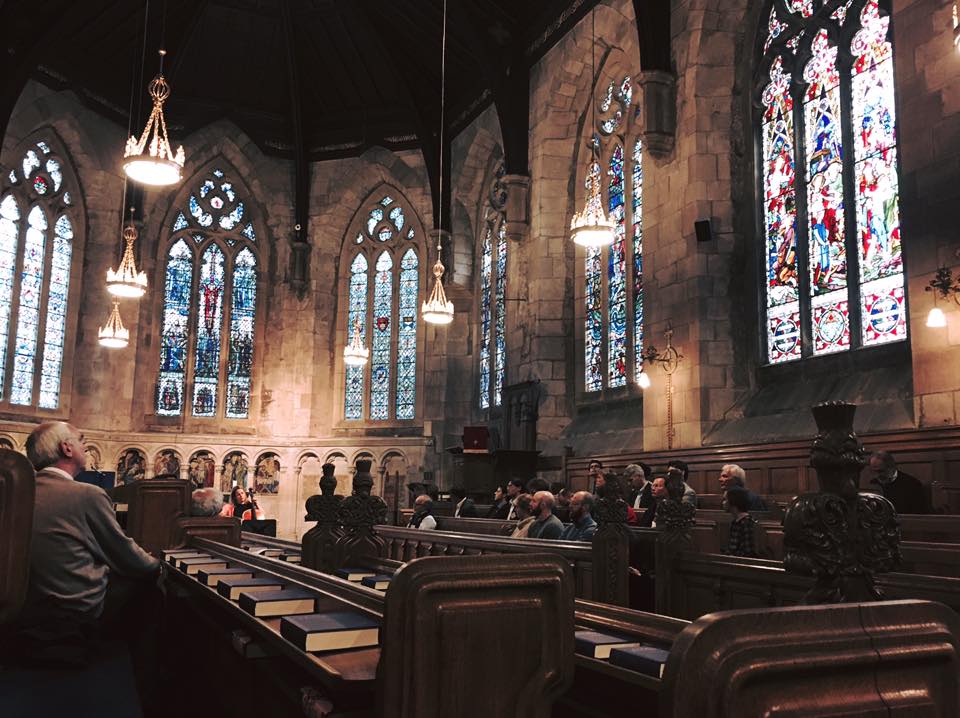
The second day finished with a lovely string quartet concert headed by the multi-talented Madhavi Nevader, and then dinner at a local pub with plenty of stimulating and erudite conversation. Here is to another good day.
Leave a Reply